


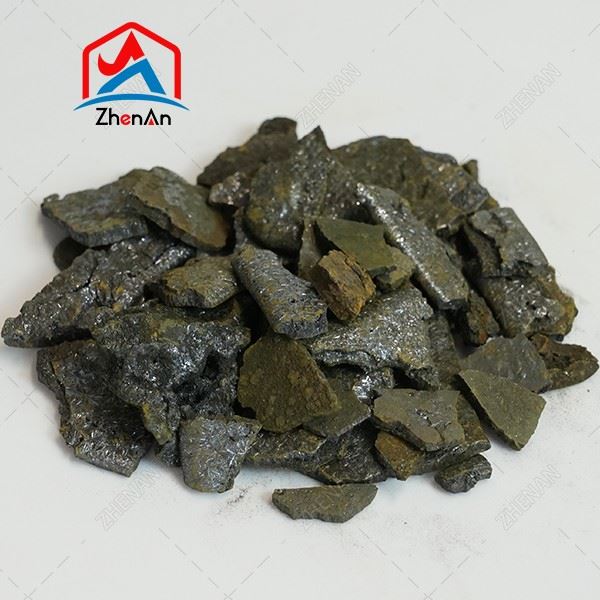


What Is Vanadium Pentoxide Catalyst Grade?
Vanadium pentoxide catalyst grade is a high-purity vanadium compound used as a precursor for industrial catalysts, especially in sulfuric acid production and oxidation reactions. It is not typically used directly as a finished catalyst but is processed into supported catalyst systems such as V₂O₅/TiO₂ formulations.
Its main function is to provide active vanadium species that enable efficient redox cycling between V⁵⁺ and V⁴⁺ states, which is essential for catalytic oxidation processes like SO₂ → SO₃ conversion.
Typical Specifications of Catalyst Grade V₂O₅
| Parameter | Specification |
|---|---|
| Product Name | Vanadium Pentoxide Catalyst Grade |
| Chemical Formula | V₂O₅ |
| Purity | 99.0% / 99.5% / 99.7% |
| Form | Flake / crystalline solid |
| Particle Size | 0.1 – 5 mm (controlled distribution) |
| Application | SO₂ oxidation / industrial catalysts |
| Fe Content | ≤0.02% |
| Si Content | ≤0.03% |
| Al Content | ≤0.02% |
| S Content | ≤0.005% |
| P Content | ≤0.003% |
| Bulk Density | 1.2 – 1.6 g/cm³ |
Role of Catalyst Grade V₂O₅ in Industry
Catalyst grade vanadium pentoxide plays a critical role in chemical oxidation processes, particularly in the contact process for sulfuric acid production. It acts as the active vanadium source in catalysts that convert sulfur dioxide (SO₂) into sulfur trioxide (SO₃), a key step in sulfuric acid manufacturing.
The efficiency of this reaction depends heavily on:
purity level of V₂O₅
dispersion on catalyst support (typically TiO₂)
stability of V⁵⁺/V⁴⁺ redox cycle
Higher purity reduces catalyst poisoning and ensures long-term operational stability in industrial reactors.
Why Catalyst Grade Requires High Purity
Catalysts are extremely sensitive to impurities. Even small amounts of Fe, Si, or P can reduce activity and shorten catalyst life.
Iron can interfere with redox reactions, silicon can affect surface dispersion, and sulfur or phosphorus can poison active sites. Therefore, catalyst manufacturers typically require 99.5% or higher purity V₂O₅ to ensure stable performance and long service life.
Grade Comparison of Vanadium Pentoxide
V₂O₅ 99.0% vs V₂O₅ 99.5%
99.0% catalyst grade is used in standard industrial catalyst systems, where cost efficiency is important. It provides acceptable performance but may show faster deactivation in long-term operations due to higher impurity levels.
99.5% grade offers improved catalytic efficiency and stability. It reduces impurity-related deactivation and is widely used in commercial sulfuric acid plants requiring consistent SO₂ conversion rates.
V₂O₅ 99.5% vs V₂O₅ 99.7%
99.5% is the standard catalyst-grade material used globally in most industrial applications.
99.7% is a premium ultra-high purity grade designed for advanced catalytic systems, offering:
higher SO₂ conversion efficiency
reduced catalyst poisoning
improved long-term stability
It is preferred in large-scale chemical plants with strict performance requirements.
Conclusion
Vanadium pentoxide catalyst grade is a key precursor material for industrial catalysts, especially in sulfuric acid and oxidation processes. Its high purity and stable chemical properties ensure efficient catalytic performance, long service life, and consistent industrial output.
FAQ (Buyer-Oriented)
Is V₂O₅ used directly as a catalyst?
No, it is used as a precursor to produce supported catalyst systems.
What is the main application of catalyst grade V₂O₅?
It is mainly used in sulfuric acid production (SO₂ oxidation).
What purity is required for catalysts?
Typically 99.5%–99.7% for stable industrial performance.
Why are impurities harmful in catalysts?
They reduce activity and shorten catalyst lifespan.
What support material is used with V₂O₅?
Titanium dioxide (TiO₂) is most commonly used.
Does particle size matter?
Yes, controlled size improves dispersion and catalyst uniformity.
Get Stable Supply of Catalyst Grade V₂O₅
We supply high-performance vanadium pentoxide for catalyst manufacturing:
Stable 99.5%–99.7% purity
Low impurity control (Fe / Si / Al / S / P)
Consistent flake morphology
Suitable for SO₂ oxidation catalysts
📩 Email: market@zanewmetal.com
📱 WhatsApp: +86 15518824805
Contact us today to receive a competitive quotation within 24 hours.
Why Choose ZhenAn for Vanadium Pentoxide Flakes?
Stable Product Quality – Strict production control ensures consistent V₂O₅ content and low impurity levels for reliable industrial use.
Procurement-Friendly Supply – Strong production capacity supports stable bulk supply and reduces supply chain risk.
Flexible Product Options – Different purity grades, flake specifications, and packaging solutions available on request.
Cost-Effective Pricing – Direct supply model helps buyers achieve better cost control in long-term procurement.
Export-Ready Documentation – COA, MSDS/SDS, and full shipping documents provided to support smooth import procedures.
Efficient Service Support – Quick quotation response, technical communication, and after-sales assistance for global buyers.
ZhenAn delivers reliable vanadium pentoxide flake solutions designed for consistent industrial procurement performance.

Hot Tags: vanadium pentoxide catalyst grade, China vanadium pentoxide catalyst grade manufacturers, suppliers, factory, Ferro vanadium Master Alloy 60, ferrovanadium 60%, ferrovanadium 40%, FeV alloy Solid, Vanadium Ferroalloys 70 , FeV alloy