


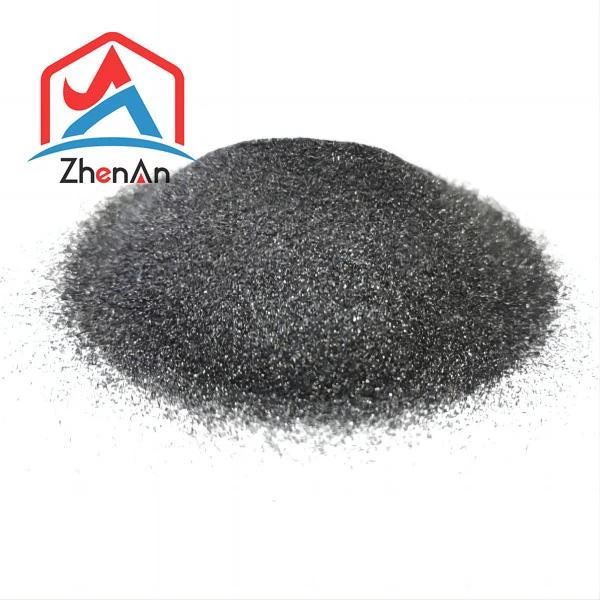


Products Parameters
| Grit | Sic | F.C. | Fe2O3 |
| F12-F90 | ≥98.50 | <0.20 | ≤0.60 |
| F100-F150 | ≥98.00 | <0.30 | ≤0.80 |
| F180-F220 | ≥97.00 | <0.30 | ≤1.20 |
| F230-F400 | ≥96.00 | <0.40 | ≤1.20 |
| F500-F800 | ≥95.00 | <0.40 | ≤1.20 |
| F1000-F1200 | ≥93.00 | <0.50 | ≤1.20 |
| P12-P90 | ≥98.50 | <0.20 | ≤0.60 |
| P100-P150 | ≥98.00 | <0.30 | ≤0.80 |
| P180-P220 | ≥97.00 | <0.30 | ≤1.20 |
| P230-P500 | ≥96.00 | <0.40 | ≤1.20 |
| P600-P1500 | ≥95.00 | <0.40 | ≤1.20 |
| P2000-P2500 | ≥93.00 | <0.50 | ≤1.20 |
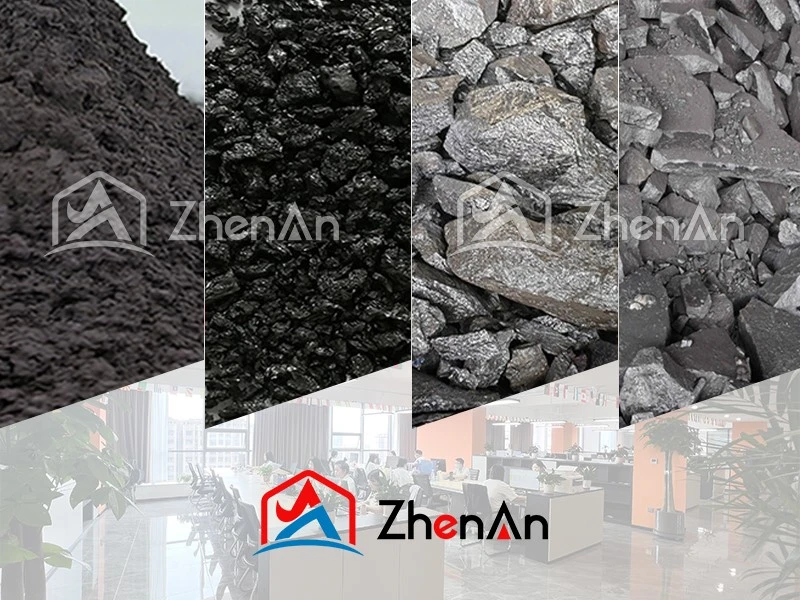
Specification granularity: natural block, 10-100mm, 10-60mm, 3-10mm, 1-3mm, 0-1mm, or customized according to customer requirements.
Packaging: Ton bag packaging (1000kg/bag) or customized according to customer requirements.
Products Description
High carbon silicon, as the name implies, is a silicon-based material containing a high proportion of carbon. It combines the semiconductor properties of silicon with the high strength and hardness of carbon to form unique physical and chemical properties. High carbon silicon has an extremely high melting point, excellent thermal stability and chemical inertness, and can maintain stable performance in extreme environments. In addition, it also exhibits good electrical and thermal conductivity, making it widely used in electronic devices, thermal management materials, etc.

The preparation process of high-carbon silicon is complex and delicate, involving a variety of advanced technologies such as chemical vapor deposition, sputtering deposition, and ion implantation. Among them, chemical vapor deposition is one of the most commonly used methods. By precisely controlling parameters such as the type, concentration, and temperature of the reaction gas, a high-quality high-carbon silicon film can be formed on the substrate. Sputtering deposition uses high-energy particles to bombard the target material, so that the target atoms are sputtered out and deposited on the substrate to form the desired high-carbon silicon structure. Ion implantation is to accelerate carbon ions and inject them into the silicon matrix. Through subsequent annealing treatment, the carbon atoms are evenly distributed in the silicon matrix, thereby forming a high-carbon silicon material.

High carbon silicon has shown a wide range of application prospects in many fields due to its unique properties. As a semiconductor material, high carbon silicon has excellent electrical properties and can be used to manufacture high-performance transistors, integrated circuits and other electronic devices. With the advancement of Moore's Law, the performance of traditional silicon-based materials is gradually approaching the limit, and high carbon silicon is expected to become a strong competitor for the next generation of semiconductor materials. High carbon silicon has extremely high thermal conductivity and can effectively conduct heat away from the heat source, so it is widely used in thermal management materials. Whether it is heat sinks and heat pipes in electronic equipment or battery thermal management systems in new energy vehicles, high carbon silicon plays an indispensable role.

High carbon silicon has extremely high hardness and excellent wear resistance, so it is used to manufacture wear-resistant tools such as knives and molds. In addition, it can also be used to manufacture friction parts such as mechanical seals and bearings to improve the durability and reliability of equipment. High carbon silicon also has potential application value in the field of optics. Due to its good light transmittance and chemical stability, it can be used to manufacture optical components such as optical lenses and filters.
Hot Tags: high carbon silicon with wide application potential, China high carbon silicon with wide application potential manufacturers, suppliers, factory