


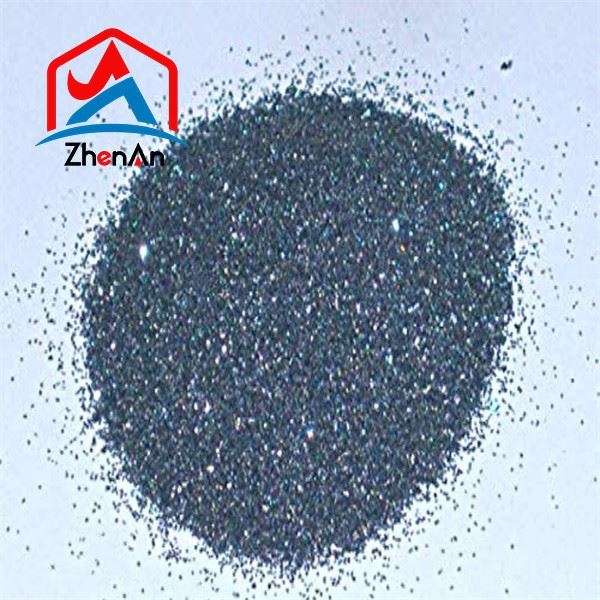

the preparation method of silicon carbide
There are various methods for preparing silicon carbide, each with its own unique advantages and disadvantages, depending on the desired material properties and application needs.
Carbon Thermal Reduction Method: This is a traditional preparation method in which silicon powder is reacted with a carbon source at high temperatures to generate silicon carbide particles. This method is suitable for high-volume production and can be prepared at a relatively low cost.
Chemical vapor deposition: In chemical vapor deposition, a silicon and carbon source in a gas decomposes at high temperatures and deposits on a substrate to form a thin film of silicon carbide material. This method is suitable for the preparation of thin films and coatings, and can be controlled to produce high-quality films.
Pyrolysis method: This method uses an organosilicon precursor to crack at high temperatures to generate silicon carbide particles. This method is commonly used to prepare high-purity silicon carbide and is suitable for some special applications, such as semiconductor manufacturing.
While these preparation methods have their advantages, there are also some challenges. For example, carbon-thermal reduction may lead to an increase in impurities in the material, affecting performance; Chemical vapor deposition requires more complex equipment and process control, and the preparation process is more complex. In order to optimize the preparation method, researchers need to make continuous efforts to control process conditions, increase yields, and reduce costs.


The prospect of silicon carbide in the future
As a high-performance material, silicon carbide has a wide range of prospects in the future development of science and technology, and is expected to play a greater role in many fields, but also faces some challenges.
Applications in high-temperature and high-pressure environments: With the development of industry and technology, the demand for materials that operate stably under extreme conditions is increasing. Silicon carbide's high-temperature stability and pressure resistance make it play a key role in aerospace, energy, and chemical industries. For example, in the aerospace sector, silicon carbide can be used to make high-temperature engine components to improve the performance and efficiency of aircraft.
Role in advanced electronics: As electronics continue to advance, there is an increasing demand for high-performance, high-power electronic devices. Silicon carbide has unique advantages in the manufacture of power devices, high-frequency radio frequency devices, etc., which helps to promote the development of electronic devices. Its high thermal conductivity and high temperature resistance make it excellent heat dissipation in high-power electronic devices, helping to improve the stability and longevity of the equipment.
As a high-performance material with multiple advantages, silicon carbide will continue to show its wide application prospects driven by future technology. Through continuous research and innovation, we can expect silicon carbide to play a more important role in high-temperature and high-pressure environments, advanced electronic devices, and other fields.
Hot Tags: the knowledge of silicon carbide, China the knowledge of silicon carbide manufacturers, suppliers, factory