


What Is Ultra-Fine Black Silicon Carbide Abrasive and Why Is It Widely Used in Industry?
What is Ultra-Fine Black Silicon Carbide Abrasive and what is it used for?
Ultra-Fine Black Silicon Carbide Abrasive is a high-performance industrial material made by smelting quartz sand and petroleum coke at high temperature in an electric resistance furnace. It is a premium-grade Silicon Carbide (SiC powder) known for its high hardness, strong thermal conductivity, excellent wear resistance, and stable chemical properties.

This type of Black silicon carbide is widely used in abrasive applications, refractory production, steelmaking, precision polishing, ceramic processing, and non-ferrous metallurgy. Because of its ultra-fine particle size and excellent purity control, it is especially suitable for grinding, lapping, surface treatment, and metallurgical deoxidation.
Compared with ordinary abrasive materials, High purity silicon carbide offers stronger cutting efficiency, lower contamination, and better thermal stability, making it an ideal material for modern industrial production.
What are the specifications and technical parameters of Ultra-Fine Black Silicon Carbide?
| Item | Specification |
|---|---|
| Product Name | Ultra-Fine Black Silicon Carbide Abrasive |
| Main Formula | SiC |
| Purity Grade | 88% / 90% / 95% / 98% |
| Common Products | SiC powder / SiC granules / SiC lump |
| Color | Black |
| Hardness | Mohs 9.2–9.5 |
| Melting Point | Approx. 2700°C |
| Particle Size | F240–F2000 / customized |
| Sulfur Content | Low sulfur SiC |
| Application | Abrasives, steelmaking, refractory, foundry |
| Packaging | 25kg bags / 1MT jumbo bag |
Popular grades such as SiC powder 88%, SiC powder 90%, and SiC granules 90% are widely used for both metallurgical and abrasive applications.
How does Black Silicon Carbide work in steelmaking and industrial applications?
In steelmaking, Silicon carbide for steelmaking works as both a deoxidizer and a reducing agent. It helps remove oxygen from molten steel while improving carbon and silicon recovery. This increases furnace efficiency and reduces production costs.
As a Silicon carbide deoxidizer, SiC is commonly used in electric arc furnaces and blast furnaces. It improves molten steel cleanliness, reduces slag formation, and stabilizes chemical composition. This is why many steel plants prefer SiC for electric arc furnace and SiC for blast furnace operations.
In abrasive industries, ultra-fine SiC powder provides strong grinding performance with excellent dimensional precision. It is widely used for polishing hard alloys, ceramics, glass, and semiconductor materials.
In non-ferrous metallurgy, SiC for non-ferrous metallurgy improves alloy purity and reduces oxidation loss during smelting.
Because of these multiple functions, Low impurity silicon carbide remains one of the most versatile industrial materials.
What is the difference between Black Silicon Carbide and Green Silicon Carbide?
Black silicon carbide is produced from quartz sand and petroleum coke and is mainly used for steelmaking, foundry, refractories, and general abrasive applications. It offers excellent hardness with strong cost efficiency.
Green silicon carbide is produced with higher purity raw materials and contains a higher SiC percentage. It is mainly used for precision grinding, semiconductor polishing, and advanced ceramics where ultra-clean processing is required.
Comparison:
Black silicon carbide = industrial use, steelmaking, cost-effective abrasive
Green silicon carbide = higher purity, precision grinding, premium applications
For steel mills and foundries, black SiC is usually the preferred economical solution.
What is the difference between SiC Powder 88% and SiC Powder 90%?
SiC powder 88% is commonly used in steelmaking and foundry applications where cost control is important. It provides good deoxidation performance and stable furnace efficiency.
SiC powder 90% offers slightly higher purity and lower impurity content, making it more suitable for higher-grade steel production and precision metallurgical processes.
Comparison:
SiC powder 88% = cost-effective, standard steelmaking, high-volume use
SiC powder 90% = better purity, improved recovery rate, cleaner steel production
Many buyers choose based on furnace requirements and target steel grade quality.
What is the difference between SiC Granules and SiC Lump?
SiC granules are smaller particles with more uniform sizing, making them ideal for automatic feeding systems and stable furnace reactions. Grades like SiC granules 88% and SiC granules 90% are widely used in steel plants.
SiC lump is larger in size and commonly used for manual feeding or refractory production. It is easier for bulk transportation and long-term storage.
Comparison:
SiC granules = better reaction efficiency, precise furnace feeding
SiC lump = bulk handling, refractory use, lower processing cost
Selection depends on plant operation systems and production goals.
Why is Ultra-Fine Black Silicon Carbide important?
Ultra-Fine Black Silicon Carbide Abrasive is a critical industrial material used across metallurgy, abrasives, refractory production, and precision manufacturing. Its high hardness, thermal stability, and strong deoxidation ability make it essential for both steelmaking and advanced surface processing.
Whether used as High purity SiC, Low sulfur SiC, or ultra-fine abrasive powder, selecting the right grade directly affects production efficiency and final product quality.
FAQ
1. What is black silicon carbide mainly used for?
It is used in steelmaking, foundry, abrasives, polishing, refractory materials, and non-ferrous metallurgy.
2. What is the difference between black and green silicon carbide?
Black SiC is used for general industry and steelmaking, while green SiC has higher purity for precision grinding and electronics.
3. Is silicon carbide a good deoxidizer for steelmaking?
Yes, it improves deoxidation efficiency, increases silicon recovery, and reduces furnace costs.
4. What does low sulfur SiC mean?
It means the sulfur impurity is strictly controlled, which helps avoid contamination during steel refining.
5. Which is better, SiC powder 88% or 90%?
90% offers better purity and cleaner steel results, while 88% is more cost-effective for standard production.
6. Can silicon carbide be used in blast furnaces?
Yes, SiC for blast furnace is widely used to improve thermal efficiency and reduce slag formation.
Looking for a reliable Silicon Carbide supplier?
If you are sourcing high-quality Silicon Carbide, we provide stable supply and competitive pricing for global steel plants, foundries, and abrasive manufacturers.
We supply:
SiC powder 88% / SiC powder 90%
SiC granules 88% / SiC granules 90%
SiC lump
High purity and low impurity silicon carbide
Low sulfur SiC for steelmaking and metallurgy
📩 Email: market@zanewmetal.com
📱 WhatsApp: +86 15518824805
Get technical specifications, bulk quotation, and professional support directly from a trusted supplier of High purity silicon carbide.
Third-party inspection available
Why Choose ZhenAn Ultra-Fine Black Silicon Carbide Abrasive?
For industrial buyers in abrasives, ceramics, and surface finishing, ultra-fine black silicon carbide (SiC) is selected based on cutting efficiency, particle uniformity, hardness stability, and batch consistency. ZhenAn focuses on meeting these key performance expectations.
1. High Hardness for Efficient Material Removal
Ultra-fine SiC maintains exceptional hardness, enabling fast and precise grinding, polishing, and lapping of hard materials such as glass, ceramics, and carbide components.
2. Narrow Particle Size Distribution
Strict classification control ensures uniform grit size, improving surface finish consistency and reducing processing variation in automated production systems.
3. Stable Chemical and Thermal Performance
Black silicon carbide retains stability under high pressure and temperature conditions, making it suitable for demanding abrasive and refractory applications.
4. Consistent Batch Quality for Industrial Use
Controlled production processes ensure repeatable performance across shipments, supporting continuous manufacturing operations.
5. Export-Ready Supply System
ZhenAn provides COA, SDS, and full export documentation, ensuring smooth international procurement and compliance support.
ZhenAn ultra-fine black silicon carbide abrasive delivers stable cutting performance, uniform particle quality, and reliable supply, meeting the requirements of high-precision industrial applications.
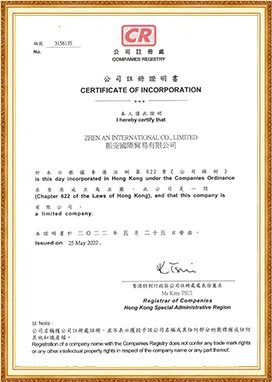
ZhenAn Metallurgy & New Materials Certificates



Hot Tags: ultra-fine black silicon carbide abrasive, China ultra-fine black silicon carbide abrasive manufacturers, suppliers, factory