




Chemical and Physical Properties
Chemical Formula: BaSi₂
Molar Mass: ~193.5 g/mol
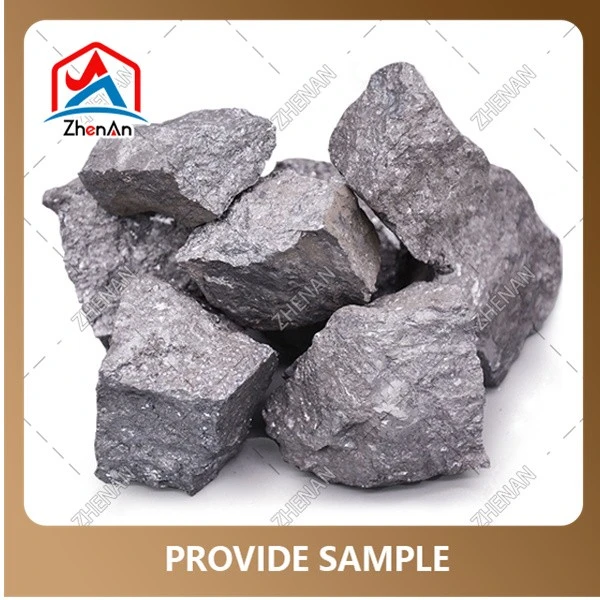
Appearance: Grayish-black crystalline solid
Density: ~4.3 g/cm³
Melting Point: ~1,200°C (varies with composition)
Crystal Structure: Orthorhombic (at room temperature)
Electrical Conductivity: Semiconducting properties (used in thin-film solar cells)
Barium silicide is a reducing agent and reacts with water and acids to produce silane (SiH₄), a flammable gas, and barium compounds.

Synthesis and Production
Barium silicide is typically synthesized through:
Solid-state reaction: Heating a mixture of barium (Ba) and silicon (Si) powders at high temperatures (800–1,200°C) under an inert atmosphere (e.g., argon).
Metallothermic reduction: Using barium oxide (BaO) and silicon dioxide (SiO₂) with a reducing agent like aluminum or magnesium.

Applications of silicon barium
(1) Semiconductor Industry
Thin-film solar cells: BaSi₂ is a promising absorbing layer due to its optimal bandgap (~1.3 eV) and high light absorption coefficient.
Thermoelectric materials: Potential use in energy conversion devices.
(2) Metallurgy
Acts as a deoxidizer and desulfurizing agent in steel production.
Used in alloy formation to enhance hardness and corrosion resistance.
(3) Chemical Synthesis
Source of silicon in organometallic reactions.
Used to generate silane (SiH₄), a precursor for silicon-based materials.
(4) Research & Emerging Technologies
Investigated for quantum dot applications and optoelectronic devices.
Studied for hydrogen storage due to its ability to form hydrides.
Hot Tags: barium silicide : a comprehensive overview, China barium silicide : a comprehensive overview manufacturers, suppliers, factory, Industrial Silicon Powder 400 mesh, Pure Silicon Powder 97, ferrosilicon powder 150 mesh, Powder High Purity Silicon 400 mesh, Silicon Alloy, ferrosilicon powder 98 8