ferro phosphorus price
| China's Phosphorus Iron Price on May 8, 2026 | ||||||
| Product Name | Specification | Steel mill/origin | price | rise and fall | Remark | unit |
| Phosphorus iron | P24 | Sichuan | 3750-3900 | - | National standard, ton bag packaging, ex-factory price including tax | Yuan/ton |
| Phosphorus iron | P24 | Guizhou | 515.5 | - | USD/ton | |
| Phosphorus iron | P24 | Henan | 3400-3500 | - | National standard, 10-50mm ton bags | Yuan/ton |
| Phosphorus iron | P24 | Yunnan | 3000-3200 | - | National standard, 10-80mm ton bags | Yuan/ton |

What Is Ferrophosphorus (FeP) and Why Is It Used in Industry?
Typical phosphorus content: 20%–25% P (adjustable grades available)
Main function: steel deoxidizer + alloying additive
Key benefit: improves hardness, wear resistance, and machinability
Common form: lumps / granules / powder
Industrial use: steelmaking, foundry, and ferroalloy production
What Is Ferrophosphorus (FeP)?
Ferrophosphorus (FeP) is an iron–phosphorus alloy produced as a by-product of phosphorus smelting. It is widely used in metallurgy as a functional additive in steel and cast iron production to improve mechanical properties and processing behavior.
In steelmaking, FeP acts as both a deoxidizing agent and alloying element, contributing phosphorus in a controlled manner to enhance hardness and wear resistance.
What Are the Specifications of Ferrophosphorus?
| Item | Specification |
|---|---|
| Product Name | Ferrophosphorus (FeP) |
| Phosphorus Content | 20% – 25% (custom grades available) |
| Iron Content | Balance (Fe) |
| Form | Lumps / granules / powder |
| Size Range | 10–50mm, 10–100mm, or customized |
| Melting Point | ~1050°C–1150°C |
| Density | 5.5–6.5 g/cm³ |
| Application | steelmaking / foundry / alloy production |
| Packaging | 1mt big bag / steel drum |
| Inspection | SGS / BV / third-party testing |
Why Is Ferrophosphorus Used in Metallurgy?
What Is the Function of FeP in Steelmaking?
Ferrophosphorus is mainly used to introduce controlled phosphorus into steel. It improves:
hardness and strength
wear resistance
machinability of low-carbon steels
It is especially useful in controlled alloy steel production.
How Does Ferrophosphorus Work as a Deoxidizer?
In molten steel, FeP helps remove oxygen impurities by forming stable oxides. This improves:
steel cleanliness
casting quality
mechanical stability
Why Is Phosphorus Important in Alloy Design?
Phosphorus contributes to:
increased tensile strength
improved surface hardness
better corrosion resistance in some alloy systems
However, it must be carefully controlled, which is why FeP is used instead of raw phosphorus.
Product Grade Comparison
FeP 20% vs FeP 25%
FeP 25% provides higher phosphorus addition efficiency, while FeP 20% is preferred for more controlled alloying in sensitive steel grades.
Ferrophosphorus vs Ferromanganese
Ferrophosphorus improves hardness and wear resistance, while ferromanganese primarily enhances toughness and deoxidation capacity.
Ferrophosphorus vs Phosphorus Metal
FeP is safer, easier to handle, and more cost-efficient compared to pure phosphorus, which is highly reactive and difficult to store.
What Are the Applications of Ferrophosphorus?
Why Is It Used in Steelmaking?
It is widely used in steel production to improve mechanical strength and machining performance.
Where Is It Used in Foundries?
It enhances wear resistance and hardness in cast iron components.
What Industrial Products Use FeP?
wear-resistant steel parts
machine tool components
structural steel alloys
low-carbon steel products
Summary
Ferrophosphorus (FeP) is an important iron–phosphorus alloy used in steelmaking and foundry industries to improve hardness, machinability, and wear resistance. It serves as both a controlled phosphorus source and a functional metallurgical additive.
FAQ About Ferrophosphorus (FeP)
What is ferrophosphorus used for?
It is used as a steel additive to improve hardness, wear resistance, and machinability.
Is ferrophosphorus safe to handle?
Yes, it is more stable and safer than pure phosphorus, making it suitable for industrial use.
What is the phosphorus content in FeP?
Typically between 20% and 25%, depending on application requirements.
What forms of ferrophosphorus are available?
It is available in lumps, granules, and powder forms.
Why is FeP used instead of pure phosphorus?
Because it is safer, easier to dose, and more stable in steelmaking processes.
Where is ferrophosphorus commonly used?
It is widely used in steel plants, foundries, and alloy manufacturing industries.
Looking for Reliable Ferrophosphorus Supplier?
We provide high-quality ferrophosphorus (FeP) with stable composition and consistent performance:
controlled phosphorus content (20%–25%)
lump / granule / powder options
stable metallurgical performance
bulk supply for steel industry
SGS / BV inspection support
📧 Email: market@zanewmetal.com
📱 WhatsApp: +86 15518824805
Contact us for quotation, technical support, and long-term supply cooperation.
Third-party inspection available
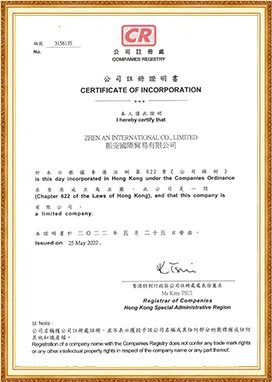
ZhenAn Metallurgy & New Materials Certificates