


What Is the Difference Between Ferro Silicon Nitride Powder and Silicon Carbide in Refractory Applications?
Ferrosilicon nitride powder and silicon carbide are both widely used refractory additives, but they perform differently in high-temperature furnace environments.
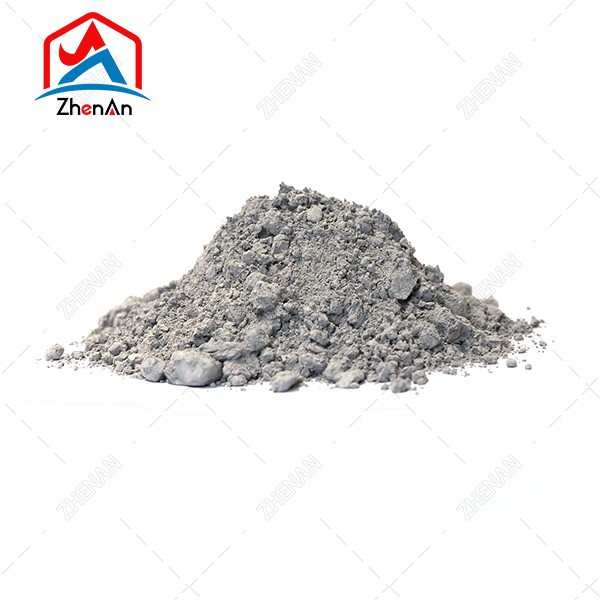
Ferrosilicon Nitride Powder (FeSiN Powder) is mainly used as a nitride bonding phase powder for refractories. It improves bonding strength, thermal shock resistance, slag corrosion resistance, and structural stability in blast furnace and taphole clay systems.
Silicon carbide (SiC), on the other hand, is primarily used to enhance hardness, oxidation resistance, and abrasion resistance in refractory products.
In modern steelmaking and blast furnace ironmaking, many refractory manufacturers now combine both materials to optimize furnace lining life and continuous tapping stability.
As a professional ferro silicon nitride powder manufacturer China, ZhenAn supplies refractory grade FeSiN powder for:
Blast furnace taphole clay
Al2O3-SiC-C refractory systems
Refractory castables
Furnace lining materials
Slag resistant refractory structures
Continuous tapping systems
Why Is FeSiN Powder Becoming More Popular in Blast Furnace Refractories?
Compared with conventional silicon carbide additives, fine ferrosilicon nitride powder provides stronger nitride phase bonding at elevated temperatures.
In blast furnace operation, refractory materials face:
Extreme thermal cycling
Alkali vapor attack
Molten slag corrosion
Mechanical erosion
Continuous tapping stress
Under these conditions, taphole clay additive FeSiN helps improve:
Hot strength
Volume stability
Crack resistance
Slag penetration resistance
Refractory service life
This is why many steel plants now prefer FeSiN powder for blast furnace ironmaking and long-campaign furnace operation.
Technical Parameters of Refractory Grade FeSiN Powder
| Item | Specification |
|---|---|
| Product Name | Ferrosilicon Nitride Powder |
| Appearance | Gray Powder |
| Nitrogen (N) | 28%–32% |
| Silicon (Si) | 45%–75% |
| Iron (Fe) | Balance |
| Particle Size | 200 Mesh / 325 Mesh / Micron Grade |
| Bulk Density | 2.4–2.9 g/cm³ |
| Application | Refractory Additive |
| Main Use | Taphole Clay, Castables, Al2O3-SiC-C Systems |
| Packaging | 1MT Jumbo Bag / 25kg Bag |
| Origin | China |
ZhenAn can also customize:
Micron grade FeSiN refractory additive powder
High nitrogen ferrosilicon nitride powder supplier solutions
Fine FeSiN powder for furnace lining stability
Metallurgical FeSiN powder supplier specifications
How Does FeSiN Powder Compare with Silicon Carbide in Thermal Shock Resistance?
One major advantage of FeSiN fine powder for refractory castables is its excellent thermal shock resistance.
During rapid heating and cooling cycles, nitride bonding phases generated by FeSiN help reduce crack propagation inside refractory structures. This improves furnace stability during:
Repeated tapping
High-temperature shutdowns
Oxygen enrichment operations
Large blast furnace fluctuations
Silicon carbide also provides good thermal conductivity, but excessive SiC oxidation at high temperatures may gradually weaken refractory integrity over time.
Thermal Shock Resistance Comparison
| Property | FeSiN Powder | Silicon Carbide |
|---|---|---|
| Thermal Shock Resistance | Excellent | Good |
| Nitride Bonding Ability | Strong | Weak |
| Crack Resistance | High | Medium |
| Structural Stability | Excellent | Moderate |
| Long Campaign Performance | Better | Good |
For refractory plants focused on thermal shock resistant refractory additive powder, FeSiN often delivers better long-term stability.
Which Material Offers Better Slag Resistance in Blast Furnace Refractories?
In highly corrosive slag environments, slag resistant refractory fine powder performance becomes critical.
FeSiN powder forms stable nitride ceramic bonding phases during high-temperature reactions, helping reduce slag penetration into refractory pores. This improves:
Slag corrosion resistance
Alkali attack resistance
Hot metal erosion resistance
Silicon carbide also provides anti-slag performance, especially in carbon-containing refractories, but oxidation can reduce effectiveness during prolonged operation.
For modern blast furnace systems operating under continuous tapping conditions, many refractory producers choose:
FeSiN for bonding reinforcement
SiC for abrasion resistance
Combined systems for optimized lining performance
Can FeSiN Powder Improve Refractory Bonding More Effectively Than Silicon Carbide?
Yes.
One core reason why FeSiN powder for Al2O3-SiC-C refractory systems is widely used is its superior bonding capability.
At elevated temperatures, FeSiN promotes nitride phase formation that enhances:
Matrix densification
Hot modulus strength
Structural cohesion
Furnace lining integrity
Silicon carbide mainly functions as a wear-resistant aggregate rather than a true bonding phase additive.
Therefore, when refractory manufacturers need:
Better bonding
Lower porosity
Improved hot strength
Longer taphole life
They often select refractory grade FeSiN powder as the preferred additive.
How Do Oxidation Resistance Properties Differ Between FeSiN and SiC?
Oxidation behavior is one of the main differences between these materials.
FeSiN Powder
Forms protective oxide and nitride layers
Maintains structural integrity under high temperatures
Improves oxidation resistance in composite refractories
Silicon Carbide
Oxidizes to SiO2 under oxygen-rich conditions
May lose mechanical performance over time
Performs better in reducing atmospheres
In blast furnace refractory systems exposed to repeated oxidation-reduction cycles, FeSiN often shows more stable long-term performance.
Why Is FeSiN Preferred in Some Al2O3-SiC-C Refractory Systems?
Modern Al2O3-SiC-C refractories require:
High thermal stability
Excellent slag resistance
Long tapping life
Low thermal expansion stress
Ferrosilicon nitride powder for blast furnace taphole clay helps create stronger ceramic bonding phases while maintaining structural toughness.
This improves:
Tap hole stability
Furnace campaign duration
Continuous tapping efficiency
High-temperature mechanical strength
For this reason, many refractory factories increasingly use:
Fine FeSiN powder for furnace lining stability
FeSiN powder for continuous tapping systems
Refractory bonding phase powder additive formulations
How Does Silicon Carbide Affect Wear Resistance Compared to FeSiN Powder?
Silicon carbide has excellent hardness and abrasion resistance, making it effective against:
Mechanical wear
Coke abrasion
Particle erosion
FeSiN focuses more on:
Bonding enhancement
Thermal stability
Slag resistance
Crack suppression
Wear Resistance Comparison
| Property | FeSiN Powder | Silicon Carbide |
|---|---|---|
| Abrasion Resistance | Good | Excellent |
| Bonding Enhancement | Excellent | Low |
| Slag Resistance | Excellent | Good |
| Thermal Stability | Excellent | Good |
| Furnace Campaign Life | Excellent | Moderate |
Many refractory producers use hybrid formulations to combine both advantages.
What Are the Cost and Performance Differences Between FeSiN and SiC Refractories?
From a procurement perspective, silicon carbide may appear cheaper initially. However, refractory buyers increasingly evaluate:
Total furnace campaign life
Maintenance frequency
Tapping stability
Downtime reduction
Refractory replacement cost
Although FeSiN powder price per ton can be higher than standard SiC materials, FeSiN often delivers:
Longer refractory lifespan
Better operational stability
Reduced shutdown frequency
Improved furnace efficiency
This creates lower total operating cost for steel plants and refractory manufacturers.
As an experienced silicon nitride iron powder exporter, ZhenAn provides stable supply solutions for global refractory customers.
What Packaging and Delivery Options Are Available for FeSiN Powder?
ZhenAn supplies:
Powder
Fine powder
Micron grade powder
Granular materials
Standard Packaging
25kg bags
1MT jumbo bags
Customized OEM packaging
Logistics Support
Sea freight export
Container loading optimization
Bulk shipment support
International documentation assistance
As a reliable ferro silicon nitride powder supplier, ZhenAn supports customers in:
Japan
India
Korea
Vietnam
Middle East
Europe
Conclusion
Both ferrosilicon nitride powder and silicon carbide play important roles in refractory manufacturing, but their functions are different.
Silicon carbide mainly improves hardness and wear resistance, while FeSiN Powder delivers stronger bonding performance, thermal shock resistance, slag resistance, and furnace lining stability.
For modern blast furnace operations and high-performance refractory systems, many manufacturers now prefer refractory grade FeSiN powder as a key additive for long campaign furnace operation and continuous tapping performance.
ZhenAn continues to supply high-quality:
Ferrosilicon Nitride Powder
Fine Ferrosilicon Nitride Powder
Taphole Clay FeSiN Powder Additive
Nitride Bonding Powder for Refractories
to global refractory and steelmaking industries.
FAQ
What is the difference between ferro silicon nitride powder and silicon carbide in refractory applications?
FeSiN powder mainly improves refractory bonding, thermal stability, and slag resistance, while silicon carbide mainly enhances hardness and abrasion resistance.
How does FeSiN powder compare with SiC in thermal shock resistance?
FeSiN generally provides better thermal shock resistance because nitride bonding phases help reduce cracking during repeated heating and cooling cycles.
Which material offers better slag resistance in blast furnace refractories?
FeSiN powder typically offers stronger slag penetration resistance and better structural stability under continuous tapping conditions.
Can FeSiN powder improve refractory bonding more effectively than silicon carbide?
Yes. FeSiN acts as a nitride bonding additive, while silicon carbide mainly functions as a wear-resistant component.
How do oxidation resistance properties differ between FeSiN and SiC?
FeSiN maintains stable bonding performance under cyclic oxidation conditions, while silicon carbide may gradually oxidize at very high temperatures.
Why is FeSiN preferred in some Al2O3-SiC-C refractory systems?
Because FeSiN improves hot strength, crack resistance, and tapping stability in high-temperature blast furnace applications.
How does silicon carbide affect wear resistance compared to FeSiN powder?
Silicon carbide provides stronger abrasion resistance, while FeSiN provides better bonding and thermal stability.
What are the cost and performance differences between FeSiN and SiC refractories?
SiC may have lower initial material cost, but FeSiN often provides longer refractory life and lower total operating cost.
Contact ZhenAn
If you are looking for a reliable ferro silicon nitride powder supplier or need a quotation for refractory grade FeSiN powder, contact ZhenAn today.
Email: market@zanewmetal.com
WhatsApp: +86 15518824805
Visit https://www.metal-alloy.com/ to learn more about the product. If you would like to learn more about the product price or are interested in purchasing, please email market@zanewmetal.com. We will get back to you as soon as we see your message.