What is the price of Alloy Cored Wire per kg?
| Export price of cored wire from China as of May 8, 2026 | |||||
| product | index | price | rise and fall | port | Remark |
| Calcium silicate cored wire | ca30si60∮13mm | 1350-1400 | -- | Tianjin Port | FOB, USD/ton |
| Calcium silicate cored wire | ca28si55∮13mm | 1200-1250 | -- | Tianjin Port | FOB, USD/ton |
| Pure calcium cored wire | ca98%min∮9mm (Ca58-68g) | 1450-1540 | -- | Tianjin Port | FOB, USD/ton |

What Is Injection Wire in Metallurgy Industry?
Typical diameter: 9–16 mm steel-sheathed wire
Core materials: Ca, CaSi, FeCa, FeTi, FeV, rare earth alloys
Function: deep molten metal injection + composition control
Key benefit: high recovery rate + precise metallurgical adjustment
Application: steel refining, desulfurization, inclusion modification
What Is Injection Wire in Metallurgy?
Injection wire in metallurgy is a high-efficiency alloy delivery system used to inject finely controlled alloy materials directly into molten steel or iron. It consists of a steel sheath filled with powdered additives such as calcium, silicon, titanium, or vanadium compounds.
It is widely used in secondary steel refining processes where precise chemical control is required.
What Are the Specifications of Injection Wire?
| Item | Specification |
|---|---|
| Product Name | Injection Wire |
| Outer Diameter | 9mm – 16mm |
| Sheath Material | Low carbon steel strip |
| Core Materials | Ca / CaSi / FeTi / FeV / alloys |
| Filling Ratio | 15% – 50% adjustable |
| Coil Weight | 800kg – 1200kg |
| Feeding Method | automated injection system |
| Application | steel refining / metallurgy |
| Packaging | steel drum / pallet |
| Inspection | SGS / BV / third-party testing |
Why Is Injection Wire Used in Metallurgy?
How Does Injection Wire Work in Molten Steel?
Injection wire is fed into molten steel using a mechanical feeder. The steel sheath melts instantly, releasing alloy powder directly into the melt.
This allows:
deep penetration into molten steel
minimal oxidation loss
controlled alloy distribution
Why Is Injection Wire Better Than Direct Alloy Addition?
Compared to bulk ferroalloy addition, injection wire provides:
higher alloy recovery efficiency
precise chemical control
reduced slag formation
improved steel cleanliness
This makes it essential in modern steel refining technology.
Why Is Injection Depth Important?
Deep injection ensures alloy elements reach the core of molten steel, preventing surface oxidation and improving reaction efficiency. This directly enhances steel quality consistency.
Product Grade Comparison
Calcium Injection Wire vs Calcium Silicon Wire
Calcium injection wire provides stronger inclusion modification, while CaSi wire is more stable and easier to control during feeding.
FeTi Injection Wire vs FeV Injection Wire
FeTi improves grain refinement and toughness, while FeV significantly increases steel strength and hardness.
Injection Wire vs Cored Wire
Injection wire generally refers to the feeding system and reinforced sheath design, while cored wire focuses on alloy powder encapsulation. Injection wire often offers stronger mechanical feeding performance.
What Are the Applications of Injection Wire?
Why Is It Used in Steel Refining?
It is widely used in ladle metallurgy furnaces (LF) to adjust steel composition precisely.
Where Is It Used in Metallurgy Industry?
secondary refining systems
vacuum degassing (VD/VOD)
continuous casting lines
alloy steel production
What Does It Improve in Steel?
inclusion shape control
sulfur and oxygen reduction
mechanical strength improvement
microstructure refinement
Summary
Injection wire is an advanced metallurgical material used to inject alloying elements directly into molten steel. It provides high efficiency, low loss, and precise control, making it essential in modern steel refining and alloy production systems.
FAQ About Injection Wire
What is injection wire used for?
It is used to inject alloy materials into molten steel for precise chemical control.
What is the difference between injection wire and cored wire?
Injection wire emphasizes mechanical feeding strength, while cored wire focuses on powder-filled alloy delivery.
What materials are used in injection wire?
Common materials include calcium, silicon, titanium, vanadium, and alloy powders.
What industries use injection wire?
It is mainly used in steelmaking and metallurgical refining industries.
Why is injection wire important in steelmaking?
It improves alloy efficiency, reduces oxidation loss, and enhances steel quality.
What is the diameter of injection wire?
Typically 9mm–16mm depending on equipment and application.
Looking for Reliable Injection Wire Supplier?
We supply high-quality metallurgical injection wire with stable performance:
Ca / CaSi / FeTi / FeV options
high recovery efficiency design
stable feeding performance
customized production available
bulk export supply capability
📧 Email: market@zanewmetal.com
📱 WhatsApp: +86 15518824805
Contact us for quotation, technical consultation, and long-term supply cooperation.
Third-party inspection available
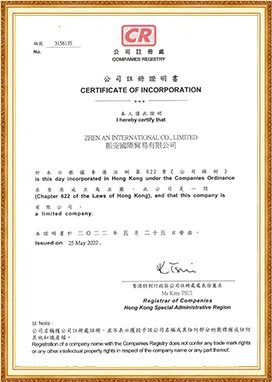
ZhenAn Metallurgy & New Materials Certificates