


Why Do Zinc Coatings on German Bridges Often Show Uneven Adhesion? How Does Thermal Spray Zinc Wire Improve Corrosion Stability?
1. Background: Typical Coating Issues in German Bridge Engineering
In bridge infrastructure projects across Germany and Central Europe, steel structures are continuously exposed to temperature fluctuations, rainfall erosion, and de-icing salt environments. These conditions accelerate steel oxidation and place higher demands on corrosion protection systems.

One of the most frequently observed issues is uneven adhesion or partial delamination of zinc coatings applied by thermal spraying.
2. Technical Root Causes of Uneven Adhesion
2.1 Unstable Substrate Surface Condition
Steel bridge components typically require abrasive blasting to SA 2.5 standard.
If surface roughness is inconsistent, zinc particles may form irregular bonding interfaces during solidification.
2.2 Impact of Zinc Wire Purity and Impurities
Industrial zinc wire containing elevated levels of lead, iron, or oxides can negatively affect molten flow behavior. This results in inconsistent atomization and reduces coating uniformity.
2.3 Wire Feeding Stability Issues
In arc spray and flame spray systems, unstable wire feeding directly affects coating structure.
3. Solution: Material Optimization of Thermal Spray Zinc Wire
3.1 Stable Melting Behavior of High Purity Zinc Wire
Using 99.9%–99.995% high purity zinc wire reduces low-melting-point impurity interference, enabling more stable melting behavior. Stable melting leads to more uniform particle size distribution and improves interfacial adhesion consistency.
3.2 Precision Drawing and Diameter Control
A diameter tolerance controlled within ±0.01mm improves continuous feeding stability. In large-scale bridge coating operations, this parameter directly impacts application efficiency and coating uniformity.
3.3 Surface Quality and Coating Consistency
A smooth and low-oxidation wire surface reduces arc instability during spraying, which is particularly important in long-span bridge construction.
4. Engineering Application: Material Selection Logic in German Bridge Systems
In German bridge corrosion protection systems, zinc wire is commonly applied in steel box girders, bridge towers, and structural support protection systems.
Key selection criteria include compliance with EN ISO 14919, wire feeding stability, coating adhesion consistency, and resistance to marine and industrial pollutants.
5. Conclusion: Material Stability Determines Long-Term Coating Reliability
The uneven adhesion of zinc coatings in German bridge projects is fundamentally the result of material stability, process control, and environmental adaptation. In practical engineering applications, high-purity zinc wire, strict dimensional control, and stable wire feeding performance are key factors in improving coating consistency.
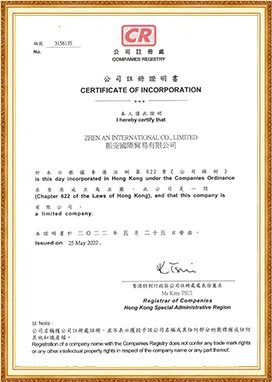
ZhenAn Metallurgy & New Materials Certificates



Why Choose ZhenAn for Thermal Spray Zinc Wire?
ZhenAn Metallurgy provides stable, industrial-grade zinc wire designed for demanding thermal spraying applications in corrosion protection.
Built for Spraying Stability
Consistent melting behavior ensures smooth arc/flame spraying and uniform coating formation.
Production Consistency
Controlled manufacturing process keeps wire diameter and surface quality stable for continuous operation.
Application Compatibility
Suitable for steel structures, bridges, pipelines, and marine anti-corrosion systems.
Flexible Supply Options
Different diameters, spool formats, and packaging solutions available for various spray equipment.
Reliable Quality Control
Each batch is tested for purity, surface condition, and feeding performance before shipment.