


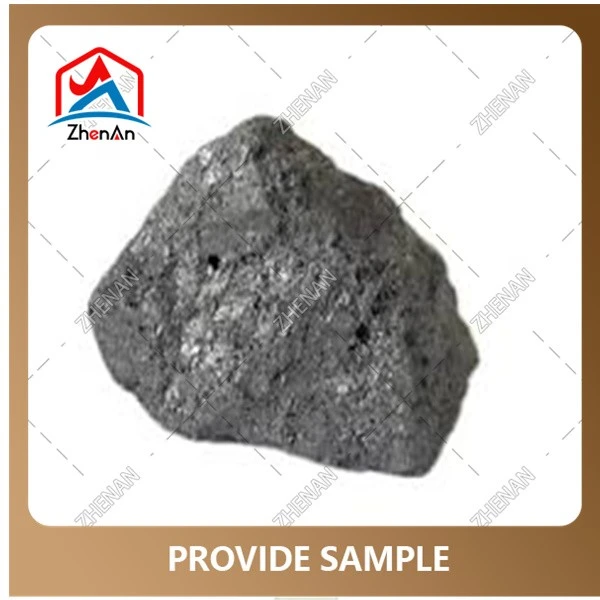
Application of high carbon alloy
Steelmaking:
Acts as a powerful deoxidizer, replacing ferrosilicon in some applications.
Enhances steel fluidity and reduces slag formation.
Cast Iron Production:
Improves graphitization and mechanical properties.
Adjusts carbon content efficiently.
Other Uses:
Raw material for silicon carbide (SiC) synthesis.
Additive in brazing alloys and welding materials.

Advantages of high carbon alloy
Cost-effective compared to traditional deoxidizers.
High efficiency in carbon and silicon supplementation.
Reduces energy consumption in smelting processes.
Production Method
Produced in submerged arc furnaces by smelting quartz (SiO₂) and carbonaceous materials (e.g., petroleum coke, coal).
High-carbon silicon bridges the gap between ferrosilicon and carbon additives, offering a balanced solution for modern metallurgy.

Characteristics of High-Carbon Silicon
High-carbon silicon (SiC alloy) is a composite material with unique physical and chemical properties, making it indispensable in metallurgical applications.
a. Chemical Composition:
Silicon (Si): 55–75% – Provides strong deoxidation and alloying effects.
Carbon (C): 8–20% – Serves as a carburizing agent.
Trace Impurities: Iron (Fe), aluminum (Al), calcium (Ca), etc.
b. Physical Properties:
Appearance: Gray-black lumps or granules with metallic luster.
Melting Point: ~1300–1400°C (varies with composition).
Density: ~2.5–3.0 g/cm³.
High Stability: Resists oxidation during storage and transport.
c. Advantages Over Alternatives:
Cost-Efficiency: Cheaper than ferrosilicon and synthetic graphite.
Dual Functionality: Simultaneously supplies silicon and carbon.
Energy-Saving: Lowers smelting temperatures in steelmaking.
Hot Tags: introduction to high silicon carbon, China introduction to high silicon carbon manufacturers, suppliers, factory, Silicon Powder Ultrafine 150 mesh, Silicon Nano Powder, Silicon Powder 400 mesh, Industrial Silicon Powder 600mesh, In Powdered Form Silicon 98, Ultrafine Silicon Powder 97