What Is the Direct Impact of Ferrovanadium Yield Fluctuation in EAF Steelmaking?
Yes-ferrovanadium yield fluctuation is one of the most critical hidden variables affecting high-strength steel consistency in Indian EAF (Electric Arc Furnace) steelmaking.
In HSLA production, vanadium works at microalloy level, meaning even small recovery deviations can lead to significant performance variation. When FeV yield fluctuates (typically 85% to 96% range depending on slag chemistry and oxygen conditions), it directly affects:
Final vanadium content deviation in steel (±0.01–0.05% V instability)
Yield strength variation across heats (20–70 MPa fluctuation)
Inconsistent grain refinement in HSLA and rebar grades
Uneven precipitation of vanadium carbides (VC)
This leads to batch inconsistency in structural steels such as Fe 500D, Fe 550D, and HSLA plate grades used in infrastructure and automotive supply chains.
What Are the Standard Ferrovanadium Specifications Used in EAF Steelmaking?
| Parameter | Standard FeV Grade | EAF Steel Grade FeV | High-Stability FeV Grade |
|---|---|---|---|
| Vanadium (V) | 75–80% | 78–82% | 80–82% |
| Recovery Efficiency | 85–90% | 88–94% | 94–96% |
| Oxygen (O) | Medium | Low | Ultra-low |
| Aluminum (Al) | ≤2.0% | ≤1.5% | ≤1.0% |
| Silicon (Si) | ≤1.5% | ≤1.0% | ≤0.8% |
| Particle Size | 10–50 mm | 5–30 mm | 3–25 mm |
| Dissolution Rate | Medium | Fast | Controlled fast |
Why Does Ferrovanadium Yield Fluctuation Occur in Indian EAF Processes?
1. Slag Chemistry Instability
EAF slag composition directly affects vanadium absorption efficiency:
High FeO content increases vanadium oxidation loss
Improper basicity reduces recovery rate
Slag foaming instability increases alloy loss
2. Oxygen Blowing Variability
Inconsistent oxygen injection leads to:
Vanadium oxidation before absorption
Lower metallurgical yield
Heat-to-heat inconsistency in alloy efficiency
3. Temperature Fluctuation in Ladle Addition
Vanadium recovery depends strongly on temperature window:
Below optimal temperature → incomplete dissolution
Above optimal range → increased slag loss
4. Impurity-Driven Reaction Loss
Impurities in FeV such as Al, Si, and O cause:
Slag viscosity changes
Inclusion formation
Reduced effective vanadium utilization
5. Particle Size Distribution Variability
Non-uniform FeV sizing results in:
Uneven dissolution timing
Localized concentration variation in molten steel
Mechanical property scatter
How Does Yield Fluctuation Affect High-Strength Steel Quality?
1. Mechanical Property Inconsistency
Yield fluctuation leads to:
Unstable yield strength in HSLA steels
Variation in tensile strength across coils
Non-uniform elongation behavior
2. Grain Refinement Instability
Vanadium controls grain size via VC precipitation:
Lower yield → coarse grain formation
Higher yield → excessive carbide clustering
Result: inconsistent toughness and ductility
3. Rebar Grade Variability (Fe 500D / Fe 550D)
Indian construction steel is highly sensitive:
Strength class deviation risk
Bendability inconsistency
Certification rejection in IS standards
4. Increased Alloy Consumption Cost
Yield fluctuation forces mills to:
Over-add FeV for safety margin
Increase cost per ton steel
Reduce process efficiency
5. Weldability and Fabrication Issues
Unstable vanadium distribution leads to:
Uneven hardness in heat affected zones (HAZ)
Welding crack sensitivity
Fabrication defects in structural components
How Do Different Ferrovanadium Grades Perform in EAF Steelmaking?
Ferrovanadium 80% vs Ferrovanadium 75%
FeV 80% improves vanadium recovery stability in EAF routes
FeV 75% increases fluctuation risk under high oxygen conditions
Indian mills prefer FeV 80% for HSLA consistency
High-Stability FeV vs Standard FeV
High-stability FeV provides tighter yield control (±0.01% V)
Standard FeV leads to batch inconsistency in mechanical properties
High-stability grades reduce rejection rates in structural steel production
FeV vs V-Nb Microalloy System
FeV: cost-efficient, fast dissolution in EAF
V-Nb: superior grain refinement but higher cost
Hybrid systems used for premium HSLA applications
Why Is Yield Stability More Important Than Vanadium Content?
In modern EAF steelmaking, consistency matters more than absolute alloy percentage:
Stable yield = predictable mechanical properties
Unstable yield = structural certification risk
Controlled recovery = optimized cost per ton steel
Indian mills increasingly optimize process stability rather than increasing FeV dosage.
How Are Indian Steelmakers Improving Ferrovanadium Yield Control?
Leading EAF operators implement:
Slag engineering optimization (CaO/SiO₂ ratio control)
Oxygen injection regulation systems
Vacuum degassing for impurity removal
AI-based alloy addition prediction models
Real-time spectrometer feedback loops
These systems improve vanadium recovery from ~85% to 94–96% in optimized plants.
What Are the Key Procurement Questions from EAF Steel Buyers?
1. Why does ferrovanadium yield fluctuate in EAF steelmaking?
Because slag chemistry, oxygen control, and temperature variation directly affect vanadium recovery efficiency.
2. What is the ideal FeV grade for Indian HSLA production?
FeV 78–82% with low oxygen and controlled impurity levels is optimal.
3. Can yield fluctuation be fully eliminated?
No, but it can be minimized through process control and stable alloy sourcing.
4. What particle size is best for EAF FeV addition?
5–30 mm ensures uniform dissolution and stable recovery.
5. Does higher FeV dosage solve yield instability?
No. It increases cost but does not eliminate metallurgical variation.
6. What steel grades are most sensitive to FeV yield fluctuation?
HSLA structural steels and Fe 500D / Fe 550D rebar grades are most affected.
Where to Source Stable Ferrovanadium for EAF Steelmaking?
For Indian EAF steelmakers, controlling ferrovanadium yield stability is essential to ensure consistent HSLA steel performance, cost efficiency, and compliance with structural standards.
We supply stable-grade ferrovanadium designed to minimize yield fluctuation and improve vanadium recovery consistency in EAF steelmaking environments.
📧 Email: market@zanewmetal.com
📱 WhatsApp: +86 15518824805
Third-party inspection available
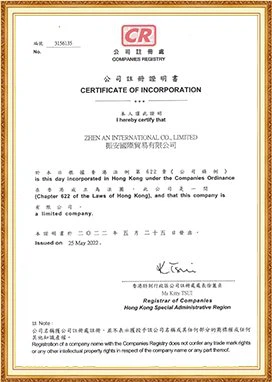
ZhenAn Metallurgy & New Materials Certificates