What Is Driving the Shift Toward Low-Carbon Ferrovanadium in Saudi Infrastructure Steel?
Saudi Arabia's mega infrastructure programs-NEOM, Red Sea Global projects, industrial corridors, and giga-scale energy infrastructure-are pushing steelmakers to adopt low-carbon, high-stability ferrovanadium supply chains.
The core reason is simple but critical:
Carbon stability + vanadium consistency = predictable high-strength steel performance in extreme climate and structural load conditions.
In HSLA and microalloyed steels used for bridges, pipelines, offshore structures, and high-rise frames, unstable ferrovanadium introduces:
Yield strength fluctuation across heat batches
Uncontrolled carbide formation
Reduced weld toughness in high-temperature environments
Carbon equivalent (CE) instability in structural steel certification
As a result, Saudi infrastructure steel producers prioritize low-carbon ferrovanadium with stable chemistry and low batch variance.
What Specifications Are Required for Low-Carbon Ferrovanadium in Infrastructure Projects?
| Parameter | Standard FeV | Infrastructure Grade FeV | Low-Carbon High-Stability FeV |
|---|---|---|---|
| Vanadium (V) | 75–80% | 78–82% | 80–82% |
| Carbon (C) | ≤0.25% | ≤0.15% | ≤0.10% |
| Oxygen (O) | Medium | Low | Ultra-low |
| Silicon (Si) | ≤1.5% | ≤1.0% | ≤0.8% |
| Aluminum (Al) | ≤2.0% | ≤1.5% | ≤1.0% |
| Nitrogen (N) | Not controlled | Controlled | Tight controlled |
| Particle Size | 10–50 mm | 5–30 mm | 3–25 mm |
| Recovery Rate | 85–90% | 90–94% | 94–96% |
Why Is Carbon Stability So Critical for Saudi Infrastructure Steel?
1. Carbon Equivalent Control for Welded Structures
Saudi infrastructure steel is heavily welded (bridges, towers, pipelines). Carbon instability causes:
Higher carbon equivalent (CE) variability
Welding crack sensitivity in heat-affected zones
Reduced fracture toughness in large structural joints
Stable low-carbon FeV ensures predictable CE values across production heats.
2. High-Temperature Performance in Desert Climate
In extreme ambient conditions (45–55°C exposure), unstable FeV increases:
Thermal expansion mismatch in steel components
Microstructural instability under cyclic loading
Long-term creep deformation risk in heavy structures
Low-carbon FeV stabilizes carbide formation and improves thermal resilience.
3. Large Heat Consistency in Mega Steel Mills
Saudi projects rely on ultra-large heat sizes (150–300 tons). Carbon variation leads to:
Heat-to-heat mechanical property deviation
Structural certification rejection risk
Increased reprocessing cost per ton steel
4. Vanadium Carbide Formation Control
Vanadium strengthens steel through VC precipitation. Excess carbon causes:
Oversized carbide clusters
Reduced grain refinement efficiency
Lower impact toughness in structural beams
Low-carbon FeV enables finer, more uniform precipitation.
5. Slag Chemistry Stability in EAF/BOF Routes
Carbon and impurity imbalance affects:
Slag foaming behavior
Vanadium recovery efficiency
Alloy consumption per ton steel
How Do Different Ferrovanadium Grades Perform in Infrastructure Steelmaking?
Low-Carbon FeV vs Standard Ferrovanadium
Low-carbon FeV provides more predictable CE control in structural steel
Standard FeV introduces variability in weldability performance
Infrastructure projects prefer low-carbon grades for certification compliance (ASTM, EN, ISO structural standards)
FeV 80% vs FeV 75% in Mega Projects
FeV 80% improves vanadium recovery consistency in large heats
FeV 75% increases alloy loss in high-temperature refining
Saudi mills prefer FeV 80% for bridge and pipeline steels
Low-Carbon FeV vs V-Nb Microalloy System
FeV: cost-efficient and stable for large-volume production
V-Nb: superior grain refinement in ultra-high strength steel
Hybrid systems used for critical infrastructure load-bearing zones
Why Are Saudi Steel Producers Prioritizing Supply Chain Stability?
Large infrastructure projects require:
Multi-year consistent material supply
Heat-by-heat traceability
Tight mechanical property control
Low rejection rates in structural certification audits
Any instability in ferrovanadium supply leads to:
Delays in construction schedules
Increased QA/QC rejection rates
Cost overruns in mega-project timelines
How Is the Industry Improving Low-Carbon Ferrovanadium Performance?
Leading suppliers and steelmakers implement:
Vacuum degassing (VD/VOD) to reduce carbon variability
Slag engineering optimization for clean metal production
Pre-alloy homogenization before shipment
Digital heat-level alloy tracking systems
Ultra-low oxygen refining processes
These improvements increase vanadium utilization efficiency to 94–96% in controlled operations.
What Are the Key Procurement Concerns from Saudi Steel Buyers?
1. Why is low-carbon ferrovanadium preferred for infrastructure steel?
Because it ensures stable carbon equivalent (CE) and weld reliability in large structural components.
2. What happens if carbon content in FeV fluctuates?
It causes inconsistent carbide formation and reduces structural toughness.
3. Is higher vanadium always better for infrastructure steel?
No. Stability of carbon and impurity control is more important than absolute vanadium content.
4. What particle size is optimal for ladle addition?
3–30 mm ensures fast dissolution and stable alloy distribution.
5. How does FeV quality affect welding in bridges and pipelines?
Poor quality FeV increases HAZ cracking risk and reduces joint reliability.
6. Can mixed FeV batches be used in large infrastructure projects?
Yes, but only with strict metallurgical blending and heat-level control systems.
Where to Source Stable Low-Carbon Ferrovanadium for Infrastructure Projects?
For Saudi Arabia's large-scale infrastructure steel projects, stable low-carbon ferrovanadium supply is essential to ensure structural reliability, welding safety, and long-term performance under extreme environmental conditions.
We supply engineered ferrovanadium grades designed for infrastructure steelmakers requiring stable chemistry, low carbon variation, and high batch-to-batch consistency.
📧 Email: market@zanewmetal.com
📱 WhatsApp: +86 15518824805
Third-party inspection available
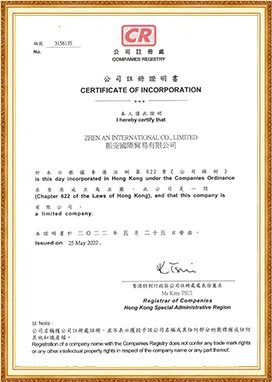
ZhenAn Metallurgy & New Materials Certificates