What Is the Key Link Between FeV Stability and Shipbuilding Steel Microstructure?
Korean shipbuilding steel producers rely heavily on ferrovanadium (FeV) stability as a core control parameter for microstructural uniformity in high-performance marine steels.
In shipbuilding grades such as EH36, DH36, and ultra-low temperature steels used for LNG carriers, even minor FeV composition fluctuations directly affect:
Ferrite–pearlite balance consistency
Vanadium carbide (VC) precipitation uniformity
Grain size distribution across thick plates
Impact toughness at sub-zero temperatures (-20°C to -60°C)
Therefore, stable FeV composition is not just an alloying input-it is a microstructure control tool for structural reliability in marine environments.
What Specifications Are Required for Shipbuilding-Grade Ferrovanadium?
| Parameter | Standard FeV | Marine Steel FeV Grade | High-Stability Shipbuilding FeV |
|---|---|---|---|
| Vanadium (V) | 75–80% | 78–82% | 80–82% |
| Oxygen (O) | Medium | Low | Ultra-low |
| Aluminum (Al) | ≤2.0% | ≤1.5% | ≤1.0% |
| Silicon (Si) | ≤1.5% | ≤1.0% | ≤0.8% |
| Nitrogen (N) | Not controlled | Controlled | Tight controlled |
| Particle Size | 10–50 mm | 5–30 mm | 3–25 mm |
| Recovery Rate | 85–90% | 90–94% | 94–96% |
Why Is Microstructural Control So Critical in Korean Shipbuilding Steel?
1. Grain Refinement for Low-Temperature Toughness
Shipbuilding steels must withstand Arctic and deep-sea conditions:
Stable FeV ensures fine grain ferrite formation
Prevents coarse grain zones in thick plate rolling
Improves Charpy impact energy consistency
Even small FeV instability can reduce toughness by 15–30% in low-temperature testing.
2. Vanadium Carbide (VC) Precipitation Stability
FeV directly controls VC formation:
Stable FeV → uniform carbide dispersion
Unstable FeV → clustered precipitation zones
Result: inconsistent strength across plate thickness
3. Through-Thickness Microstructure Uniformity
In ship hull plates (up to 100–250 mm thickness):
Surface-to-core cooling differences already exist
FeV inconsistency amplifies microstructural gradient
Leads to weak zones in critical structural areas
4. Weld Zone Microstructure Stability
Shipbuilding involves extensive welding:
Stable FeV reduces HAZ (Heat Affected Zone) hardening variation
Improves crack resistance in welded joints
Enhances fatigue life of hull structures
5. Corrosion Resistance Microstructure Balance
In marine environments:
Uniform microstructure reduces localized corrosion initiation
Stable FeV improves passivation layer consistency
Critical for offshore platform steel durability
How Do Korean Steelmakers Use FeV to Control Microstructure?
1. Controlled Vanadium Precipitation Engineering
Korean mills design FeV addition to optimize:
VC nucleation timing during cooling
Fine precipitation distribution
Grain boundary pinning effect
2. Thermo-Mechanical Controlled Processing (TMCP) Integration
Stable FeV supports TMCP by ensuring:
Predictable austenite decomposition
Consistent rolling temperature response
Uniform phase transformation kinetics
3. Heat-by-Heat Alloy Traceability Systems
Advanced mills track:
FeV batch chemistry per heat
Recovery efficiency per ladle
Microstructure correlation mapping
4. Secondary Refining Optimization (LF + RH)
Refining systems are tuned to:
Stabilize oxygen levels before FeV addition
Reduce inclusion interference in VC formation
Improve alloy absorption efficiency
How Do Different Ferrovanadium Grades Affect Shipbuilding Steel?
FeV 80% vs FeV 75%
FeV 80% ensures stable VC precipitation in thick plates
FeV 75% increases microstructural scatter in cooling gradients
Marine steel producers prefer FeV 80% for EH36-class steels
High-Stability FeV vs Standard FeV
High-stability FeV reduces grain size variation across plate width
Standard FeV leads to inconsistent toughness zones
Critical for LNG carrier hull steel certification
FeV vs V-Nb Microalloy System
FeV: cost-effective and strong grain refiner
V-Nb: superior ultra-high strength but more complex control
Korean shipyards often use hybrid systems for critical structural zones
Why Is FeV Consistency More Important Than Alloy Quantity?
In shipbuilding steels, performance depends on:
Microstructure uniformity, not just vanadium percentage
Controlled phase transformation during cooling
Consistent mechanical properties across large plates
Thus, stable FeV composition is more important than increasing alloy dosage.
How Do Korean Producers Minimize Microstructural Variation?
Leading shipbuilding steelmakers implement:
Ultra-low oxygen FeV procurement standards
Tight impurity control (Al, Si, N)
Advanced TMCP rolling schedules
Vacuum degassing (VD/VOD) refining
AI-based microstructure prediction models
These systems reduce microstructural deviation by up to 30–50% in high-end marine steels.
What Are the Key Procurement Questions from Shipbuilding Steel Buyers?
1. Why does FeV stability affect shipbuilding steel microstructure?
Because vanadium controls grain refinement and carbide precipitation during cooling.
2. What is the best FeV grade for EH36 and DH36 steel?
FeV 78–82% with low oxygen and controlled nitrogen is optimal.
3. Can FeV variation affect low-temperature toughness?
Yes, it directly influences grain size and impact energy performance.
4. What particle size is ideal for marine steel FeV?
5–30 mm ensures uniform dissolution in ladle metallurgy.
5. Does higher vanadium improve shipbuilding steel strength?
Not necessarily-uniform distribution is more important than total content.
6. How do shipyards ensure consistent microstructure in thick plates?
Through TMCP control, stable FeV chemistry, and secondary refining systems.
Where to Source Stable Ferrovanadium for Shipbuilding Steel?
For Korean shipbuilding steel producers, stable ferrovanadium is essential to ensure consistent microstructure, low-temperature toughness, and structural reliability in marine environments.
We supply engineered ferrovanadium grades designed for shipbuilding applications requiring stable chemistry, controlled impurity levels, and uniform performance in large-scale plate production.
📧 Email: market@zanewmetal.com
📱 WhatsApp: +86 15518824805
Third-party inspection available
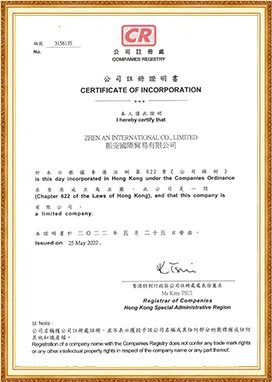
ZhenAn Metallurgy & New Materials Certificates