In global industrial metallurgy, procurement teams often debate whether specific alloy compositions are recognized under official standardized classifications. A frequent point of discussion centers on the chemical composition of FeSi70: Is FeSi70 a recognized industrial grade under mainstream international frameworks like ASTM or GB/T? As global steel mills optimize production costs, understanding the standardization of 70% ferrosilicon helps buyers ensure material compatibility and meet regulatory requirements. As an established global ferroalloy manufacturer, ZhenAn has prepared this compliance guide examining the position of FeSi70 within ASTM, ISO, and GB standards. Whether your operation focuses on high-tonnage electric arc furnace steelmaking or specialized ladle metallurgy, this analysis clarifies the legal and chemical frameworks governing this versatile material.
For official mill test certificates, custom grade developments, or international shipment pricing, please connect with our technical service division:
Email: market@zanewmetal.com
WhatsApp/WeChat: +86 15518824805
Is FeSi70 a Recognized Industrial Grade of Ferrosilicon Under Global Frameworks?
Yes, FeSi70 is a fully recognized commercial and industrial grade of ferrosilicon used extensively across global metallurgical centers. It represents an optimized intermediate formulation containing a nominal 70% silicon content, striking an efficient balance between chemical reduction performance and unit cost. While international trading blocks historically prioritized 75% or 72% variants, modern industrial frameworks officially categorize 70% variants within their lower-silicon sub-tiers to accommodate diverse production requirements.
In practice, FeSi70 is categorized as a bulk ferroalloy intended primarily for heavy-duty steel deoxidation applications. Its chemical stability enables metallurgists to execute precise additions without introducing out-of-spec chemical variations, making it a staple material for both standard structural long-product steel plants and high-volume gray iron foundries.
What Is the Smelting and Processing Technology Used to Meet FeSi70 Standards?
Manufacturing FeSi70 within the strict chemical windows mandated by global standard bodies requires controlled electrothermal processing within a submerged electrical arc furnace:
- Raw Material Blending: Pure silica quartz crystals (SiO₂ > 99.0%) are blended with iron-bearing materials (low-manganese scrap or iron ore) and carbon-based reducing agents like semi-coke or petroleum coke.
- Submerged Arc Reduction: The charge is processed using continuous multi-megawatt electrical currents. At core zone temperatures ranging from 1800°C to 1950°C, carbon bonds with the oxygen in the quartz, producing liquid silicon that dissolves into the iron pool:
SiO₂ + 2C + Fe → FeSi + 2CO↑ - Ladle Metallurgy Refining: The liquid alloy is tapped into a refining ladle. Technicians inject specialized fluxes or oxygen gas to lower tramp elements, creating specialized variations such as low aluminum FeSi or low carbon ferrosilicon.
- Sizing for Process Lines: The refined alloy is poured into casting beds. Once cooled, it is processed into a standard lump ferrosilicon size 10-50mm for bulk furnace charging, a ferrosilicon granule format for automated alloy injection lines, or a fine FeSi powder 100 mesh configuration for chemical applications.

How Are FeSi70 Technical Parameters and Grade Codes Decoded globally?
Different industrial markets use specific nomenclatures to designate the 70% ferrosilicon grade based on its exact chemical profile:
GB/T Designation (FeSi70-A/B): In Asian manufacturing sectors, the code explicitly indicates a silicon baseline of 70%, with "A" or "B" tiers indicating restricted levels of aluminum, phosphorus, and sulfur.
ASTM Equivalent Tiers: While ASTM typically labels grades based on major specification ranges, FeSi70 aligns structurally with the lower composition bands of Grade B, providing an alternative path for meeting strict project specifications.
Low-Al Refining Categories: For advanced steel cleanliness, specialized sub-grades limit aluminum to ≤0.50% or ≤0.10%, enabling the material to function as an effective high purity ferrosilicon alloy.
one-stop solution
professional team
high quality
What Are the Standard Technical Specifications for FeSi70 Across ASTM and GB/T?
The comparative data matrix below displays the chemical composition requirements and allowable variance levels for FeSi70 under mainstream industrial standards, aligned with current 2026 technical frameworks:
| Standard Specification | Si Range (%) | Al Max (%) | P Max (%) | S Max (%) | C Max (%) | Primary Industry Role |
|---|---|---|---|---|---|---|
| GB/T 2272 FeSi70-A | 68.0% – 72.0% | 1.50% | 0.040% | 0.020% | 0.15% | Standard deoxidation and silicon additions for commercial structural steel production. |
| GB/T 2272 FeSi70-B | 68.0% – 72.0% | 2.00% | 0.050% | 0.020% | 0.20% | Cost-optimized alloy additions for basic long steels and general iron casting applications. |
| ASTM A100 Equiv. | 65.0% – 70.0% | 1.50% | 0.040% | 0.040% | 0.15% | North American furnace additions, intermediate steel grade alloying adjustments. |
| ISO 5445 FeSi70Al1.5 | 67.0% – 73.0% | 1.50% | 0.040% | 0.020% | 0.15% | Global import/export specification baseline for consistent, standardized trade parameters. |
How Is FeSi70 Utilized within Chemical and Extraction Processes?
While primarily a metallurgical commodity, FeSi70 plays a significant role as a reducing agent within the chemical and extraction industries. In the Pidgeon process for chemical magnesium production, milled FeSi70 powder is mixed with calcined dolomite ore. Under high-vacuum conditions and extreme thermal profiles, the active silicon reduces magnesium oxide into gaseous vapors, which are then condensed into high-purity magnesium ingots.
Additionally, the magnetic properties and density of FeSi70 make it useful as a heavy media separation (HMS) agent in mineral processing. When crushed into fine particle distributions, the alloy is mixed with water to create stable suspensions used to separate valuable ores from host rock within mineral separation circuits.
What Are the Roles of FeSi70 in Steelmaking and Cast Iron Production?
FeSi70 supports several key metallurgical mechanisms during active furnace processing:
- Electric Arc Furnace Steelmaking: During EAF operations, adding FeSi70 provides rapid deoxidation, removing dissolved oxygen from the melt to prevent blowholes and form stable silicate compounds that float into the slag layer.
- BOF Steelmaking: Used as a basic oxygen furnace deoxidizer, its chemical profile provides predictable silicon additions while helping maintain the thermal balance of the steel bath.
- Ductile Iron Production: Functions as an effective nodular iron inoculant, providing nucleation sites for graphite crystallization during freezing. This prevents brittle iron carbide formations and ensures uniform nodular graphite distributions in the castings.
- Blast Furnace Ironmaking: Used as a blast furnace additive to adjust silicon levels in hot metal, supporting optimal chemistry ahead of subsequent refining steps.
How Do FeSi70 and High-Silicon FeSi75 Compare in Production Environments?
Choosing between FeSi70 and FeSi75 requires evaluating performance requirements alongside cost factors:
- Exothermic Heat Output: FeSi75 introduces more silicon per unit weight, generating greater exothermic heat when dissolved in liquid steel. This supports operations needing to maintain or raise melt temperatures without external heating.
- Economic Sourcing: FeSi70 contains more iron carrier material, making it more economical to produce. For steel plants with reliable ladle heating equipment, using a stable composition FeSi 70 grade lowers overall raw material costs while delivering consistent chemistry.
Ferrosilicon FeSi70 vs Silicon Metal and FeSiZr: Understanding the Differences
Procurement teams should distinguish standard FeSi70 from related products like pure silicon metal and ferrosilicon zirconium (FeSiZr)[cite: 1]:
- Chemical Composition: Pure silicon metal is a non-ferrous product (Si ≥98.5%) used when iron additions must be avoided. FeSi70 is an iron-silicon binary ferroalloy containing 26%–30% iron. Ferrosilicon Zirconium is a specialized inoculant alloy containing 2%–6% zirconium[cite: 1].
- Primary Application: Silicon metal is required for aluminum alloy casting and silicone chemical synthesis. FeSi70 is used for bulk deoxidation in carbon steel production. Ferrosilicon Zirconium functions as a ladle inoculant in gray and ductile iron foundries to refine graphite structures and prevent chilling defects along thin casting sections[cite: 1].
The Strategic Sourcing Guide for Buying Standard-Compliant FeSi70
To ensure high silicon recovery rates, safeguard steel cleanliness, and maintain consistent production, ZhenAn's procurement specialists recommend implementing the following quality controls:
- Implement Core Sampling Protocols: Ensure sampling procedures follow ISO 4552 guidelines. Drawing core samples across the entire shipment helps verify that the inner material matches the surface analysis and identifies any potential alloy segregation.
- Verify Chemistry via XRF or ICP-OES: Mandate chemical analysis using X-ray Fluorescence (XRF) or Inductively Coupled Plasma Optical Emission Spectroscopy (ICP-OES) to check that primary silicon and trace elements fall within contract limits before authorizing final port clearance.
- Match Particle Size to Charging Equipment: Specify exact size distributions, such as 10–50mm lumps for bulk additions or uniform granules for automated injection lines, to minimize material handling losses and oxidation burn-off on the slag surface.
Detailed FAQ: Critical Compliance Insights on FeSi70 Industrial Standards
Q1: Is FeSi70 a recognized industrial grade of ferrosilicon?
A1: Yes, FeSi70 is a fully recognized commercial and industrial grade of ferrosilicon within the global ferroalloy market. It represents a standardized intermediate formulation designed to deliver a nominal 70% silicon concentration. This grade is widely used as a cost-effective deoxidizer and alloying agent in carbon steel manufacturing, structural long-product mills, and general cast iron foundries. Its inclusion in major international standards confirms its status as a reliable commodity for global metallurgical procurement.
Q2: Which international standards define FeSi70 ferrosilicon specifications?
A2: FeSi70 specifications are defined by several major international and regional standards, including ISO 5445 (the International Organization for Standardization framework for ferrosilicon) and Chinese National Standard GB/T 2272. These standards establish clear baselines for the primary silicon content (68.0% to 72.0%) and set strict maximum limits for trace elements such as aluminum, carbon, phosphorus, and sulfur, ensuring consistent material performance across global supply chains.
Q3: Does ASTM include FeSi70 as a standard ferrosilicon grade?
A3: While the primary ASTM A100 standard traditionally categorizes standard ferrosilicon into broader commercial bands (such as 50%, 75%, and 80% silicon tiers), FeSi70 is accommodated under the composition bands of Grade B (typically covering the 65%–70% or 70%–75% ranges). Sourcing managers frequently use ASTM A100 testing guidelines to verify the composition of FeSi70 shipments destined for North American steel plants, ensuring compliance with local quality standards.
Q4: How is FeSi70 classified under Chinese GB/T ferrosilicon standards?
A4: Under the Chinese National Standard GB/T 2272, FeSi70 is classified as an independent industrial grade designated as FeSi70. The standard divides this grade into sub-tiers (such as FeSi70-A and FeSi70-B) based on permitted impurity levels. FeSi70-A specifies a strict aluminum maximum of 1.50%, while FeSi70-B allows up to 2.00% aluminum. This clear classification allows buyers to select the appropriate refinement level for their specific steelmaking requirements.
Q5: What is the difference between FeSi70 and internationally traded FeSi grades?
A5: The primary difference lies in the specific silicon concentration and the resulting iron ratio. FeSi70 contains 68.0%–72.0% silicon and 26.0%–30.0% iron, whereas standard FeSi72 provides 72.0%–75.0% silicon and high-grade FeSi75 delivers 74.0%–80.0% silicon. Because FeSi70 includes a higher iron carrier content, it has a slightly higher bulk density, which helps it penetrate surface furnace slag layers quickly during heavy deoxidation operations.
Q6: Why do some markets use FeSi70 while others prefer FeSi72 or FeSi75?
A6: The preference for specific grades depends on regional cost structures and plant equipment characteristics. Markets with high-capacity ladle furnace heating often select FeSi70 due to its lower raw material unit cost. Conversely, plants with tight processing windows or limited heating capacity may prefer high-grade FeSi75 because its higher silicon concentration generates greater exothermic heat during dissolution, helping maintain optimal melt temperatures.
Q7: What documents are required to confirm FeSi70 grade compliance?
A7: Confirming compliance for an industrial FeSi70 shipment requires three standard documents:
1. Mill Test Certificate (MTC): Issued by the producer, detailing the chemical analysis and size distribution metrics for the specific production lot.
2. Independent Inspection Report: Provided by an independent testing firm (such as SGS or CCIC), confirming unbiased sampling and analysis results.
3. Certificate of Origin and Bill of Lading: Ensuring full compliance with international shipping and supply chain traceability requirements.
Q8: How should buyers verify FeSi70 specifications before purchase?
A8: Buyers should verify specifications through a structured quality assurance process. This involves establishing clear contractual maximum caps for trace elements like aluminum, phosphorus, and sulfur. Before dispatch or unloading, an independent inspection agency should draw core samples according to ISO 4552 guidelines and verify the chemical composition using X-ray Fluorescence (XRF) or Inductively Coupled Plasma (ICP) spectroscopy to ensure the material matches the agreed contract specifications.
Visit https://www.metal-alloy.com/ to learn more about the product. If you would like to learn more about the product price or are interested in purchasing, please email market@zanewmetal.com. We will get back to you as soon as we see your message.
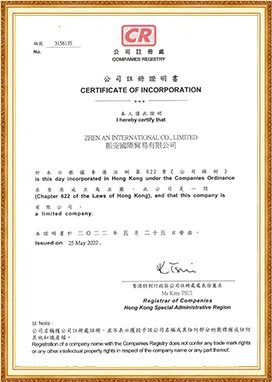
ZhenAn Metallurgy & New Materials Certificates