


Ferroniobium Price on Oct 26, 2026: Ferro Niobium 60-A, 60-B and Brazilian FeNb65 Hold Flat
China's ferroniobium market quoted all three monitored grades unchanged on October 26, 2026. Domestic ferro niobium 60-A held at 32-33 (10k CNY/t), 60-B at 27-28, and the Brazilian-origin FeNb65 reference at 24.7-25, with the change column marked "--" for every grade. For steel mills and alloy traders, a session in which nothing moves is itself information: the reference levels used for microalloying procurement, quotation comparison, and contract review stay exactly where they were.
Current Ferroniobium Price
Table 1. China ferroniobium mainstream prices, October 26, 2026
| Product | Grade | Price (10k CNY/t) | Price (RMB/mt) | Change |
|---|---|---|---|---|
| Ferroniobium | 60-A | 32-33 | 320,000-330,000 | -- |
| Ferroniobium | 60-B | 27-28 | 270,000-280,000 | -- |
| Brazilian Ferroniobium | FeNb65 | 24.7-25 | 247,000-250,000 | -- |
Quotations in 10,000 CNY per metric ton, cash payment, tax-included basis. Data date: October 26, 2026.
Note: Every figure in the table is stated in 10,000 CNY per metric ton; the RMB per metric ton column multiplies the same band out, so 32-33 (10k CNY/t) reads as RMB 320,000-330,000/mt, 27-28 reads as RMB 270,000-280,000/mt, and 24.7-25 reads as RMB 247,000-250,000/mt. The two presentations describe one quotation band each and should not be mixed inside a single comparison. The basis is cash payment with tax included: the quoted figure already carries value-added tax and assumes cash settlement rather than credit terms. That basis does not by itself set delivery terms, packing specification, or freight, which are agreed at quotation stage. A "--" in the change column means no change was reported for this session; it carries no implied direction, and no grade shows a plus or minus figure on this date.
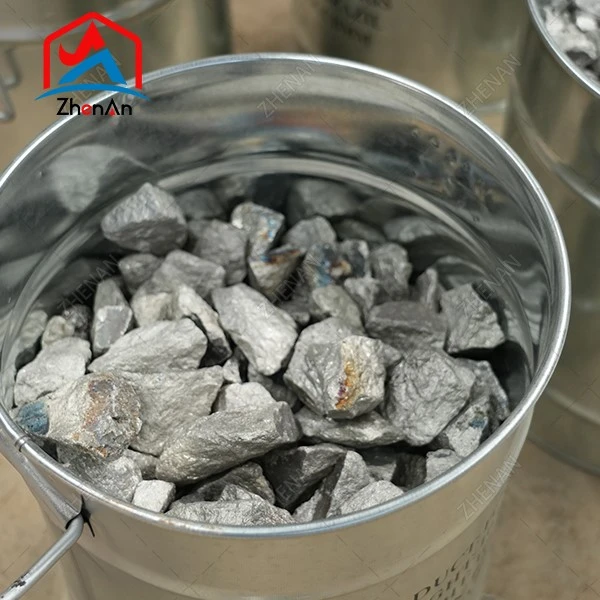
Ferroniobium Price Trend vs Previous
On October 26, 2026, ferroniobium prices show no change from the previous quotation on any grade. All three lines, 60-A, 60-B, and Brazilian FeNb65, carry "--" in the change column, so this is a fully flat session rather than a mixed one. No grade recorded an increase, no grade recorded a decrease, and no grade altered its position relative to the other two.
Because all three bands held together, the differences between grades are also unchanged. 60-A sits 5 (10k CNY/t) above 60-B at both ends of the band, and between 7.3 and 8.0 (10k CNY/t) above Brazilian FeNb65 across the same range. Those figures are arithmetic on today's bands, not a view on where prices move next, and they describe the quotation structure as it stands on this date.
For procurement teams the practical reading is narrow but useful. Offers received this week can be compared line by line against Table 1 without adjusting for a mid-week move, and a supplier quote that sits outside the relevant band is a question worth asking rather than a market signal. Where a tender or a melt-shop schedule needs one number to hold for a short window, the flat session gives a defensible reference for that conversation, with the grade and the price basis stated alongside it.
Grade and Market Context
Ferroniobium, also written ferro niobium and abbreviated FeNb, is the master alloy through which niobium enters steel. Niobium additions are small relative to steel mass, yet they refine grain structure during hot rolling and lift strength, toughness, and weldability in high-strength low-alloy plate, line pipe, automotive grades, and structural sections. That combination, a modest addition rate against a disproportionate metallurgical effect, is why buyers track the alloy band closely even though it is a minor line in a steel cost sheet. Our full ferro niobium products range covers the grades discussed here.
The two domestic grades share a nominal niobium content of about 60 percent and differ in chemistry control. 60-A applies tighter limits on carbon, sulfur, phosphorus, and aluminum, which supports more consistent niobium recovery in the ladle and is specified where inclusion control matters. 60-B accepts a wider chemistry window and serves general structural, rebar, and commercial plate production where the marginal benefit of tighter control does not justify the difference in band.
Brazilian FeNb65 carries a nominal niobium content of about 65 percent and is quoted as a separate reference line, reflecting both its origin and its higher assay. The higher niobium content means less alloy is needed per ton of steel to reach a target addition, so the per-unit discount against domestic grades is not the same thing as a cheaper addition cost. Brazil is a major source country for niobium-bearing ore and for ferroniobium, and material of that origin is traded internationally as a distinct grade with its own quotation line.
The supply side of the Chinese market runs on two channels: domestic smelting of niobium concentrate, and imported FeNb65. Niobium ore supply is geographically concentrated, and a large share of ferroniobium volume moves under annual contracts and framework agreements rather than spot trades, which is why quotation bands in this market tend to step rather than swing. Grade availability, lot size, and lead time differ by channel, and those differences belong in the purchasing decision next to the price.
FeNb60-A vs FeNb60-B vs FeNb65
The three grades are not interchangeable on price alone. The comparison below puts the dimensions that matter to a buyer side by side, with the current bands taken from Table 1.
| Dimension | Ferroniobium 60-A | Ferroniobium 60-B | Brazilian FeNb65 |
|---|---|---|---|
| Niobium content (nominal) | About 60% Nb | About 60% Nb | About 65% Nb |
| Grade positioning | Premium domestic grade, tighter chemistry control | Standard domestic grade, wider chemistry window | Imported reference grade, higher niobium assay |
| Price band, Oct 26, 2026 (10k CNY/t) | 32-33 | 27-28 | 24.7-25 |
| Price band, Oct 26, 2026 (RMB/mt) | 320,000-330,000 | 270,000-280,000 | 247,000-250,000 |
| Typical applications | HSLA plate, line pipe, automotive steel | General structural steel, rebar, commercial plate | High-grade steel where the higher assay reduces addition volume |
| Supply basis | Domestic smelting channel, shorter lead time | Domestic smelting channel, shorter lead time | Import channel, longer lead time and lot planning |
Read the table by column, not by headline price. 60-A carries the highest band of the three and earns it through chemistry control, not through niobium content, which is nominally the same as 60-B. The 5 (10k CNY/t) step between 60-A and 60-B at both ends of the band is therefore a control premium, and a mill that does not need the tighter window is paying for something its steel grades will not use.
FeNb65 needs a second adjustment. On a per-ton-of-alloy basis it is the lowest band on the page, but at about 65 percent niobium against about 60 percent for the domestic grades, fewer kilograms are consumed for the same target addition. Whether the imported grade is cheaper in practice depends on delivered cost, recovery in the specific furnace, and lot planning, which is why the grade is quoted separately rather than folded into one domestic line.
Selection guidance follows from that. Where the steel specification or the end customer names 60-A, the control premium is not optional. Where a standard chemistry window is allowed, 60-B is the lower-cost domestic route with a shorter lead time. FeNb65 enters the picture when the specification accepts the higher assay and when import lead time fits the production calendar, and it should be evaluated on contained niobium and delivered cost rather than on the quoted band alone.
What Buyers Should Check Before Ordering Ferroniobium
Six checks cover most of the risk in a ferroniobium purchase, and each of them is cheaper to settle before the order than after arrival.
1. Grade authorisation. Confirm in writing whether your product standard or the end customer's requirement names 60-A, allows 60-B, or accepts the higher-assay FeNb65. Substituting one grade for another without sign-off is the most common route to an off-specification lot.
2. Niobium content and certificate of analysis. Fix the required niobium content and require a certificate of analysis for the actual lot, not for a typical specification. The certificate should travel with the shipment documents.
3. Impurity limits. State limits for carbon, sulfur, phosphorus, and aluminum at inquiry. These are where 60-A and 60-B diverge, and where an unspecified tolerance becomes a dispute.
4. Lump size and packing. Ferroniobium is normally supplied in lump form for furnace charging. If your feeding system needs a narrower size range, or if fines must be screened out, say so at inquiry rather than at shipment.
5. Quantity, delivery term, and lead time. Confirm volume, delivery term, and lead time together. Domestic grades and imported material differ in lot planning, so a quantity that is easy on one channel may be slow on the other.
6. Price basis. Confirm that the offer is on the same basis as Table 1: 10,000 CNY per metric ton, cash payment, tax included, or an equivalent export basis with tax treatment stated explicitly. Delivery terms, packing, and freight should be written out separately so that two offers can be compared without conversion guesswork.
Buyers who also source niobium in wrought form can review our niobium sheet and plate stock page for mill products, or look at our niobium target offering where sputtering-grade material is required. Both are niobium products with their own specification logic, distinct from ferroniobium used for steel alloying.
FAQ
1. Which ferroniobium grade should a buyer choose, 60-A, 60-B, or FeNb65?
Grade choice follows the steel specification, not the price list. Where the product standard or the end customer's requirement names 60-A, that grade is the only compliant option, because its tighter chemistry control is part of what was specified. Where a standard chemistry window is acceptable, 60-B is the lower-cost domestic route with a shorter lead time. Brazilian FeNb65 is the reference for buyers whose specification accepts a higher niobium assay, and it should be assessed per contained niobium and delivered cost rather than on the quoted band alone. A metallurgical review before switching grades is the cheapest insurance in this decision.
2. What is the difference between ferroniobium 60-A and 60-B?
Both are domestic grades with a nominal niobium content of about 60 percent, so the difference is chemistry control rather than niobium content. 60-A applies tighter limits on carbon, sulfur, phosphorus, and aluminum, which supports more consistent niobium recovery and is specified for HSLA plate, line pipe, and automotive steel. 60-B accepts a wider chemistry window and serves general structural steel, rebar, and commercial plate, where the marginal benefit of tighter control does not justify the difference in band. That control difference is what separates the two quotation bands in Table 1, and it is the reason a switch between them requires metallurgical sign-off rather than a purchasing decision alone.
3. Are ferroniobium prices tax-included, and how is settlement handled?
The three bands published on October 26, 2026 are cash payment, tax-included quotations: 60-A at 32-33 (10k CNY/t), 60-B at 27-28, and Brazilian FeNb65 at 24.7-25, equivalent to RMB 320,000-330,000, RMB 270,000-280,000, and RMB 247,000-250,000 per metric ton. Tax-included means the figure already carries value-added tax, and cash means settlement without credit terms. Delivery terms, packing, and freight sit outside that basis and are fixed at quotation, so competing offers should be compared on an identical basis, with the tax treatment and settlement terms written into the contract rather than assumed.
4. What should I confirm before placing a ferroniobium order?
Confirm six items in writing: the grade authorised by your steel specification, the required niobium content together with the certificate of analysis for the lot, impurity limits for carbon, sulfur, phosphorus, and aluminum, lump size and packing, quantity with delivery term and lead time, and the price basis including tax treatment and settlement terms. Confirming all six before the order removes most of the disputes that otherwise surface after shipment, and it gives both sides one document to point at if a lot is questioned on arrival.
Key Takeaways
- Ferroniobium prices on October 26, 2026 are unchanged across all three monitored grades, with "--" in the change column for 60-A, 60-B, and Brazilian FeNb65.
- 60-A is quoted at 32-33 (10k CNY/t), or RMB 320,000-330,000 per metric ton, on a cash payment, tax-included basis.
- 60-B is quoted at 27-28 (10k CNY/t), or RMB 270,000-280,000 per metric ton, on the same basis.
- Brazilian FeNb65 is quoted at 24.7-25 (10k CNY/t), or RMB 247,000-250,000 per metric ton, on the same basis.
- The 60-A band sits 5 (10k CNY/t) above 60-B at both ends, which is a chemistry-control premium rather than a niobium-content difference.
- FeNb65 carries a higher niobium assay, so its lower band should be assessed per contained niobium and delivered cost, not per ton of alloy.
Get Your Tailored Quotation
Share your target grade, required niobium content, monthly volume, and destination port, and we will prepare a quotation against the October 26, 2026 levels in Table 1. We supply domestic 60-A and 60-B together with Brazilian FeNb65, with certificate of analysis and export packing.
Related Reading
- Ferroniobium Prices Hold Steady Across Domestic And Brazilian Grades On Oct 9, 2026
- China Ferroniobium Price Update On August 25, 2026: Market Prices Remain Stable
- What Is The Current Ferroniobium Price In China And How Should Steel Buyers Interpret It?
- Why Choose Ferroniobium Over Alternatives? Ferro Niobium Suppliers