


Ferrovanadium Price Report, Oct 26, 2026: FeV50 and FeV80 Trading Levels
Ferrovanadium trading held steady in the Oct 26, 2026 assessment, with mainstream transaction ranges for both grades unchanged from the previous reading. Quotations were trimmed on both grades, while large-plant FeV50 held on both transaction and quotation levels. The table below records the published ranges as they stand, on the payment basis stated for each line.
Current Ferrovanadium Price
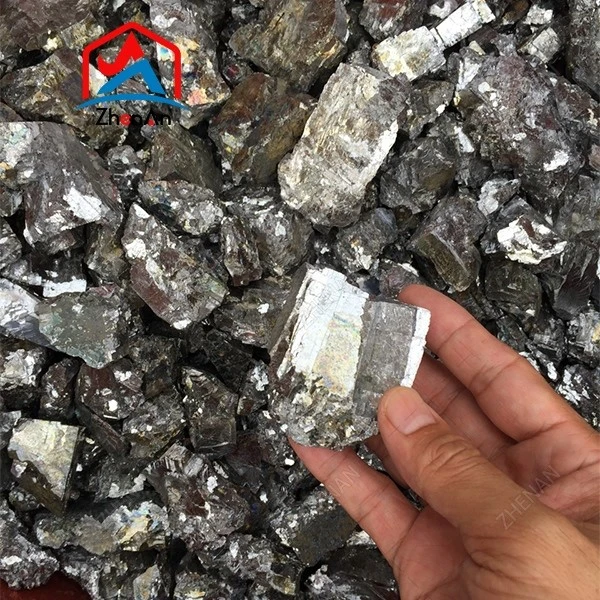
Table 1. Ferrovanadium mainstream prices, Oct 26, 2026 (RMB 10,000/mt, tax inclusive)
Scope: mainstream transaction and mainstream quotation ranges for FeV50, FeV80 and large-plant FeV50, as published for Oct 26, 2026.
| Grade | Market segment | Mainstream transaction | Mainstream quotation | Change | Payment basis |
|---|---|---|---|---|---|
| Ferrovanadium FeV50 | Mainstream | 8 - 8.1 | 8.1 - 8.2 | Quotation down 0.1; transaction unchanged | Acceptance bill, tax inclusive |
| Ferrovanadium FeV80 | Mainstream | 12.8 - 12.96 | 12.96 - 13.12 | Quotation down 0.16; transaction unchanged | Acceptance bill, tax inclusive |
| Ferrovanadium FeV50, large plant | Large plant | 8.4 - 8.5 | 8.4 - 8.6 | Unchanged | Cash, tax inclusive |
Note on units and payment basis. The table is quoted in RMB 10,000 per tonne, the unit used in the source assessment. Restated in RMB per metric tonne, the FeV50 mainstream transaction range reads RMB 80,000 to 81,000 per tonne and its quotation range reads RMB 81,000 to 82,000 per tonne. The FeV80 mainstream transaction range reads RMB 128,000 to 129,600 per tonne and its quotation range reads RMB 129,600 to 131,200 per tonne. Large-plant FeV50 reads RMB 84,000 to 85,000 per tonne for transactions and RMB 84,000 to 86,000 per tonne for quotations. In the same unit, a movement of 0.1 equals RMB 1,000 per tonne and a movement of 0.16 equals RMB 1,600 per tonne.
What the payment basis means. An acceptance-bill price is settled with a bank acceptance draft, and the quoted level already carries the financing cost of that draft; a cash price is settled on payment and carries no draft cost. Both are quoted tax inclusive. Because the two routes are not interchangeable, a range published on one basis should not be ranked against a range published on the other without normalising for settlement cost. In this issue the two mainstream grades are published on an acceptance basis and the large-plant line on a cash basis.
Ferrovanadium Price Trend vs Previous
Only two movements are recorded for this date, and both sit on the quotation side. The FeV50 mainstream quotation eased by 0.1, taking the published range to 8.1 to 8.2. The FeV80 mainstream quotation eased by 0.16, taking its published range to 12.96 to 13.12. On the transaction side nothing moved: FeV50 held at 8 to 8.1 and FeV80 held at 12.8 to 12.96. The large-plant FeV50 line was unchanged on both sides, at 8.4 to 8.5 for transactions and 8.4 to 8.6 for quotations.
Read plainly, the record shows offers being trimmed while concluded business stayed where it was, and the large-plant tier standing still on both sides. That is a description of the published figures for this date and nothing more; no earlier or later assessment is used here, and no forward direction is inferred from a single reading.
Grade and Market Context
Vanadium enters steel as a micro-alloying addition, raising strength and toughness through the precipitation of vanadium carbonitrides during hot working and heat treatment. The standard carrier for that addition is ferrovanadium, an iron-vanadium master alloy sold by vanadium content rather than by alloy weight, which is why buyers compare offers on a per-unit-of-vanadium basis rather than on price per tonne alone.
FeV50 sits at roughly half vanadium and half iron carrier, and it is the workhorse grade for carbon and low-alloy steelmaking: structural sections, rebar, forging stock, spring and tool steels, and general high-strength low-alloy work. It is bought in normal tonnage, it dissolves readily in the ladle, and it suits operations whose residual and impurity limits leave room for the extra carrier mass.
FeV80 carries roughly four fifths vanadium. The attraction is not a different metal, it is a smaller charge: for the same vanadium units a buyer adds far less iron, carbon and silicon, which matters in high-alloy and specialty melting, in welding consumables, and where a heat is small enough that carrier mass distorts the analysis. That second grade is normally bought in smaller lots against a tighter specification.
Two structural features shape how these prices should be read. The first is the split between mainstream and large-plant supply: the two lines are published separately and carry different settlement bases, so they have to be read as separate series rather than as one market level. The second is settlement: acceptance-bill and cash terms are both standard in this market, and the two are quoted separately rather than netted into one number.
FeV50 vs FeV80: Comparison
| Dimension | Ferrovanadium FeV50 | Ferrovanadium FeV80 |
|---|---|---|
| Vanadium content | Nominal 50 percent vanadium, balance iron carrier; exact limits per purchase specification | Nominal 80 percent vanadium, balance iron carrier; exact limits per purchase specification |
| Carbon and impurity load | Higher carbon, silicon and carrier mass delivered per unit of vanadium | Lower impurity and carrier load per unit of vanadium, which is the main reason buyers pay for it |
| Typical steel applications | Structural and rebar steel, forging stock, spring and tool steel, general high-strength low-alloy grades | High-alloy and specialty steels, welding consumables, superalloy and titanium-alloy feed, small heats with tight residual limits |
| Oct 26, 2026 quotation range | 8.1 to 8.2 (RMB 10,000/mt), i.e. RMB 81,000 to 82,000 per tonne | 12.96 to 13.12 (RMB 10,000/mt), i.e. RMB 129,600 to 131,200 per tonne |
| Oct 26, 2026 transaction range | 8 to 8.1 (RMB 10,000/mt), i.e. RMB 80,000 to 81,000 per tonne | 12.8 to 12.96 (RMB 10,000/mt), i.e. RMB 128,000 to 129,600 per tonne |
| Settlement basis published this issue | Acceptance bill, tax inclusive | Acceptance bill, tax inclusive |
| Ratio to FeV50 on the same quote side | Baseline, taken as 1.00 | 1.60 times the FeV50 level at both ends of the quotation range |
| Buying pattern | Regular tonnage against an annual or quarterly frame | Smaller, specification-driven lots, often with assay agreed per batch |
The ratio row is the most useful line for a buyer, and it is pure arithmetic on the figures above. Dividing the FeV80 quotation by the FeV50 quotation gives 12.96 / 8.1, and 13.12 / 8.2, and both come to 1.6; the transaction ranges divide the same way, 12.8 / 8.0 and 12.96 / 8.1, again 1.6. So the two grades trade at a fixed 1.6 to 1 across the published ranges, which is exactly the ratio of nominal vanadium content, 80 divided by 50. That is worth knowing because it means the quoted premium between the grades is arithmetic rather than a judgement about scarcity, and because a per-tonne comparison of the two grades tells you almost nothing until it is converted to a per-unit-of-vanadium basis. Because the ratio holds at both ends of both ranges on this date, a buyer can value an FeV80 offer against an FeV50 offer simply by applying 1.6; a deviation from that figure is the part of the offer that needs explaining. Product pages for ferro vanadium 50 and FeV80 set out the two specifications side by side.
What Buyers Should Check Before Ordering Ferrovanadium
- Grade and full specification. Agree the vanadium content basis, the carbon and silicon limits, sizing or lump size, and packing, because a grade name on its own leaves all four open.
- Price basis in writing. State whether the figure is a transaction or a quotation level, acceptance bill or cash, and tax inclusive, then keep the same basis through the negotiation.
- Assay and documentation. Ask for a certificate of analysis per lot, ask how the sample was taken, and consider an independent check on a high-value lot rather than relying on a single in-house result.
- Normalised comparison. Convert every offer to a per-kilogramme of vanadium figure with your own recovery assumption before ranking suppliers, as described on the ferrovanadium overview page.
- Lot consistency across deliveries. If the heat matters, ask whether the full quantity comes from one lot and how a split shipment would be documented.
- Delivery and contract mechanics. Fix the delivery window, quantity tolerance, inspection rights and the documents that travel with the shipment, and confirm the delivery basis before the price is locked.
FAQ
Should I buy ferro vanadium 50 or FeV80?
Start from the specification of the steel or alloy you are feeding. Ferro vanadium 50 is the general-purpose grade: it suits most carbon and low-alloy steelmaking where the residual limits are moderate and the addition is made in normal tonnage. FeV80 carries roughly 80 percent vanadium, so it delivers the same vanadium units with a smaller charge mass and a lower load of carbon, silicon and other carrier elements; it is the usual choice where tighter impurity limits, smaller additions, or high-alloy and specialty melting make carrier mass a real constraint. If your limits are moderate and cost per tonne of metal is the main driver, FeV50 is normally enough; if you are fighting residual limits or melting small heats, price both grades on a contained-vanadium basis before deciding.
How do acceptance-bill and cash prices differ for ferrovanadium?
They are two settlement routes, not two quality levels. An acceptance-bill price is settled with a bank acceptance draft, so the seller carries the discounting cost and the quoted level already reflects that; a cash price is settled on payment, so it carries no draft cost. Both are normally quoted tax inclusive. The practical rule for buyers is to compare like with like: a range published on an acceptance basis is not directly comparable with a range published on a cash basis, because the gap between them is a financing cost rather than a metal premium. In this issue, mainstream FeV50 and FeV80 are published on an acceptance basis, while large-plant FeV50 is published on a cash basis, so the three lines have to be normalised before they can be ranked on cost.
Why is large-plant FeV50 quoted above mainstream FeV50 on Oct 26, 2026?
As published for Oct 26, 2026, the large-plant FeV50 quotation stands at 8.4 to 8.6 against a mainstream FeV50 quotation of 8.1 to 8.2, and the transaction lines sit at 8.4 to 8.5 against 8 to 8.1. The two lines are not a like-for-like comparison, because large-plant FeV50 in this table is quoted cash and tax inclusive while mainstream FeV50 is quoted on an acceptance basis and tax inclusive. The published difference therefore cannot be read straight off as a quality premium. Confirm the specification, the payment terms, the delivery basis and the assay behind each offer, then normalise both to the same settlement basis before ranking them.
What should be confirmed before placing a ferrovanadium order?
Four items carry most of the commercial risk. First, the grade and full specification: vanadium content basis, carbon and silicon limits, sizing, and packing. Second, the price basis: whether the figure is a transaction or a quotation level, acceptance or cash, and tax inclusive. Third, the assay and documentation: certificate of analysis per lot, the sampling method behind it, and whether a third-party check is warranted on a high-value lot. Fourth, contract mechanics: delivery window, quantity tolerance, inspection rights, and the documents that must travel with each shipment. Getting these four in writing before the order removes most of the room for dispute later.
Key Takeaways
- Mainstream FeV50 held at 8 to 8.1 for transactions on Oct 26, 2026, with its quotation trimmed by 0.1 to 8.1 to 8.2.
- Mainstream FeV80 held at 12.8 to 12.96 for transactions, with its quotation trimmed by 0.16 to 12.96 to 13.12.
- Large-plant FeV50 was unchanged on both sides at 8.4 to 8.5 for transactions and 8.4 to 8.6 for quotations, on a cash basis.
- Only the two quotation lines moved in this issue; transactions and the large-plant tier were flat.
- The two mainstream grades are quoted on an acceptance basis and the large-plant line on a cash basis, so the three lines are not directly comparable without normalisation.
Get Your Tailored Quotation
Send the grade, quantity, packing and delivery basis you need, and we will come back with a quotation built around your specification rather than a generic list price. Reach us on WhatsApp: +86 15518824805 or by Email: market@zanewmetal.com.