


Introduction: Welcome to the definitive industrial guide on the common grades of silicon metal powder, curated by ZhenAn-a leading global manufacturer specializing in high purity Si powder engineering. This technical reference manual details the distinct chemical structures, metallurgical properties, and raw material grading matrices of granular silicon materials. From highly refined Jet Milled Silicon Powder variants used in chemical synthesis to 98% Silicon Powder destined for primary aluminum smelting plants, our overview provides data-centric insights optimized for modern procurement teams. For custom particle size distributions, bulk volume discounts, or instant quotes, connect with our commercial desk at Email: market@zanewmetal.com or WhatsApp/WeChat: +86 15518824805.
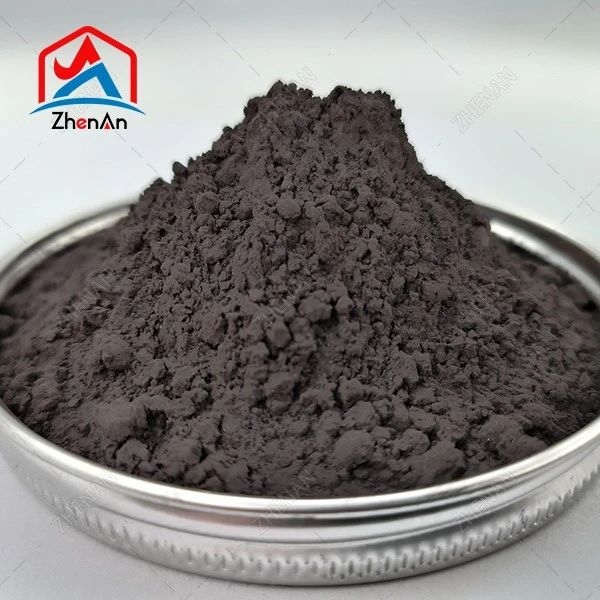
What is Silicon Metal Powder and How are Its Underlying Material Formations Characterized?
Silicon metal powder is a highly reactive, finely reduced form of elemental industrial silicon manufactured through precise mechanical pulverization of metallurgical silicon blocks. Unlike basic coarse aggregates, micronized silicon powder possesses an expanded structural surface area that optimizes thermodynamic reaction kinetics. This fine powder format is crucial for manufacturing premium polysilicon semiconductors, synthetic engineering silicone polymers, and heavy refractory composites that depend on tight gas-solid chemical bonding interactions.
How do Refineries Mill Industrial Blocks into Controlled Particle Size Si Powder Systems?
The manufacturing infrastructure at ZhenAn transforms high-grade crystalline silicon blocks into a highly consistent, uniform particle silicon powder through a strictly monitored multi-stage processing routine:
- Feedstock Assorting: Silicon blocks are physically batched and verified via analytical spectrometers to establish baseline elemental compliance.
- Mechanical Pulverization: Advanced high-speed impact mills break down the primary crystalline blocks into intermediate coarse sand.
- Protective Milling: The fine grinding loop utilizes gas-swept jet mills or continuous vibratory ball mills running under a strict nitrogen gas blanket to suppress spontaneous oxidation and eliminate dust explosion risks, producing high-quality jet milled silicon metal powder.
- Laser Classification: High-efficiency air classifiers separate the particle streams to produce exact grain structures, typically yielding standard 200 Mesh Silicon Powder or finer 325 Mesh Silicon Powder depending on customer requirements.
What are the Common Grades of Silicon Metal Powder Governed by Chemistry Benchmarks?
Commercial silicon powder is indexed globally via a standardized three-digit or four-digit numbering system representing the maximum allowable weight percentages of its primary impurity trace elements: Iron (Fe), Aluminum (Al), and Calcium (Ca). The table below documents the foundational chemical parameters utilized across modern international engineering workflows:
| Powder Grade | Silicon (Si) Minimum | Iron (Fe) Maximum | Aluminum (Al) Maximum | Calcium (Ca) Maximum |
|---|---|---|---|---|
| Grade 1101 (Ultra-Pure) | 99.79% | 0.10% | 0.10% | 0.01% |
| Grade 2202 (High Purity) | 99.58% | 0.20% | 0.20% | 0.02% |
| Grade 3303 (Premium Chemical) | 99.37% | 0.30% | 0.30% | 0.03% |
| Grade 421 (Standard Silicone) | 99.18% | 0.40% | 0.20% | 0.10% |
| Grade 441 (Chemical Base) | 99.10% | 0.40% | 0.40% | 0.10% |
| Grade 553 (Metallurgical Grade) | 98.50% | 0.50% | 0.50% | 0.30% |
What Specific Technical Parameters Govern Micron Silicon Powder Behavior Under Thermal Loads?
To secure uniform operational output, engineers look beyond raw chemistry sheets to evaluate several foundational physical and particle size selection constraints:
- Sizing Nomenclature (Mesh Values): Typically spans from silicon metal powder 200 mesh (particles < 75μm) down to ultra-fine silicon powder 325 mesh (particles < 45μm) depending on chemical injection fluidization constraints.
- Melting Matrix Point: Holds stable at approximately 1414°C, which facilitates high-temperature stability within composite refractory linings.
- Angle of Repose & Flowability: Measures powder friction characteristics. Low Al silicon powder lots must retain optimal dry flow properties to prevent hopper bridging or feeding blockages during automated pneumatically driven injection cycles.
Why is Low Iron Silicon Powder Indispensable for Silicone Materials and Chemical Syntheses?
Within the organic chemical sector, deploying low Fe silicon powder matrices is critical to preventing catalyst degradation during the Rochow direct synthesis method. Chemical fluid-bed reactors combine high purity Si powder with methyl chloride gas to synthesize chlorosilane monomers-the direct precursors for building engineering silicone fluids, advanced sealants, and rubbers. Maintaining strict control over trace metallic elements ensures optimal chemical reactivity, maximizes monomer selectivity, and prevents hazardous secondary chemical deposits from building up inside the reactor channels.
Which Silicon Metal Powder Grade is Optimal for the Advanced Aluminum Industry?
Foundries specializing in casting high-integrity automotive and aerospace aluminum alloys use metallurgical grade silicon powder to improve molten fluid flow and mechanical hardness. Adding 98% Silicon Powder to aluminum-silicon (Al-Si) melts lowers the liquidus temperature, limits structural cooling cracks, and boosts final tensile performance. This structural improvement makes it vital for manufacturing lightweight components like high-stress engine blocks, transmission housings, and complex structural casings.
How Do Production Properties Compare in a Grade 553 VS Grade 441 Silicon Powder Assessment?
When selecting raw materials, engineering teams balance material costs against process stability by utilizing clear performance evaluations such as Grade 553 VS Grade 441 or Grade 3303 VS Grade 2202:
- Grade 553 VS Grade 441: Grade 441 features strict trace limits, restricting iron and aluminum levels to a maximum of 0.40% each to support specialized chemical synthesis loops. Grade 553 allows for slightly higher impurity limits (0.50% Fe and Al, with calcium up to 0.30%), making it a highly economical choice for bulk aluminum casting and structural steel refining.
- Grade 3303 VS Grade 2202: Grade 2202 delivers a highly refined silicon structure with calcium restricted to 0.02%, positioning it as a premium option for advanced chemical compounds and electronic alloys. Grade 3303 acts as a middle-tier alternative, providing strong silicon recovery for high-end automotive aluminum alloys at a reduced cost.
How Does Elemental Silicon Powder Differ in a Silicon Metal Powder VS Ferrosilicon Powder Evaluation?
To pick the right material for specific processing setups, operators compare structural alternatives using comparative guidelines like Silicon Metal Powder VS Ferrosilicon Powder or Silicon Metal Powder VS Fused Silica Powder:
- Silicon Metal Powder VS Ferrosilicon Powder: Silicon metal powder delivers concentrated elemental silicon (typically 98.5% to 99.9% Si) with minimal iron content, which is required for aluminum alloying and chemical synthesis. Ferrosilicon powder contains a large iron fraction (25% to 35% Fe), making it suitable for heavy media separation and standard steel deoxidation.
- Silicon Metal Powder VS Fused Silica Powder: Silicon metal powder consists of elemental silicon (Si), which acts as a powerful reducing agent and alloy modifier. Fused silica powder is an amorphous silicon dioxide compound (SiO2) used primarily for thermal insulation, investment casting shells, and electronic encapsulation ceramics.
What Procurement Benchmarks Guard Against Inconsistent Particle Size Distributions?
To avoid manufacturing delays caused by excessive dust loss or uneven chemical reactions, purchasing managers should audit potential manufacturing partners against these core validation metrics:
- Granular Validation Documentation: Ensure the manufacturer provides verified laser diffraction test data (such as Malvern analyzer reports) to confirm complete D10, D50, and D90 particle distribution curves for every shipment.
- Moisture Management: Confirm that the factory uses multi-layer, hermetically sealed polymer packaging with integrated inner liners to prevent oxidation and moisture absorption during transport.
- Trace Element Control: Verify that the supplier uses advanced ICP-OES testing to confirm that trace elements remain within agreed specification boundaries.
Frequently Asked Questions Regarding Silicon Metal Powder Grades and Applications
Q1: What are the common grades of silicon metal powder used in industrial applications?
A1: The most common industrial grades include 553, 441, 421, 3303, 2202, and 1101. These numbers indicate the specific concentrations of the three main trace elements: iron, aluminum, and calcium. Lower numbers indicate higher purity levels and lower trace elements within the powder matrix.
Q2: How are silicon metal powder grades classified by silicon content and impurity levels?
A2: Classification follows a standardized system based on maximum trace impurity percentages. For example, Grade 553 allows up to 0.5% iron, 0.5% aluminum, and 0.3% calcium. Grade 441 reduces these limits to 0.4% iron, 0.4% aluminum, and 0.1% calcium, which automatically raises the total minimum silicon content.
Q3: What is the difference between 553, 441, 421, 3303, 2202, and 1101 silicon metal powder grades?
A3: The difference lies in chemical purity and target applications. Grades 553 and 441 are standard grades used in metallurgy and basic chemistry. Grade 421 reduces aluminum levels further for specialized applications, while Grades 3303 and 2202 are premium high-purity options with calcium restricted below 0.03%. Grade 1101 represents an ultra-pure material engineered for advanced electronics and electronic chemicals.
Q4: Which silicon metal powder grade is suitable for silicone and chemical production?
A4: Chemical synthesis lines generally require Grade 441, 421, or 3303 silicon powder. These chemical processes require low Al silicon powder and low Fe silicon powder configurations to prevent catalyst poisoning, optimize reaction yields, and ensure steady gas-fluidization inside reactor beds.
Q5: Which silicon metal powder grades are commonly used in aluminum alloy manufacturing?
A5: Grade 553 and standard Grade 441 are the primary choices for aluminum alloy manufacturing. These grades provide an economical way to introduce active silicon into aluminum melts, helping to improve fluid flow properties and structural strength without requiring expensive extra refining stages.
Q6: How do impurity levels such as Fe, Al, and Ca differ among silicon metal powder grades?
A6: Impurity thresholds drop significantly as you move from metallurgical grades to high-purity chemical grades. Grade 553 contains up to 1.3% combined trace impurities, whereas premium Grade 2202 limits total combined impurities to 0.42%. Ultra-pure Grade 1101 keeps total trace impurities under 0.21%, providing highly predictable reaction behavior.
Q7: How does particle size selection vary for different silicon metal powder applications?
A7: Size selection depends directly on the user's processing method. Chemical factories running fluid bed reactors typically choose silicon metal powder 200 mesh to maximize gas contact while preventing material loss. Refractory manufacturers and advanced alloy producers often select ultra-fine silicon powder 325 mesh or specialized micronized silicon powder to ensure rapid dissolution and uniform blending.
Q8: How should buyers choose the right silicon metal powder grade for their industry?
A8: Buyers should evaluate their final product purity requirements, target particle size distributions, process tolerances for trace impurities, and budget parameters. For standard aluminum casting, Grade 553 offers excellent cost efficiency. For high-precision silicone synthesis or advanced electronics, selecting high purity Si powder grades like 3303, 2202, or 1101 is required to ensure reliable process performance.