


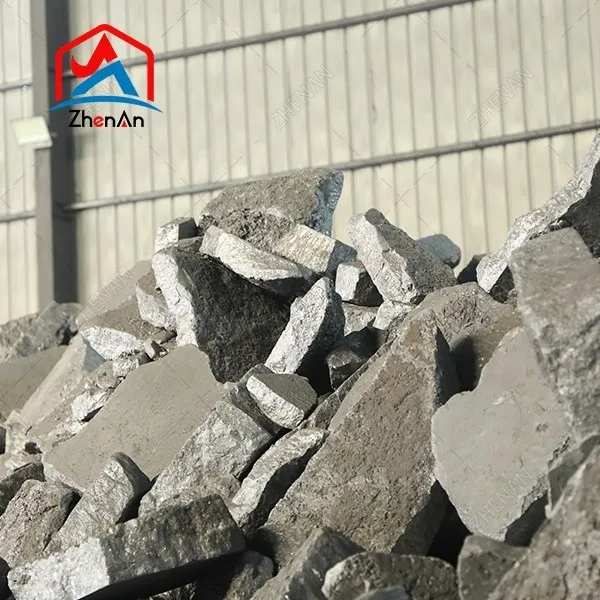
Ferrosilicon Supplier for Steelmaking, Foundry & Metallurgical Applications
High-Performance Ferrosilicon for Industrial Production
✅ Silicon Content: 70%–75%
✅ Available Grades: FeSi70, FeSi72, FeSi75
✅ Particle Sizes: 0–3mm, 3–10mm, 10–50mm, 10–100mm
✅ Deoxidation Efficiency: Up to 95%+
✅ Low Impurity Levels: Low P, S, Al, and C
✅ Suitable for Steelmaking, Foundry, Welding, Mineral Processing & Metallurgy
✅ Customized Packaging and Global Export Support
Ferrosilicon (FeSi) is one of the most widely used ferroalloys in modern industry. It serves as a powerful deoxidizer, alloying additive, inoculant, and reducing agent, making it essential in steel production, cast iron manufacturing, and numerous metallurgical processes worldwide.
What Are the Main Industrial Applications of Ferrosilicon?
The primary applications of ferrosilicon include steelmaking deoxidation, alloy production, cast iron inoculation, welding electrode manufacturing, and mineral processing.
Because ferrosilicon contains a high percentage of silicon, it effectively removes oxygen from molten metal while simultaneously enhancing mechanical properties such as strength, hardness, and corrosion resistance. Its versatility makes it one of the most important raw materials in the metallurgical industry.
What Are the Typical Specifications of Industrial Ferrosilicon?
Ferrosilicon Technical Specifications
| Grade | Si (%) | Al (%) Max | C (%) Max | P (%) Max | S (%) Max |
|---|---|---|---|---|---|
| FeSi70 | ≥70 | 2.0 | 0.20 | 0.04 | 0.02 |
| FeSi72 | ≥72 | 2.0 | 0.20 | 0.04 | 0.02 |
| FeSi75 | ≥75 | 1.5 | 0.20 | 0.04 | 0.02 |
Available Particle Sizes
| Size |
|---|
| 0–3 mm |
| 1–3 mm |
| 3–10 mm |
| 10–50 mm |
| 10–100 mm |
| Customized |
Why Is Ferrosilicon Widely Used in Steelmaking Processes?
Steelmaking remains the largest application sector for ferrosilicon globally.
During steel production, molten steel contains dissolved oxygen that can create blowholes, inclusions, brittleness, and surface defects. Ferrosilicon efficiently removes oxygen while introducing beneficial silicon into the steel.
The result is cleaner steel with improved mechanical performance, better surface quality, and enhanced production efficiency.
For carbon steel, alloy steel, spring steel, and electrical steel production, ferrosilicon is considered a standard metallurgical additive.
How Does Ferrosilicon Function as a Deoxidizer in Molten Steel?
Ferrosilicon acts as a strong deoxidizing agent because silicon has a high affinity for oxygen.
When added to molten steel, silicon reacts with dissolved oxygen to form stable silicon oxides. These oxides float into the slag layer and are removed during refining.
Key benefits include:
Lower oxygen content
Reduced non-metallic inclusions
Improved steel cleanliness
Better alloy recovery
Enhanced mechanical properties
Efficient deoxidation is one of the major reasons why ferrosilicon is indispensable in modern steelmaking operations.
What Role Does Ferrosilicon Play in Cast Iron and Foundry Production?
In foundries, ferrosilicon is primarily used as an inoculant.
Adding ferrosilicon during cast iron production promotes graphite formation and controls the solidification structure of castings. This helps improve machinability, tensile strength, dimensional stability, and casting quality.
Ductile iron, gray iron, and specialty iron castings all rely heavily on ferrosilicon inoculation technology to achieve desired metallurgical properties.
Without proper inoculation, castings may suffer from shrinkage defects, poor graphite distribution, and inconsistent mechanical performance.
How Is Ferrosilicon Used as an Alloying Additive to Improve Steel Properties?
Beyond deoxidation, silicon serves as an important alloying element.
When silicon dissolves into steel, it contributes to:
Higher tensile strength
Increased hardness
Better elasticity
Improved oxidation resistance
Enhanced magnetic properties
Electrical steel manufacturers particularly benefit from silicon additions because silicon improves magnetic permeability while reducing core losses.
Many high-strength low-alloy steels also use silicon to optimize strength-to-weight ratios.
What Industries Besides Steelmaking Commonly Use Ferrosilicon?
Although steelmaking accounts for the majority of ferrosilicon consumption, several other industries also depend on FeSi.
Foundry Industry
Used as inoculant and graphitization promoter in cast iron production.
Welding Consumable Manufacturing
Used in welding electrodes and flux-cored wire formulations.
Mineral Processing Industry
High-silicon ferrosilicon is used as a dense medium material for gravity separation processes.
Ferroalloy Production
Serves as a reducing agent for producing various alloy materials.
Metallurgical Processing
Used in special reduction reactions requiring high silicon activity.
The diversity of applications contributes to strong and stable global demand for ferrosilicon.
How Do Different Ferrosilicon Grades Affect Industrial Applications?
Different grades are selected according to metallurgical requirements, recovery rates, and production costs.
FeSi70 vs FeSi72
| Property | FeSi70 | FeSi72 |
|---|---|---|
| Silicon Content | Lower | Higher |
| Cost | More Economical | Moderate |
| Recovery Rate | High | Higher |
| Application | General Steelmaking | Quality Steel Production |
FeSi70 is often preferred when cost control is a priority.
FeSi72 provides a balance between performance and economy.
FeSi70 vs FeSi75
| Property | FeSi70 | FeSi75 |
|---|---|---|
| Silicon Content | ≥70% | ≥75% |
| Purity | Standard | Higher |
| Recovery Efficiency | Good | Excellent |
| Steel Cleanliness | Good | Superior |
FeSi75 is commonly selected for premium steel grades requiring strict composition control.
FeSi72 vs FeSi75
| Property | FeSi72 | FeSi75 |
|---|---|---|
| Market Demand | Very High | High |
| Price | Lower | Higher |
| Metallurgical Performance | Excellent | Superior |
| High-End Applications | Suitable | Preferred |
FeSi75 typically delivers the highest recovery rates and process consistency.
What Factors Should Buyers Consider When Selecting Ferrosilicon for Specific Industries?
Selecting the correct ferrosilicon supplier requires evaluating more than just price.
Buyers should consider:
Silicon Content Stability
Consistent chemistry ensures predictable metallurgical performance.
Low Impurity Levels
Lower phosphorus and sulfur contribute to cleaner steel production.
Particle Size Uniformity
Uniform sizing improves melting behavior and recovery efficiency.
Production Capacity
Reliable suppliers can support long-term contracts and large-volume demand.
Quality Documentation
COA reports, SGS inspections, and quality management systems help verify product consistency.
Industry Experience
Suppliers with experience in steelmaking, foundry, and metallurgical industries often provide better technical support and customized solutions.
Conclusion
Ferrosilicon is one of the most versatile ferroalloys used in modern industry. Its primary functions include steel deoxidation, alloy strengthening, cast iron inoculation, welding material production, and mineral processing. Different grades such as FeSi70, FeSi72, and FeSi75 are selected based on specific performance requirements, recovery efficiency, and production economics. For industrial buyers, choosing a supplier with stable quality, low impurities, consistent sizing, and reliable delivery capability is critical for maximizing metallurgical efficiency and long-term profitability.
FAQ
What are the main industrial applications of ferrosilicon (FeSi)?
Ferrosilicon is mainly used in steelmaking, foundries, welding materials, and mineral processing.
Its deoxidizing, alloying, and inoculating properties make it essential across multiple industries.
Why is ferrosilicon widely used in steelmaking processes?
Ferrosilicon efficiently removes oxygen and improves steel quality.
Cleaner steel leads to better mechanical properties and fewer production defects.
How does ferrosilicon function as a deoxidizer in molten steel?
Silicon reacts with dissolved oxygen to form removable oxide compounds.
This process reduces inclusions and enhances steel cleanliness.
What role does ferrosilicon play in cast iron and foundry production?
Ferrosilicon acts as an inoculant that promotes graphite formation.
It improves casting quality, machinability, and mechanical performance.
How is ferrosilicon used as an alloying additive to improve steel properties?
Silicon strengthens steel and improves oxidation resistance.
It enhances hardness, elasticity, and overall alloy performance.
What industries besides steelmaking commonly use ferrosilicon?
Foundries, welding consumable manufacturers, and mineral processors use ferrosilicon extensively.
Its versatility supports a wide range of metallurgical and industrial applications.
How do different ferrosilicon grades affect industrial applications?
Higher silicon grades generally provide higher recovery rates and cleaner metallurgy.
FeSi70, FeSi72, and FeSi75 are selected based on performance requirements and budget.
What factors should buyers consider when selecting ferrosilicon for specific industries?
Buyers should prioritize chemistry stability, impurities, sizing consistency, and supplier reliability.
These factors directly impact production efficiency and final product quality.
Looking for a Reliable Ferrosilicon Supplier?
Whether you need FeSi70, FeSi72, or FeSi75, we can provide customized specifications, particle sizes, and export packaging for steelmaking, foundry, and metallurgical applications.
📧 Email: market@zanewmetal.com
📱 WhatsApp: +86 15518824805
Send your required specification, quantity, and destination port today to receive a competitive quotation and technical support.
Visit https://www.metal-alloy.com/ to learn more about the product. If you would like to learn more about the product price or are interested in purchasing, please email market@zanewmetal.com. We will get back to you as soon as we see your message.