


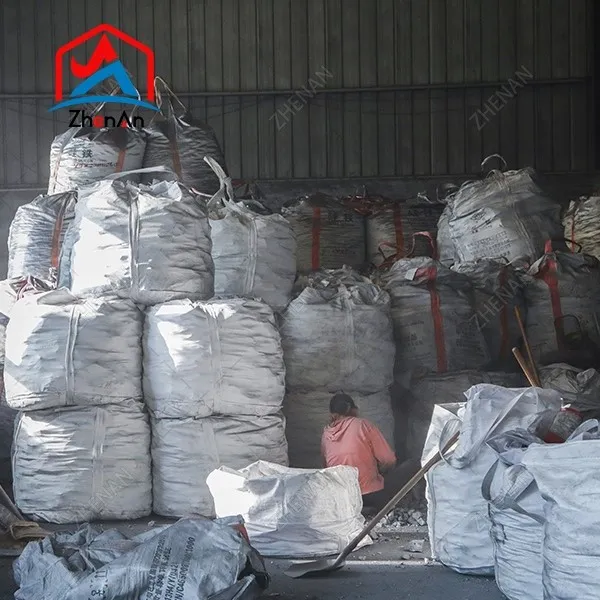
Ferrosilicon Supplier for Steelmaking Deoxidation & Metallurgical Applications
High-Efficiency FeSi Deoxidizer for Clean Steel Production (70%–75% Si)
Silicon Content: 70% / 72% / 75%
Oxygen Removal Efficiency: 90–98% depending on steel grade
Particle Sizes: 0–3 mm, 3–10 mm, 10–50 mm, customized
Low Impurity Control: Low P ≤0.04%, S ≤0.02%
Forms Available: Lump / Granule / Powder
Application: Steelmaking, casting, alloy steel, ductile iron
Function: Deoxidizer + alloying agent
Ferrosilicon (FeSi) is one of the most widely used deoxidizers in modern steel production because silicon has a strong chemical affinity for oxygen. It removes dissolved oxygen from molten steel efficiently while simultaneously improving steel quality and stability.
Why is Ferrosilicon Used as a Deoxidizer in Steel Production?
Ferrosilicon is used as a deoxidizer because it provides a fast, stable, and cost-effective way to remove oxygen from molten steel while also improving final mechanical properties.
In steelmaking, excess oxygen leads to porosity, inclusions, brittleness, and reduced fatigue resistance. FeSi eliminates this oxygen by forming stable silicon oxides that are removed into slag, resulting in cleaner and stronger steel.
Product Specification Table
| Grade | Si (%) | Al (%) | C (%) | P (%) | S (%) | Application |
|---|---|---|---|---|---|---|
| FeSi 70 | ≥70 | ≤2.0 | ≤0.2 | ≤0.04 | ≤0.02 | General steelmaking |
| FeSi 72 | ≥72 | ≤2.0 | ≤0.2 | ≤0.04 | ≤0.02 | Medium/high grade steel |
| FeSi 75 | ≥75 | ≤1.5 | ≤0.2 | ≤0.04 | ≤0.02 | High-performance steel |
How Does Ferrosilicon Remove Oxygen from Molten Steel?
Ferrosilicon works through a thermodynamically favorable oxidation reaction where silicon binds with dissolved oxygen in molten steel.
When FeSi is added:
Silicon reacts with oxygen → forms SiO₂
SiO₂ rises into slag phase
Oxygen content in steel drops significantly
Steel structure becomes more uniform
This process prevents gas porosity and improves internal density of the final steel product.
Why Ferrosilicon Is More Effective Than Other Deoxidizers?
Compared with aluminum or manganese-based deoxidizers, ferrosilicon offers a more balanced reaction control.
Key Advantages:
Controlled deoxidation speed (reduces reaction turbulence)
Lower cost per ton of steel
Dual function: deoxidizer + alloying element
Less risk of over-deoxidation
Improves silicon content in final steel
This makes it especially suitable for continuous steelmaking operations.
How Does Ferrosilicon Improve Steel Cleanliness?
Clean steel requires low oxygen and minimal non-metallic inclusions.
FeSi improves cleanliness by:
Reducing oxide inclusions
Lowering dissolved oxygen content
Enhancing slag separation efficiency
Producing denser steel microstructure
Cleaner steel results in better fatigue resistance, weldability, and mechanical strength.
What Role Does Silicon Play in the Deoxidation Reaction?
Silicon is the active element in FeSi responsible for oxygen removal.
Its role includes:
High oxygen affinity → drives oxidation reaction
Formation of stable SiO₂ compounds
Contribution to alloy strengthening after deoxidation
Stabilization of steel microstructure
This dual function makes FeSi more efficient than single-role deoxidizers.
How Does Ferrosilicon Affect Steel Quality and Mechanical Properties?
After deoxidation, silicon remains in steel as an alloying element.
It improves:
Tensile strength
Hardness
Elasticity
Corrosion resistance
Heat resistance
This is why FeSi is not only a refining agent but also a performance-enhancing additive.
What Steel Grades Use Ferrosilicon Deoxidation?
Ferrosilicon is widely used in:
Carbon steel
Low alloy steel
Spring steel
Structural steel
Electrical steel
Ductile iron production
Each application benefits from improved purity and mechanical performance.
What Factors Influence Ferrosilicon Deoxidation Efficiency?
Efficiency depends on:
Silicon content (FeSi 75 > FeSi 72 > FeSi 70)
Particle size distribution
Addition timing in furnace
Temperature of molten steel
Stirring and slag conditions
Proper control ensures maximum oxygen removal and alloy recovery.
Grade Comparison: FeSi 70 vs FeSi 75
| Property | FeSi 70 | FeSi 75 |
|---|---|---|
| Si Content | Lower | Higher |
| Deoxidation Strength | Medium | Strong |
| Cost | Lower | Higher |
| Steel Cleanliness | Good | Excellent |
FeSi 75 is preferred for high-grade steel requiring strict oxygen control.
FeSi 72 vs FeSi 75
| Property | FeSi 72 | FeSi 75 |
|---|---|---|
| Stability | High | Very High |
| Purity | Medium-High | High |
| Application | General steel | Premium steel |
| Recovery efficiency | Good | Best |
FeSi 75 provides superior consistency in critical steelmaking applications.
FeSi 70 vs FeSi 72
| Property | FeSi 70 | FeSi 72 |
|---|---|---|
| Cost efficiency | Best | Moderate |
| Performance | Standard | Improved |
| Usage | Basic steelmaking | Balanced applications |
| Market demand | High | Very High |
FeSi 70 is widely used where cost optimization is prioritized.
Conclusion
Ferrosilicon is one of the most effective and widely used deoxidizers in steel production because it removes oxygen efficiently, improves steel cleanliness, and enhances mechanical properties simultaneously. Its ability to perform both deoxidation and alloying functions makes it essential in modern metallurgy, especially in carbon steel, alloy steel, and ductile iron production. Different grades such as FeSi 70, FeSi 72, and FeSi 75 allow steelmakers to balance cost, performance, and purity requirements.
FAQ
Why is ferrosilicon commonly used as a deoxidizer in steel production?
Ferrosilicon is widely used because it efficiently removes oxygen and improves steel quality simultaneously.
How does ferrosilicon remove oxygen from molten steel?
Silicon reacts with oxygen to form stable SiO₂, which is removed into slag.
What advantages does ferrosilicon offer compared to other deoxidizers?
It provides controlled reaction, lower cost, and dual deoxidizing and alloying effects.
How does ferrosilicon improve steel cleanliness?
It reduces non-metallic inclusions and lowers dissolved oxygen content.
What role does silicon play in deoxidation?
Silicon binds with oxygen and stabilizes the steel microstructure.
Which steel grades use ferrosilicon?
Carbon steel, alloy steel, spring steel, electrical steel, and ductile iron.
What factors affect deoxidation efficiency?
Silicon content, particle size, temperature, and addition timing.
How does ferrosilicon affect final steel properties?
It improves strength, hardness, and corrosion resistance.
Contact for Ferrosilicon Supply
Looking for a stable ferrosilicon supplier for steelmaking or casting applications?
We supply:
FeSi 70 / FeSi 72 / FeSi 75
Lump / Powder / Granule forms
Customized sizing & export packaging
📧 Email: market@zanewmetal.com
📱 WhatsApp: +86 15518824805
Send your specification and target port to receive a quotation within 24 hours.
Visit https://www.metal-alloy.com/ to learn more about the product. If you would like to learn more about the product price or are interested in purchasing, please email market@zanewmetal.com. We will get back to you as soon as we see your message.