


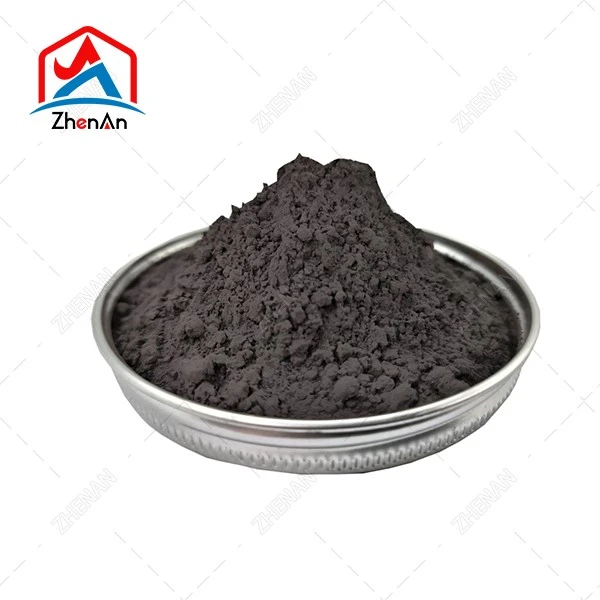
What Is the Standard Silicon Metal Powder Specification? Complete Technical Guide
Silicon metal powder (also known as metal silicon powder or silicon powder) is a refined industrial material produced by crushing and classifying metallurgical-grade silicon. It is widely used in metallurgy, refractory systems, powder metallurgy, chemical synthesis, and advanced materials industries.
The "standard specification" of silicon metal powder does not refer to a single fixed value. Instead, it is defined by a combination of chemical purity, particle size distribution (mesh or micron), impurity limits, and application-specific performance requirements.
This guide summarizes global industrial practice to help engineers and procurement teams correctly understand silicon powder standards used across major industries.
What Is Silicon Metal Powder?
Silicon metal powder is produced by crushing and grinding high-purity metallurgical silicon obtained from quartz reduction in electric arc furnaces. The material is then classified into different particle sizes for industrial use.
Its performance is influenced by silicon content, impurity levels (Fe, Al, Ca), oxygen content, and particle size distribution.
| Property | Typical Industrial Range |
|---|---|
| Silicon Content | 98.5% – 99.9%+ |
| Appearance | Gray metallic powder |
| Melting Point | 1414°C |
| Density | 2.33 g/cm³ |
What Is the Standard Specification of Silicon Metal Powder?
The standard specification of silicon metal powder is generally defined by three key parameters:
- Chemical composition (Si purity and impurity limits)
- Particle size distribution (mesh or micron size)
- Physical properties (flowability, bulk density, moisture content)
1. Standard Chemical Composition
| Grade | Si (%) | Fe (%) max | Al (%) max | Ca (%) max | Application |
|---|---|---|---|---|---|
| 553 | ≥98.5 | 0.5 | 0.5 | 0.3 | General metallurgy |
| 441 | ≥99.0 | 0.4 | 0.4 | 0.1 | Aluminum alloys |
| 421 | ≥99.0 | 0.4 | 0.2 | 0.1 | Chemical industry |
| 3303 | ≥99.3 | 0.3 | 0.3 | 0.03 | Silicone production |
| 2202 | ≥99.5 | 0.2 | 0.2 | 0.02 | High purity chemicals |
2. Standard Particle Size
Particle size is one of the most important specification parameters of silicon metal powder. It is usually expressed in mesh size or micron (µm).
| Mesh Size | Micron (µm) | Standard Application |
|---|---|---|
| 10–40 mesh | 2000–400 µm | Coarse metallurgical use |
| 40–80 mesh | 400–180 µm | Steelmaking deoxidation |
| 80–120 mesh | 180–125 µm | General metallurgy |
| 120–200 mesh | 125–75 µm | Chemical processing |
| 200–325 mesh | 75–45 µm | Refractory materials |
| 325–600 mesh | 45–20 µm | Powder metallurgy |
| 600–1000 mesh | 20–10 µm | Advanced ceramics |
Why Standard Specification Matters?
Silicon metal powder is a functional industrial material. Small differences in specification can significantly affect process behavior and final product performance.
Reaction Efficiency
Finer powders increase surface area and improve reaction speed in deoxidation and chemical synthesis.
Process Stability
Coarser powders improve storage stability and reduce oxidation risk during transport.
Product Consistency
Stable impurity levels ensure consistent alloy quality and predictable chemical behavior.
What Is Silicon Metal Powder Used For?
Silicon metal powder is widely used across multiple industries due to its reducing properties and thermal stability.
- Steelmaking deoxidizer
- Aluminum alloy production
- Silicone and silane chemical manufacturing
- Refractory castables and ceramic systems
- Powder metallurgy components
- Advanced silicon-based materials
Standard Specification vs Application Requirements
| Application | Recommended Specification |
|---|---|
| Steelmaking | 553 grade, 40–120 mesh |
| Aluminum alloy industry | 441 grade, 80–200 mesh |
| Chemical industry | 421 / 3303 grade, 120–325 mesh |
| Refractories | 200–325 mesh |
| Powder metallurgy | 325–600 mesh |
| Advanced ceramics | 600–1000 mesh |
What Are the Key Quality Control Standards?
Industrial buyers typically evaluate silicon metal powder based on international procurement standards and internal QA requirements.
- Chemical analysis (ICP, XRF testing)
- Particle size distribution (laser analysis)
- Oxygen content control
- Moisture content monitoring
- Bulk density consistency
- Third-party inspection reports (SGS, BV)
Silicon Metal Powder vs Similar Materials: Specification-Based Comparison
In industrial procurement, silicon metal powder is often confused with other silicon-based materials. However, these materials differ significantly in chemical composition, function, and specification standards. Understanding these differences is critical for correct material selection and process stability.
1. Silicon Metal Powder vs Ferrosilicon Powder
| Property | Silicon Metal Powder | Ferrosilicon Powder |
|---|---|---|
| Main Composition | Elemental Silicon (Si) | Silicon + Iron Alloy (FeSi) |
| Silicon Content | 98.5% – 99.9%+ | 45% – 75% |
| Iron Content | Very Low | High (balance) |
| Specification Focus | Purity + mesh size control | Cost + alloy ratio control |
| Main Use | High-purity deoxidation, chemical feedstock | Steelmaking deoxidation, alloying |
Conclusion: Ferrosilicon powder is a cost-driven alloy material, while silicon metal powder is a purity-driven functional material.
2. Silicon Metal Powder vs Silicon Carbide Powder (SiC)
| Property | Silicon Metal Powder | Silicon Carbide Powder (SiC) |
|---|---|---|
| Chemical Nature | Elemental material (Si) | Compound material (Si + C) |
| Function Type | Reducing agent / chemical feedstock | Abrasive / refractory reinforcement |
| Carbon Presence | None | High |
| Steelmaking Role | Deoxidizer | Carburizer + deoxidizer |
| Main Industry | Chemicals, metallurgy, silicon chain | Refractories, abrasives, ceramics |
Conclusion: Silicon metal powder is a raw elemental material, while silicon carbide is a high-hardness functional compound used for mechanical and thermal reinforcement.
3. Silicon Metal Powder vs Silica Fume (Microsilica)
| Property | Silicon Metal Powder | Silica Fume (SiO₂) |
|---|---|---|
| Chemical Form | Elemental silicon (Si) | Oxidized silicon dioxide (SiO₂) |
| Origin | Crushed silicon metal | By-product of silicon alloy smelting |
| Reactivity | Reducing behavior | Pozzolanic reaction in cement systems |
| Primary Use | Metallurgy, chemical synthesis | Concrete, construction materials |
Important Note: Silicon metal powder and silica fume are fundamentally different materials. One is elemental silicon, the other is oxidized silicon dioxide.
4. Silicon Metal Powder vs Silicon Nitride Powder (Si₃N₄)
| Property | Silicon Metal Powder | Silicon Nitride Powder |
|---|---|---|
| Material Type | Raw elemental material | Advanced engineering ceramic |
| Thermal Resistance | High | Very high |
| Mechanical Strength | Moderate | Excellent |
| Industry Role | Precursor material | Final ceramic product |
| Cost Level | Lower | Higher |
Conclusion: Silicon metal powder is commonly used as a raw precursor for silicon nitride production, while silicon nitride is a finished high-performance ceramic material.
Selection Guide Based on Specification Differences
| Application Requirement | Recommended Material |
|---|---|
| High-purity deoxidation (steelmaking) | Silicon Metal Powder |
| Low-cost alloy production | Ferrosilicon Powder |
| Abrasive and wear-resistant materials | Silicon Carbide (SiC) |
| Cement and concrete reinforcement | Silica Fume |
| Advanced ceramic precursor | Silicon Metal Powder |
| Finished high-performance ceramics | Silicon Nitride (Si₃N₄) |
Email: market@zanewmetal.com
WhatsApp: +86 15518824805
FAQ About Silicon Metal Powder Specification
What is the standard silicon content of silicon metal powder?
Industrial silicon metal powder typically contains 98.5% to 99.9% silicon depending on grade.
What is the most common mesh size?
200 mesh and 325 mesh are the most commonly used specifications in industrial applications.
Is there a universal global standard for silicon powder?
No. Specifications vary depending on application, but grading systems such as 553, 441, and 3303 are widely recognized.
Why is particle size important?
Particle size determines reaction speed, surface area, and processing behavior in industrial systems.
Which specification is best for chemicals?
421 and 3303 grades with 120–325 mesh are commonly used in chemical applications.
Can silicon powder be customized?
Yes. Mesh size, purity, and impurity limits can be customized according to application requirements.
How is quality tested?
Through chemical analysis, particle size testing, moisture control, and third-party inspection reports.
What affects silicon powder performance most?
Purity level, impurity content, particle size distribution, and oxygen content are the most critical factors.