


Why Is Ferro Vanadium Essential in High Strength Low Alloy (HSLA) Steel? Complete Technical Guide
Ferro Vanadium (FeV) is a critical ferroalloy used in modern steelmaking, especially in the production of High Strength Low Alloy (HSLA) steels. It is primarily composed of iron (Fe) and vanadium (V), typically containing 35%–85% vanadium depending on grade.
In HSLA steel systems, ferro vanadium acts as a microalloying element that significantly improves strength, toughness, wear resistance, and grain refinement without increasing steel weight or carbon content.
This article explains the role of ferro vanadium in HSLA steel from a technical, metallurgical, and industrial procurement perspective based on global steelmaking practices.
What Is Ferro Vanadium?
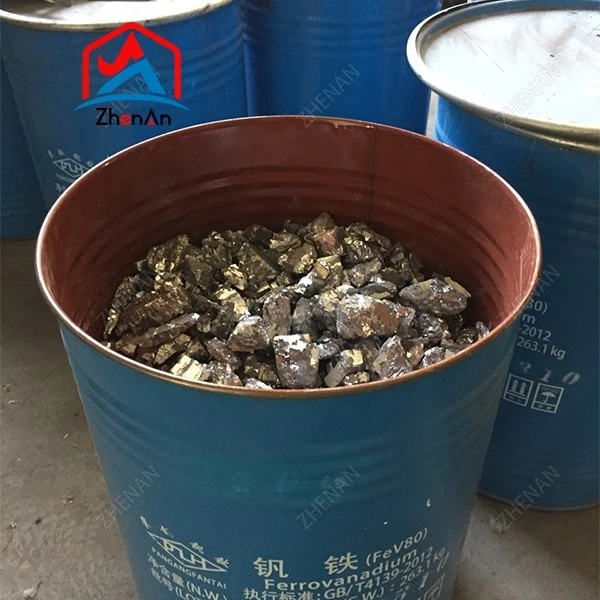
Ferro vanadium is a ferroalloy composed of iron and vanadium, widely used as a microalloying additive in steel production. It is typically produced by reducing vanadium oxides (V₂O₅) in the presence of iron-bearing materials under high-temperature conditions.
| Property | Typical Range |
|---|---|
| Vanadium Content | 35% – 85% |
| Iron Content | Balance |
| Melting Point | 1350°C – 1450°C |
| Density | ~6.0 g/cm³ |
| Form | Lumps / Powder |
Why Is Ferro Vanadium Essential in HSLA Steel?
High Strength Low Alloy (HSLA) steels are designed to achieve high mechanical strength while maintaining good weldability, toughness, and reduced weight. Ferro vanadium plays a central role in achieving these properties through microalloying mechanisms.
1. Grain Refinement Strengthening
Vanadium forms stable carbides and nitrides (VC, VN) during steel solidification. These precipitates inhibit grain growth, resulting in finer microstructure and improved mechanical strength.
2. Precipitation Strengthening
During cooling and heat treatment, vanadium compounds precipitate within the steel matrix, blocking dislocation movement and significantly increasing yield strength without increasing carbon content.
3. Improved Toughness and Ductility
HSLA steels require a balance between strength and toughness. Vanadium microalloying improves impact resistance while maintaining structural integrity under dynamic loads.
4. Reduced Carbon Requirement
Unlike traditional high-carbon steels, HSLA steels rely on microalloying elements such as vanadium instead of carbon to achieve strength. This improves weldability and reduces brittleness.
5. High Temperature Stability
Vanadium carbides and nitrides remain stable at elevated temperatures, making HSLA steels suitable for structural and automotive applications exposed to heat and stress.
HSLA Steel Composition Role of Ferro Vanadium
| Element | Function in HSLA Steel |
|---|---|
| Vanadium (V) | Microalloying, precipitation strengthening |
| Carbon (C) | Base hardness control |
| Manganese (Mn) | Strength and hardenability |
| Niobium (Nb) | Grain refinement |
| Titanium (Ti) | Nitride stabilization |
Industrial Applications of HSLA Steel with Ferro Vanadium
Automotive Industry
HSLA steels containing vanadium are widely used in chassis, frames, suspension systems, and safety components due to their high strength-to-weight ratio.
Construction and Infrastructure
Used in bridges, buildings, and structural beams where high load-bearing capacity and durability are required.
Oil and Gas Industry
Pipeline steels benefit from vanadium microalloying due to improved toughness and resistance to fracture under pressure.
Railway Engineering
Used in rail tracks and heavy-duty structural components requiring fatigue resistance and long service life.
Ferro Vanadium Grade Classification
| Grade | Vanadium Content | Application |
|---|---|---|
| FeV 40 | ~40% | General steelmaking |
| FeV 50 | ~50% | HSLA steels |
| FeV 80 | ~80% | High-end alloy steels |
Why Ferro Vanadium Is Preferred Over Pure Vanadium?
Pure vanadium is difficult to handle and expensive to use in steelmaking. Ferro vanadium provides a stable, cost-effective, and easier-to-dose form of vanadium addition with improved recovery efficiency in molten steel.
Key Benefits of Ferro Vanadium in HSLA Steel
- Increases yield strength without increasing carbon content
- Improves weldability and structural integrity
- Enhances fatigue resistance
- Refines grain structure
- Improves high-temperature stability
- Optimizes strength-to-weight ratio
Global Demand Trends for Ferro Vanadium
The demand for ferro vanadium is closely linked to infrastructure development, automotive lightweighting, and energy transportation systems. HSLA steel adoption is increasing globally due to its efficiency in reducing material usage while maintaining performance.
Ferro Vanadium vs Similar Alloying Materials: Technical Comparison for HSLA Steel
In HSLA steel production, ferro vanadium is often compared with other microalloying and ferroalloy materials. Although these alloys may appear interchangeable, their strengthening mechanisms, phase behavior, and cost-performance balance are fundamentally different.
This section provides a specification-based comparison to support correct material selection in modern steelmaking.
1. Ferro Vanadium vs Ferromanganese
| Property | Ferro Vanadium (FeV) | Ferromanganese (FeMn) |
|---|---|---|
| Main Element | Vanadium (V) | Manganese (Mn) |
| Primary Function | Microalloying, precipitation strengthening | Deoxidation, desulfurization, base alloying |
| Strengthening Mechanism | Grain refinement + carbide/nitride precipitation | Solid solution strengthening |
| HSLA Role | Critical microalloying element | Supporting alloy element |
Conclusion: Ferromanganese is a base strengthening alloy, while ferro vanadium is a high-performance microalloy used for advanced HSLA steel optimization.
2. Ferro Vanadium vs Ferro Niobium
| Property | Ferro Vanadium (FeV) | Ferro Niobium (FeNb) |
|---|---|---|
| Main Element | Vanadium (V) | Niobium (Nb) |
| Strengthening Type | Precipitation strengthening (VC, VN) | Strong grain refinement + precipitation (NbC, NbN) |
| Temperature Stability | High | Very high |
| Application Focus | General HSLA steels | Ultra-high strength pipeline steels |
Conclusion: Ferro niobium provides stronger grain refinement effects, while ferro vanadium offers balanced strength and cost efficiency in HSLA steel systems.
3. Ferro Vanadium vs Ferro Titanium
| Property | Ferro Vanadium (FeV) | Ferro Titanium (FeTi) |
|---|---|---|
| Main Function | Strengthening + grain refinement | Nitrogen and oxygen fixation |
| Main Compounds | VC, VN | TiN, TiC |
| Steelmaking Role | Microalloying element | Cleanliness control element |
| Impact on Steel | Increases strength and toughness | Improves steel purity and stability |
Conclusion: Ferro titanium is mainly used for impurity control, while ferro vanadium is primarily used for strength enhancement in HSLA steels.
4. Ferro Vanadium vs Ferro Silicon
| Property | Ferro Vanadium (FeV) | Ferrosilicon (FeSi) |
|---|---|---|
| Main Element | Vanadium (V) | Silicon (Si) |
| Primary Function | Microalloying strengthening | Deoxidation and alloying |
| HSLA Role | Performance enhancer | Base deoxidizer |
| Cost Level | High | Lower |
Conclusion: Ferrosilicon is used for basic steel deoxidation, while ferro vanadium is used for advanced mechanical property optimization.
HSLA Steel Alloy Selection Guide
| Steel Requirement | Recommended Alloy |
|---|---|
| High strength + weldability balance | Ferro Vanadium (FeV) |
| Ultra-high strength pipeline steel | Ferro Niobium (FeNb) |
| Cost-effective deoxidation | Ferrosilicon (FeSi) |
| Steel cleanliness control | Ferro Titanium (FeTi) |
| Basic alloy strengthening | Ferromanganese (FeMn) |
Key Insight for HSLA Steel Engineering
In modern HSLA steel design, ferro vanadium is not a replacement material but a functional microalloying element. Its value lies in its ability to refine microstructure and improve mechanical performance without increasing carbon content, making it indispensable in automotive, construction, and energy-grade steels.
Email: market@zanewmetal.com
WhatsApp: +86 15518824805
FAQ About Ferro Vanadium and HSLA Steel
What is ferro vanadium used for?
Ferro vanadium is mainly used as a microalloying element in HSLA steels to improve strength, toughness, and grain refinement.
Why is vanadium important in HSLA steel?
Vanadium forms carbides and nitrides that strengthen steel through precipitation hardening and grain refinement.
What is HSLA steel?
High Strength Low Alloy steel is a type of steel designed for high strength and good toughness with low alloy content.
Is ferro vanadium better than pure vanadium?
Yes, ferro vanadium is preferred due to easier handling, lower cost, and higher recovery efficiency in steelmaking.
Which industries use HSLA steel?
Automotive, construction, oil and gas, and railway industries widely use HSLA steel.
What is the typical vanadium content in ferro vanadium?
It typically ranges from 35% to 85% depending on grade.
How does vanadium increase steel strength?
It forms fine precipitates that block dislocation movement and refine grain structure.
Can ferro vanadium reduce steel weight?
Yes, by increasing strength, it allows thinner steel sections without reducing performance.