Why Do Nordic Offshore Platforms Suffer Severe Long-Term Salt Spray Corrosion? Why Is High Purity Zinc Wire Used in Marine Thermal Spray Protection?
1. Background: Corrosion Characteristics in Nordic Offshore Environments
In Nordic offshore regions such as Norway, Denmark, and coastal Sweden, marine structures are continuously exposed to high salinity spray, high humidity, and strong wave impact.

Steel platforms, offshore wind foundations, and marine equipment surfaces are highly susceptible to electrochemical corrosion.
2. Key Challenge: Strict Material Requirements for Offshore Corrosion Protection
2.1 Electrochemical Imbalance Caused by Long-Term Salt Spray Exposure
High chloride concentration in seawater continuously damages the passive layer on metal surfaces. If the protective coating's conductivity and corrosion consumption rate are unstable, localized failure accelerates.
2.2 Non-Uniform Coating Thickness Issues
In large offshore structures such as platform legs and pile foundations, complex geometries create spray shadow zones. If atomization is inconsistent, coating thickness variation becomes more severe.
2.3 Material Purity Affects Cathodic Protection Efficiency
As zinc is used as a sacrificial anode, its purity directly influences electrochemical reaction stability. Low purity zinc containing iron or lead impurities may disturb potential stability.
3. Solution: Advantages of High Purity Zinc Wire in Offshore Spraying
3.1 Stable Electrochemical Consumption Behavior
High purity zinc wire (99.9%–99.995%) provides a more consistent corrosion consumption rate in seawater environments, making cathodic protection systems more predictable.
3.2 Improved Atomization Uniformity
High purity material provides more stable molten flow behavior, producing uniform atomized particles. This is critical for complex offshore structures.
3.3 Reduced Coating Defects Caused by Impurities
Lower impurity levels reduce porosity and inclusion risks during spraying, improving coating continuity.
4. Application: Material Selection Logic in Nordic Offshore Projects
In Nordic offshore engineering, zinc wire is primarily used in offshore wind turbines, offshore platforms, port infrastructure, and subsea pipeline protection systems.
5. Conclusion: Material Consistency Is the Core of Offshore Corrosion Protection
The failure of corrosion protection systems in Nordic offshore environments is fundamentally caused by mismatches between extreme marine conditions and material performance. As a critical consumable, thermal spray zinc wire directly determines long-term coating reliability through its purity, melting stability, and atomization consistency.
Third-party inspection available
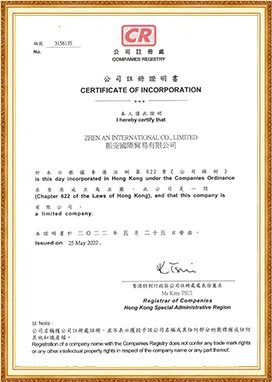
ZhenAn Metallurgy & New Materials Certificates