1. Background: Oxidation Risks in Offshore Steel Structures
In offshore engineering applications, steel structures are continuously exposed to high salt spray, high humidity, and alternating UV radiation. This combined environmental stress accelerates electrochemical reactions in zinc coatings, leading to premature surface oxidation.
2. Key Issue: Non-Uniform Coating and Early Oxidation Mechanism
2.1 Uneven Coating Thickness Accelerates Local Corrosion
In offshore steel structures such as platform supports and wind turbine towers, complex geometries create spray shadow zones. Thin coating areas become initial points of electrochemical corrosion and oxidation.
2.2 Unstable Zinc Melting Affects Coating Structure
If zinc wire has low purity or contains impurities such as iron, lead, or oxides, uneven atomization occurs during melting. This reduces coating density and uniformity.
2.3 Spray Parameter Fluctuation Causes Structural Defects
Small variations in arc current, wire feed speed, and spray distance affect particle deposition behavior. In marine environments, these inconsistencies are amplified by salt spray exposure.
3. Solution: Material and Process Optimization for Coating Uniformity
3.1 Electrochemical Stability of High Purity Zinc Wire
Using 99.9%–99.995% high purity zinc wire reduces potential fluctuations caused by impurities. In seawater environments, zinc behaves more uniformly as a sacrificial anode.
3.2 Precision Diameter Control Improves Wire Feeding Continuity
Diameter control within ±0.01mm reduces feeding interruptions and spraying instability, which is critical for large offshore structures.
3.3 Low-Oxidation Surface Reduces Initial Defects
Controlled low-oxidation wire surfaces reduce poor particle bonding during initial spraying, improving coating density.
4. Application: Material Selection Logic in Offshore Structures
In marine engineering, zinc wire is primarily used in offshore wind foundations, offshore platforms, port steel piles, and subsea pipeline protection systems.
5. Conclusion: Consistency Control Is the Key Variable in Offshore Corrosion Protection
Premature oxidation of zinc coatings on offshore steel structures is fundamentally driven by the interaction of material purity, spraying process, and marine environment. Among these factors, coating consistency is the key determinant of protective lifespan.
Third-party inspection available
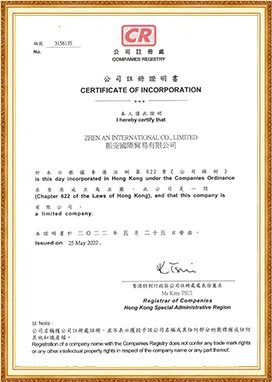
ZhenAn Metallurgy & New Materials Certificates