Introduction: Welcome to the technical briefing by ZhenAn Metallurgy, a tier-one global metallurgical grade FeSi alloy supplier with over 30 years of smelting expertise. This comprehensive analysis evaluates the structural, economic, and performance parameters of premium ferrosilicon variants, focusing directly on the industrial trade-offs of FeSi70 VS FeSi72. Whether you are optimizing a ferrosilicon deoxidizer setup for electric arc furnaces or selecting the ideal foundry ferrosilicon inoculant, our data-backed breakdown ensures precise material selection. For custom processing, price quotes, or mill test certificates, reach out to our engineering team at Email: market@zanewmetal.com or WhatsApp/WeChat: +86 15518824805.
What is Ferrosilicon (FeSi Alloy) and What Roles Does It Play in Industrial Refineries?
Ferrosilicon is a highly specialized iron-silicon ferroalloy generated through the carbothermic reduction of silica in high-capacity furnaces. This essential FeSi alloy serves two fundamental metallurgical roles globally: as an aggressive ferrosilicon deoxidizer in ladle refining and as an engineering matrix stabilizer within the foundry sector. By introducing controlled silicon portions into molten metal pools, operators can alter thermodynamic balances, scrub out detrimental dissolved gases, improve graphite nodulization, and elevate the final physical yield strengths of structural metals.
How is Metallurgical Ferrosilicon Manufactured Using Submerged Arc Technology?
The core production pipeline at ZhenAn Metallurgy adheres to rigorous pyrometallurgical controls within modern Submerged Electric Arc Furnaces (EAF). The production cycle is managed through the following operational steps:
Charge Allocation: High-purity quartz crystals (SiO2), calibrated iron ore or clean steel scrap fragments, and fixed-carbon reductants (semi-coke and charcoal) are weighed accurately via automated load cells.
Thermal Smelting: Sustained electrical currents drive furnace core zones to temperatures between 1800°C and 2000°C, precipitating the primary reduction:
SiO₂ + 2C → Si + 2CO and
xFe + ySi → FexSiy.
Refining Stage: The liquid alloy pool undergoes auxiliary slag-skimming and inert gas purging to remove gaseous impurities, creating low aluminum ferrosilicon for casting.
Sizing Profiles: Tapped alloy ingots are systematically cooled to block elemental macro-segregation and processed into standardized fractions (e.g., 10-50mm lumps or 1-3mm fine grains).

What are the Standard Grade Analyses and Classifications for Ferrosilicon Materials?
Industrial ferrosilicon grades are indexed primarily by their elemental silicon weight parameters, bounded by strict maximum threshold targets for trace impurities. The table below represents the core chemistry classifications utilized across modern international trade:
| Alloy Grade | Silicon (Si) Range | Aluminum (Al) Max | Carbon (C) Max | Phosphorus (P) Max | Sulfur (S) Max |
|---|---|---|---|---|---|
| FeSi 75 (Premium Steel Grade) | 73.0% – 78.0% | 1.5% | 0.10% | 0.04% | 0.02% |
| FeSi 72 (Standard Foundry) | 72.0% – 74.0% | 2.0% | 0.15% | 0.04% | 0.02% |
| FeSi 70 (Versatile Smelting) | 68.0% – 72.0% | 2.0% | 0.20% | 0.04% | 0.02% |
| FeSi 65 (Basic Addition) | 63.0% – 67.0% | 3.0% | 0.40% | 0.04% | 0.02% |
What Technical Parameters Rule the Physical Performance of Nodular Iron FeSi?
Beyond chemical purity sheets, physical properties dictate the downstream dissolution kinetics of nodular iron FeSi and other treatment additives inside hot metal reservoirs:
- Alloy Bulk Density: Ranges from 6.7 g/cm³ to 7.1 g/cm³. An increase in silicon shifts the density downward, causing high-grade particles to remain buoyant near the slag line.
- Liquidus Threshold: Spans 1200°C to 1250°C. This allows fast, localized melting when the alloy encounters molten metal, preventing thermal drop or chilling effects.
- Granular Stability: Mechanical strength must resist crumbling during shipping, avoiding excessive dust generation that can create uneven distributions when added to the ladle.
Why is Ferrosilicon Crucial Across Chemical Process Units and Magnesium Plants?
Outside of conventional casting floors, specialized metallurgical ferrosilicon serves as a foundational component in the chemical and magnesium extraction industries. In the thermochemical Pidgeon process, ferrosilicon acts as a powerful reducing agent at elevated temperatures under deep vacuum conditions, extracting pure magnesium vapor from calcined dolomite ores. Additionally, finely atomized ferrosilicon powders are frequently utilized by heavy media separation (HMS) plants within chemical mineral dressing loops due to their reliable magnetic properties and highly controllable slurry densities.
How Does Ferrosilicon for Steelmaking Deoxidation Enhance Ladle Cleanliness Indices?
During secondary processing in electric arc furnaces (EAF) and basic oxygen furnaces (BOF), molten steel contains high levels of dissolved gases that can form structural cracks. Deploying ferrosilicon for steelmaking deoxidation drives the rapid conversion of free oxygen into stable silicon dioxide, following the reaction equilibrium:
[Si] + 2[O] ⇌ SiO₂(s).
The resulting silica inclusions gather into fluid micro-slag clusters that float out of the metal bath. Furthermore, this intense exothermic interaction generates significant thermal energy, which helps maintain the tap temperature without requiring extra electric power or chemical burners.
How Do Key Grades Compare When Analyzing FeSi70 VS FeSi72 Performance?
For purchasing teams balancing strict chemistry limits with cost controls, checking the operational differences under a FeSi70 VS FeSi72 lens highlights key distinctions:
- FeSi70 VS FeSi72 (Silicon and Density): FeSi70 offers a stable silicon range of 68-72%, providing slightly more iron and a higher bulk density. FeSi72 maintains a narrower window of 72-74% silicon, allowing it to dissolve faster into the liquid metal stream.
- FeSi70 VS FeSi72 (Deoxidation and Recovery): FeSi72 provides slightly higher deoxidation potential per kilogram of mass added, making it well-suited for tight ladle chemistry setups. FeSi70 delivers reliable silicon recovery for structural steel casting runs where slight variances in final silicon levels are manageable.
- FeSi70 VS FeSi72 (Cost-Efficiency): FeSi70 features a lower market price per ton because it requires less refining time in the furnace. This makes it an excellent choice for bulk additions where reducing raw material costs is a priority.
How Does Ferrosilicon Perform in a General Ferrosilicon VS Calcium Silicon Evaluation?
To understand how ferrosilicon compares with other active metallurgical agents, operators evaluate it through a comparative Ferrosilicon VS Calcium Silicon or Ferrosilicon VS Silicomanganese framework:
- Ferrosilicon VS Calcium Silicon (CaSi): Ferrosilicon serves as an economical option focused on silicon addition and deep oxygen scrubbing. Calcium Silicon combines two active deoxidizers; the calcium component reshapes hard alumina clusters into fluid, rounded shapes, which helps prevent clogging in continuous casting nozzles.
- Ferrosilicon VS Silicomanganese (SiMn): Ferrosilicon provides a higher concentration of silicon, making it ideal for targeted silicon adjustments and generating exothermic heat. Silicomanganese delivers a balanced mixture of manganese and silicon, working together to form low-melting-point manganese silicates that separate cleanly from the metal bath.
What Guidelines Should Global Buyers Implement to Evaluate a Metallurgical Grade FeSi Alloy Supplier?
To ensure consistent chemical quality and minimize production issues, global procurement teams should evaluate potential partners using these strict performance standards:
- Verification Protocols: Partner with a metallurgical grade FeSi alloy supplier that runs batch-by-batch checks using X-ray Fluorescence (XRF) and confirms trace elements via Inductively Coupled Plasma (ICP-OES) analysis.
- Sizing Accuracy: Ensure the vendor utilizes automated double-deck screening decks to minimize fine particles under 2mm, which can blow away during furnace addition and lower overall recovery rates.
- Packaging Systems: Request multi-layer, UV-resistant 1-ton jumbo bags with integrated moisture-proof liners to prevent surface hydration and hydrogen pickup during long-distance ocean shipping.
Frequently Asked Questions Regarding FeSi70 VS FeSi72 Performance Variations
Q1: What is the difference between FeSi70 and FeSi72 ferrosilicon?
A1: The main difference lies in the certified elemental silicon concentration and the resulting price point. FeSi72 carries a higher silicon baseline (72% to 74%), while FeSi70 offers a broader range (68% to 72%). Because FeSi70 contains more iron, it has a slightly higher bulk density but a lower market cost per ton compared to FeSi72.
Q2: How do FeSi70 and FeSi72 differ in silicon content and chemical composition?
A2: FeSi72 guarantees a minimum of 72% silicon by weight, keeping trace contaminants like aluminum and carbon within tighter limits. FeSi70 allows for a slightly lower silicon baseline (down to 68%) and accommodates slightly higher iron levels, making it a reliable choice for standard alloying applications that do not require ultra-low impurity levels.
Q3: Which grade provides better deoxidation efficiency: FeSi70 or FeSi72?
A3: FeSi72 offers higher deoxidation efficiency per metric ton because of its greater concentration of active silicon. This allows steel mills to use less material by weight to remove the same amount of dissolved oxygen, resulting in smaller addition masses and lower cooling effects inside the ladle furnace.
Q4: Is FeSi70 more cost-effective than FeSi72 for steelmaking applications?
A4: Yes, FeSi70 is generally more cost-effective for bulk alloying where strict purity limits can be relaxed. It requires less electricity and shorter refining cycles during production, allowing manufacturers to offer it at a lower price per ton compared to the more highly refined FeSi72 grade.
Q5: How does silicon recovery rate compare between FeSi70 and FeSi72?
A5: FeSi72 provides slightly more predictable recovery rates in high-oxygen steel melts because it floats closer to the slag-metal interface where it dissolves rapidly. FeSi70 has a higher density and can sink deeper into the ladle; however, when used with automated injection or standard ladle stirring systems, both grades show comparable recovery rates.
Q6: Which industries commonly use FeSi70 and FeSi72 grades?
A6: FeSi72 is widely chosen by premium cast iron foundries as a base material for nodular iron inoculant ferrosilicon and ductile iron production. FeSi70 is heavily utilized in standard carbon steel manufacturing, EAF steelmaking operations, structural rebar plants, and structural metal casting facilities.
Q7: How do buyers choose between FeSi70 and FeSi72 for metallurgical requirements?
A7: Technical teams base their choice on the final silicon targets of their steel or iron grades and their factory's addition systems. If the furnace chemistry requires tight control over aluminum and carbon tracking, FeSi72 is chosen. If the priority is minimizing raw material costs for low-alloy structural steels, FeSi70 is preferred.
Q8: Does the price difference between FeSi70 and FeSi72 affect procurement decisions?
A8: Yes, the price difference significantly influences large-scale buying decisions. For large mills running high-volume production, switching to FeSi70 for bulk deoxidation provides noticeable raw material savings, provided their refining systems can handle the slightly higher iron additions.
Visit https://www.metal-alloy.com/ to learn more about the product. If you would like to learn more about the product price or are interested in purchasing, please email market@zanewmetal.com. We will get back to you as soon as we see your message.
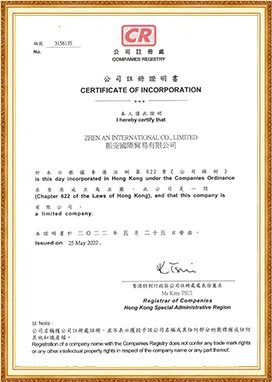
ZhenAn Metallurgy & New Materials Certificates