How to Solve Non-Uniform Coating Thickness on Steel Bridges? Why Is Stable Wire Feeding Critical in Thermal Spray Zinc Applications?
1. Background: Importance of Coating Thickness Control in Steel Bridge Protection
In steel bridge corrosion protection projects, thermal spray zinc coating is a key process for extending structural service life. Coating thickness directly determines protection level and operational lifespan.

However, a common field issue is non-uniform coating thickness.
2. Key Issue: Main Technical Causes of Uneven Thickness
2.1 Unstable Wire Feeding Causes Material Output Fluctuation
In arc spray systems, wire feeding speed determines the metal deposition rate per unit time. If feeding is unstable, it directly causes inconsistent coating thickness.
2.2 Diameter Tolerance Affects Spraying Rhythm
Wire diameter variation affects feeding roller stability. In long-span bridge spraying, this variation becomes amplified.
2.3 Mismatch Between Spray Parameters and Material
Mismatch between current, spray distance, and melting behavior leads to uneven particle deposition, resulting in local thickness variation.
3. Key Solution: Role of Stable Wire Feeding Zinc Wire
3.1 Stable Material Output Is the Foundation of Thickness Uniformity
Stable wire feeding ensures consistent molten metal output per unit time, which is the primary variable in controlling coating thickness.
3.2 High Precision Diameter Control (±0.01mm)
Accurate wire diameter ensures continuous feeding without jamming or speed fluctuation, maintaining stable spraying rhythm.
3.3 High Purity Zinc Wire Improves Melting Consistency.
High purity zinc wire (99.9%–99.995%) reduces melting inconsistencies caused by impurities, improving atomization stability.
3.4 Surface Quality Reduces Friction Variation
Smooth, low-oxidation surfaces reduce feeding friction variation, improving continuous operation stability.
4. Application: Control Logic in Steel Bridge Corrosion Protection
In steel bridge engineering, zinc wire is used in steel box girders, bridge piers, steel truss structures, and maintenance recoating projects.
5. Conclusion: Wire Feeding Stability Is the Core Variable for Thickness Control
Non-uniform coating thickness in steel bridge corrosion protection is fundamentally caused by imbalance among wire feeding stability, material consistency, and spray parameters. Among these, stable wire feeding is the most direct factor affecting coating uniformity.
Third-party inspection available
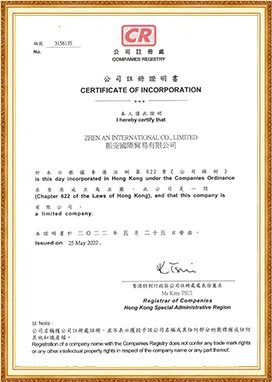
ZhenAn Metallurgy & New Materials Certificates