Why Do Marine Corrosion Projects Require ASTM Standard Zinc Wire? How Do International Standards Affect Thermal Spray Performance?
1. Background: Dependence on Standardized Materials in Marine Corrosion Engineering
In marine engineering, steel structures are continuously exposed to high salt spray, humidity, and strong electrochemical corrosion environments. Offshore wind farms, port facilities, and marine platforms all require highly stable corrosion protection systems.

In this context, thermal spray zinc wire is typically required to comply with international standards, the most common being ASTM B833 (Standard Specification for Zinc and Zinc Alloy Wire for Thermal Spraying).
2. Key Issue: Why ASTM Standard Zinc Wire Is Required
2.1 Chemical Composition Consistency Control
ASTM standards strictly limit impurities such as lead, iron, and cadmium in zinc wire, ensuring consistent electrochemical performance.
2.2 Stable Melting Behavior
Standardized zinc wire exhibits predictable melting temperature ranges and flow behavior, which is critical for arc and flame spraying processes.
2.3 Consistent Spray Particle Formation
ASTM-compliant materials ensure uniform particle size distribution during atomization, improving coating density and adhesion performance.
3. Impact of International Standards on Spraying Performance
3.1 Improved Coating Structural Uniformity
Standard zinc wire reduces localized overheating and splashing caused by impurities, resulting in more uniform and continuous coatings.
3.2 Enhanced Cathodic Protection Stability
In seawater environments, zinc acts as a sacrificial anode, and its purity directly affects potential stability. Standardized materials ensure consistent long-term protection performance.
3.3 Improved Process Control
Standardized zinc wire provides more consistent diameter, tolerance, and surface condition, helping reduce feeding fluctuations and equipment failure risks.
4. Application: Standardized Selection Logic in Marine Engineering
In marine corrosion engineering, ASTM standard zinc wire is mainly used in offshore wind structures, offshore platforms, port facilities, and subsea pipeline systems.
5. Conclusion: Standardization Is the Foundation of Offshore Corrosion Reliability
The use of ASTM standard zinc wire in marine corrosion engineering is primarily driven by strict control over material consistency and electrochemical behavior. Compared with non-standard materials, standardized wire significantly improves spraying stability and long-term coating reliability.
Third-party inspection available
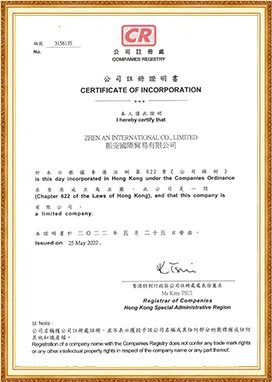
ZhenAn Metallurgy & New Materials Certificates