Why Is Impurity Variation in Ferrovanadium a Critical Issue for Korean Automotive Steel Producers?
Korean automotive steelmakers operate under extremely strict quality windows for advanced high-strength steels (AHSS), where even minor impurity fluctuations in ferrovanadium-such as oxygen, aluminum, silicon, nitrogen, and trace carbon variations-can destabilize final steel performance.
The core challenge is that impurity variation directly disrupts:
Precipitation strengthening behavior of vanadium carbides (VC)
Yield strength consistency across coil batches (±30–80 MPa deviation risk)
Formability balance in AHSS grades (DP, TRIP, and martensitic steels)
Weldability in automotive chassis and structural components
As a result, Korean steelmakers increasingly require ultra-clean ferrovanadium with tightly controlled impurity profiles and heat-to-heat stability.
What Are the Technical Specifications Required for Automotive-Grade Ferrovanadium?
| Parameter | Standard FeV Grade | Automotive Steel Grade FeV | Ultra-Clean FeV Grade |
|---|---|---|---|
| Vanadium (V) | 75–80% | 78–82% | 80–82% |
| Oxygen (O) | Medium | Low | Ultra-low (<0.03%) |
| Aluminum (Al) | ≤2.0% | ≤1.5% | ≤1.0% |
| Silicon (Si) | ≤1.5% | ≤1.0% | ≤0.8% |
| Nitrogen (N) | Not controlled | Controlled | Ultra-controlled |
| Particle Size | 10–50 mm | 5–30 mm | 3–25 mm |
| Recovery Rate | 85–90% | 90–94% | 94–96% |
How Does Impurity Variation Affect Automotive Steel Production in Korea?
1. Instability in Precipitation Hardening Behavior
Vanadium strengthens steel through VC precipitation. Impurities interfere with:
Nucleation uniformity
Carbide dispersion density
Grain boundary stabilization
Even small oxygen fluctuations can reduce strengthening efficiency by 10–20%.
2. Yield Strength Inconsistency in AHSS Grades
Korean automotive steels require tight mechanical tolerances:
DP590, DP780, DP980 grades
TRIP steels for crash resistance zones
Impurity variation leads to:
Heat-to-heat yield deviation
Non-uniform elongation rates
Unstable tensile strength curves
3. Weldability Degradation in Automotive Structures
Excess Al, Si, or O in ferrovanadium increases:
Inclusion formation during welding
HAZ (Heat Affected Zone) brittleness
Spot welding failure rates
This is critical for EV battery frames and crash-critical structures.
4. Slag-Metal Reaction Instability
Impurity-rich FeV changes slag chemistry:
Increased slag viscosity
Reduced vanadium recovery efficiency (down to 85%)
Higher alloy consumption per ton steel
5. Surface Defect Formation in Cold-Rolled Sheets
Impurities contribute to:
Sliver defects
Surface oxide streaks
Coating adhesion instability (galvanized steel)
How Do Different Ferrovanadium Grades Perform in Automotive Steelmaking?
Ferrovanadium 80% vs Standard Ferrovanadium 75%
FeV 80% delivers more stable vanadium recovery in BOF and EAF routes
FeV 75% shows higher impurity variability impact under oxygen-rich conditions
Automotive mills prefer FeV 80% for consistent AHSS mechanical profiles
Ferrovanadium Low-Oxygen Grade vs Conventional Grade
Low-oxygen FeV improves VC precipitation uniformity
Conventional FeV increases inclusion formation and weld variability
Low-oxygen grade reduces coil rejection rates in automotive stamping lines
Ferrovanadium vs Vanadium-Niobium Master Alloy
FeV: faster dissolution, cost-efficient for mass production
V-Nb alloy: superior grain refinement synergy for ultra-HSS
Korean mills often use hybrid addition strategies for DP980+ grades
What Are the Main Industrial Challenges Caused by Impurity Variation?
Korean automotive steelmakers report five recurring production issues:
Batch-to-batch strength inconsistency
Increased scrap in stamping operations
Welding instability in BIW (Body-in-White) structures
Higher alloy consumption per heat
Certification risk under strict OEM standards (Hyundai, Kia supply chain requirements)
How Are Korean Steelmakers Reducing Ferrovanadium Impurity Impact?
Leading producers adopt advanced control systems:
Ultra-low oxygen ferrovanadium sourcing
Tight supplier qualification systems (lot traceability)
Secondary refining with RH/VOD vacuum degassing
AI-based alloy addition modeling
Slag engineering optimization for higher recovery efficiency
These systems improve vanadium utilization from ~88% to over 95% in advanced lines.
What Are the Most Common Procurement Questions from Automotive Steel Buyers?
1. Why does impurity variation matter more in automotive steel than construction steel?
Because automotive steels require tighter mechanical tolerances and crash-performance consistency.
2. What impurity is most harmful in ferrovanadium for AHSS production?
Oxygen is the most critical, followed by aluminum and silicon.
3. Can blending different ferrovanadium batches stabilize composition?
Yes, but only if controlled with metallurgical calculation and heat-level tracking.
4. What particle size is optimal for automotive steelmaking?
5–30 mm ensures fast dissolution and stable recovery in ladle metallurgy.
5. Does higher vanadium content always improve steel strength?
Not always-impurity control is more important than absolute vanadium percentage.
6. What is the ideal ferrovanadium grade for DP980 steel?
Ultra-clean FeV 80–82% with low oxygen and controlled nitrogen content.
Where to Source Stable Ferrovanadium for Automotive Steel Production?
For automotive-grade steel manufacturing, impurity stability in ferrovanadium is essential to ensure consistent mechanical and welding performance across AHSS production lines.
We supply tightly controlled ferrovanadium grades designed for automotive steelmakers requiring high consistency, low impurity variation, and stable batch performance.
📧 Email: market@zanewmetal.com
📱 WhatsApp: +86 15518824805
Third-party inspection available
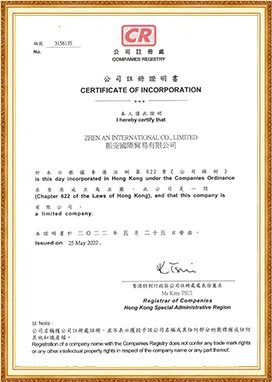
ZhenAn Metallurgy & New Materials Certificates