


Ferromanganese Price Report, Oct 26, 2026: Ferro Manganese Quotes Hold Steady Across Every Grade
Ferromanganese prices were unchanged across every grade and every quoting region in the Oct 26, 2026 assessment. High-carbon, blast-furnace, medium-carbon and low-carbon ferromanganese all held their previous levels, and the change column shows no movement on any line of the table. For buyers, the practical message is that this is a flat, fully quoted market, and that grade selection, phosphorus grouping and shipping distance, rather than day-to-day price direction, are what decide the cost of a tonne.
Current Ferromanganese Price
The tables below reproduce the Oct 26, 2026 assessment line by line, first by grade and then by region. High-carbon grades are quoted per producing or trading region. Medium-carbon and low-carbon grades are quoted per region and, where the source distinguishes them, per phosphorus group.
Table 1. High-Carbon Ferromanganese FeMn65C7.0 - Price by Region
CNY/mt, ex-works, cash, tax included. For reference only.
| Region | Phosphorus | Price (CNY/mt) | Change |
|---|---|---|---|
| Guangxi | P<0.2 | 5,000–5,050 | -- |
| Shanxi | P<0.2 | 5,250–5,300 | -- |
| Inner Mongolia | P<0.2 | 5,100 | -- |
| Jiangsu | P<0.2 | 5,400–5,500 | -- |
| Shandong | P<0.2 | 5,250–5,300 | -- |
| Shanghai | P<0.2 | 5,400–5,500 | -- |
| Tianjin | P<0.2 | 5,400–5,500 | -- |
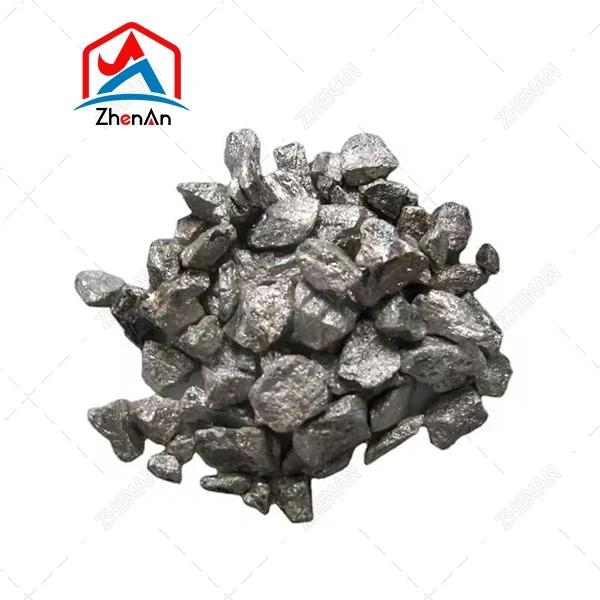
Table 2. High-Carbon Ferromanganese FeMn75C7.0 - Price by Region
CNY/mt, ex-works, cash, tax included. For reference only.
| Region | Phosphorus | Price (CNY/mt) | Change |
|---|---|---|---|
| Yunnan | P<0.2 | 5,800–5,850 | -- |
| Guangxi | P<0.25 | 5,750–5,850 | -- |
| Inner Mongolia | P<0.25 | 5,600 | -- |
| Zhejiang | P<0.25 and P<0.15 both quoted | 6,000–6,100 | -- |
| Shanghai | P<0.25 | 6,000–6,100 | -- |
Table 3. Blast-Furnace Ferromanganese FeMn65C7.0 - National Quotation
CNY/mt, ex-works, cash, tax included. For reference only.
| Product | Route | Price (CNY/mt) | Change |
|---|---|---|---|
| Blast-furnace ferromanganese FeMn65C7.0 | Blast furnace | 5,350 | -- |
The source table does not attach a region to this line, so it is presented here as a national quotation for the blast-furnace route rather than as a regional price.
Table 4. Medium-Carbon Ferromanganese FeMn75C2.0 - Price by Region and Phosphorus Group
CNY/mt, ex-works, cash, tax included. For reference only.
| Region | Phosphorus | Price (CNY/mt) | Change |
|---|---|---|---|
| Guizhou | P<0.25 | 7,600–7,700 | -- |
| Guangxi | P<0.25 | 7,800–7,900 | -- |
| Hunan | P<0.25 | 7,700–7,800 | -- |
| Henan | P<0.25 | 7,600–7,700 | -- |
| Inner Mongolia | P<0.25 | 7,700–7,800 | -- |
| Zhejiang | P<0.2 | 7,900–8,000 | -- |
Table 5. Low-Carbon Ferromanganese FeMn80C0.7 and FeMn80C0.4 - Price by Region and Phosphorus Group
CNY/mt, ex-works, cash, tax included. For reference only.
| Grade | Phosphorus group | Region | Price (CNY/mt) | Change |
|---|---|---|---|---|
| FeMn80C0.7 | Group 2 | Guizhou | 9,600–9,700 | -- |
| FeMn80C0.7 | Group 2 | Hunan | 9,600–9,700 | -- |
| FeMn80C0.7 | Group 2 | Shanxi | 9,600–9,700 | -- |
| FeMn80C0.7 | Group 1 | Guizhou | 9,700–9,800 | -- |
| FeMn80C0.4 | Group 2 | Hunan | 9,900–10,000 | -- |
| FeMn80C0.4 | Group 1 | Hunan | 10,000–10,100 | -- |
| FeMn80C0.4 | Group 1 | Henan | 10,000–10,100 | -- |
Note. All figures are in CNY per metric tonne, ex-works, cash, tax included, and are for reference only. A change marked "--" means the quotation is unchanged from the previous assessment. Phosphorus groups follow the source convention: group 1 is the tighter phosphorus range for a given grade and group 2 the standard range, which is why one grade can carry two separate prices. For FeMn65C7.0 the source table lists no quotation for Sichuan, Guizhou, Henan or Liaoning, so no figures are shown for those regions here.
Ferromanganese Price Trend vs Previous
The Oct 26, 2026 assessment reports no change on any single line: every quotation in every table above carries the same "--" marker. High-carbon FeMn65C7.0 is unchanged in each of its seven quoting regions, from Guangxi at 5,000–5,050 through Inner Mongolia at 5,100 to the 5,400–5,500 band quoted in Jiangsu, Shanghai and Tianjin. High-carbon FeMn75C7.0 is likewise unchanged across Yunnan, Guangxi, Inner Mongolia, Zhejiang and Shanghai, and the blast-furnace FeMn65C7.0 line is unchanged at 5,350. The medium-carbon FeMn75C2.0 lines in Guizhou, Guangxi, Hunan, Henan, Inner Mongolia and Zhejiang are all steady, and so is every low-carbon line for FeMn80C0.7 and FeMn80C0.4 across Guizhou, Hunan, Shanxi and Henan.
What that means in practice is a market with no upward or downward pressure visible in the assessed quotations this issue. Because the change column is flat everywhere, buyers have no basis in this table for reading a short-term directional signal, and sellers have no basis for claiming one. The useful comparison this week is horizontal rather than vertical: the gap between the cheapest and the dearest region for the same grade, and the gap between adjacent grades, both of which are unchanged but still wide.
Grade and Market Context
Ferromanganese is the workhorse manganese addition for steelmaking, and the grades in this table sit at four distinct points on the carbon scale. High-carbon ferromanganese, quoted as FeMn65C7.0 and FeMn75C7.0, carries roughly seven percent carbon as encoded in the grade designation and is the volume product used for deoxidation and manganese alloying in ordinary steel. Blast-furnace FeMn65C7.0 is the same carbon level produced through the blast-furnace route, quoted as a single national figure rather than region by region. Medium-carbon FeMn75C2.0 sits at two percent carbon, used where the steel grade needs manganese without the carbon load of the high-carbon product. Low-carbon FeMn80C0.7 and FeMn80C0.4, at 0.7 and 0.4 percent carbon respectively, sit at the top of the price ladder.
Phosphorus is the second axis that shapes this market. Within one grade, a tighter phosphorus limit commands a higher price, which is visible in the low-carbon table: FeMn80C0.7 in group 1 is quoted at a higher level than the same grade in group 2 in the same region, and FeMn80C0.4 in group 1 is quoted above FeMn80C0.4 in group 2. Medium-carbon FeMn75C2.0 shows the same pattern across regions: the P<0.2 quotation in Zhejiang sits at 7,900–8,000, above the P<0.25 quotations elsewhere in the table. Buyers who need a tight phosphorus specification should therefore expect to pay for it within whichever grade they choose, and should compare like with like when they compare regions.
Regional supply structure explains the rest of the spread. The FeMn65C7.0 table covers seven distinct quoting locations, and the difference between the lowest line, Guangxi at 5,000–5,050, and the highest band, 5,400–5,500 in Jiangsu, Shanghai and Tianjin, is a straightforward geographic gap between a southern production base and eastern consumption and trading hubs. Inner Mongolia and Shanxi and Shandong cluster in the middle at 5,100 and 5,250–5,300 respectively. The FeMn75C7.0 table shows the same geography at a higher carbon-manganese level: Inner Mongolia is the lowest line at 5,600, Yunnan and Guangxi sit at 5,750–5,850, and Zhejiang and Shanghai top the table at 6,000–6,100. Medium-carbon FeMn75C2.0 is quoted in six locations, with Guizhou and Henan at the low end of the P<0.25 range at 7,600–7,700 and Guangxi and Zhejiang at the top. Low-carbon supply in the assessed table is concentrated: FeMn80C0.7 is quoted from Guizhou, Hunan and Shanxi, and FeMn80C0.4 from Hunan and Henan only.
For a full product specification on each of these grades, see the high carbon ferro manganese page, the medium carbon ferro manganese page and the low carbon ferro manganese page; buyers who also need the manganese-silicon combination can review silico manganese.
High-Carbon vs Medium-Carbon vs Low-Carbon Ferromanganese
The three families are not interchangeable, and the Oct 26, 2026 table makes the price consequence of that clear. The comparison below uses only the grades and quotations in this assessment.
| Dimension | High-carbon ferromanganese | Medium-carbon ferromanganese | Low-carbon ferromanganese |
|---|---|---|---|
| Carbon content (per grade code) | C7.0, about seven percent carbon | C2.0, two percent carbon | C0.7 and C0.4, under one percent carbon |
| Grades quoted this issue | FeMn65C7.0, FeMn75C7.0 | FeMn75C2.0 | FeMn80C0.7, FeMn80C0.4 |
| Manganese content (per grade code) | 65 percent and 75 percent | 75 percent | 80 percent |
| Phosphorus grouping quoted | P<0.2 (FeMn65C7.0); P<0.2, P<0.25 and P<0.15 (FeMn75C7.0) | P<0.25 by region; P<0.2 in Zhejiang | Group 1 and group 2, quoted separately |
| Price band this issue (CNY/mt) | 5,000–6,100, plus 5,350 for the blast-furnace line | 7,600–8,000 | 9,600–10,100 |
| Number of quoting regions this issue | Seven for FeMn65C7.0, five for FeMn75C7.0 | Six | Four region-and-grade combinations |
| Typical application focus | Bulk steel deoxidation and manganese alloying | Steel grades needing manganese with tighter carbon control | Low-carbon and special steel grades, where carbon pickup must be minimised |
The separation between the families is the single most important fact in the table. The three ranges do not overlap at all: high-carbon tops out at 6,100 while medium-carbon begins at 7,600, and medium-carbon tops out at 8,000 while low-carbon begins at 9,600. The blast-furnace line is the lowest single figure in the whole assessment at 5,350. Within high-carbon, moving from FeMn65C7.0 to FeMn75C7.0 raises both the manganese content and the quotation, with the FeMn75C7.0 range running from 5,600 to 6,100 against 5,000 to 5,500 for FeMn65C7.0.
What Buyers Should Check Before Ordering Ferromanganese
A flat price column does not make an order simple, because most of the risk in a ferromanganese purchase sits outside the price line. The checklist below follows the structure of the table itself.
- Grade and carbon level. Confirm the exact grade code, for example FeMn65C7.0 or FeMn80C0.4, and the carbon range it implies. A specification that names only "ferromanganese" leaves the supplier free to quote any point on the ladder from 5,000 to 10,100.
- Phosphorus limit and group. State the phosphorus limit explicitly, P<0.2 or P<0.25 for high and medium carbon, and group 1 or group 2 for low carbon. Because one grade can carry two prices depending on group, an unstated phosphorus requirement is an unpriced requirement.
- Price basis. Establish whether a quotation is ex-works, cash and tax included, as every line in this table is, or delivered. The gap between ex-works and delivered pricing is separate from, and often larger than, the regional gap in the table.
- Region and logistics. Match the quoting region to the delivery point. The same FeMn65C7.0 grade is quoted at 5,000–5,050 in Guangxi and 5,400–5,500 in Jiangsu, Shanghai and Tianjin, so freight, transit time and port or warehouse handling all belong in the landed-cost comparison.
- Quantity, sizing and packing. Confirm the tonnage, the lump or crushed size range, and the packing form, since these change handling cost and are not reflected in a per-tonne quotation.
- Analysis and certification. Ask for the chemical analysis of the actual lot, covering manganese, carbon, phosphorus and sulphur, rather than relying on the grade code alone.
- Payment and delivery terms. Agree the payment instrument, the delivery window and the inspection basis in writing before the price is fixed.
FAQ
Which grade of ferromanganese should I choose: high carbon, medium carbon or low carbon?
Choose by the carbon budget of the steel you are making. High-carbon FeMn65C7.0 or FeMn75C7.0 is the normal choice for bulk deoxidation and manganese alloying where the carbon load is acceptable. Medium-carbon FeMn75C2.0 is for grades that need manganese with tighter carbon control, and low-carbon FeMn80C0.7 or FeMn80C0.4 is for low-carbon and special steels where carbon pickup must be minimised. In the Oct 26, 2026 table the three families are quoted in clearly separated bands, so the choice is a metallurgical one first and a cost one second.
What is the difference between phosphorus group 1 and group 2 in ferromanganese?
Group 1 is the tighter phosphorus range for a given grade and group 2 is the standard range, so the same grade can be quoted at two different prices depending on which group is required. The effect is visible in the low-carbon table: FeMn80C0.7 in group 1 is quoted above FeMn80C0.7 in group 2 in the same region, and FeMn80C0.4 in group 1 is quoted above FeMn80C0.4 in group 2. Buyers should state the required group in the enquiry, because an unstated phosphorus requirement cannot be priced.
Why do ferromanganese prices differ between regions in the Oct 26, 2026 table?
The assessment itself does not break the regional gaps down into causes, but two things are visible in the table. First, different regions quote different grades and different phosphorus limits, so not every region is offering the same product. Second, for a single grade the gap is geographic: FeMn65C7.0 is quoted at 5,000–5,050 in Guangxi and at 5,400–5,500 in Jiangsu, Shanghai and Tianjin, with Inner Mongolia at 5,100 and Shanxi and Shandong at 5,250–5,300 in between. Any landed-cost comparison therefore needs the freight and delivery terms added before the numbers are compared.
What should I confirm before placing a ferromanganese order?
Confirm the grade code and carbon level, the phosphorus limit or group, the price basis (ex-works or delivered, cash and tax included or otherwise), the quoting region against your delivery point, the tonnage and sizing, the chemical analysis of the lot, and the payment and delivery terms. On a flat market like this one, these specification and logistics items move the landed cost far more than any price movement visible in the assessment.
Key Takeaways
- Every ferromanganese quotation in the Oct 26, 2026 assessment is unchanged: the change column is "--" on all lines, across high-carbon, blast-furnace, medium-carbon and low-carbon grades.
- High-carbon FeMn65C7.0 is quoted from 5,000–5,050 in Guangxi to 5,400–5,500 in Jiangsu, Shanghai and Tianjin, with Inner Mongolia at 5,100 and Shanxi and Shandong at 5,250–5,300.
- High-carbon FeMn75C7.0 is quoted from 5,600 in Inner Mongolia to 6,000–6,100 in Zhejiang and Shanghai, and blast-furnace FeMn65C7.0 is quoted at 5,350 as a national figure without a region.
- Medium-carbon FeMn75C2.0 runs from 7,600–7,700 in Guizhou and Henan to 7,900–8,000 for P<0.2 material in Zhejiang.
- Low-carbon material is the top of the ladder, from 9,600–9,700 for FeMn80C0.7 group 2 to 10,000–10,100 for FeMn80C0.4 group 1.
- Phosphorus grouping is a price variable inside a grade, not a footnote: the tighter group commands the higher number.
- Because nothing moved this issue, the actionable comparison is horizontal, between regions and between grades, not directional.
Ready to price a specific grade against your delivery point? Send us the grade code, phosphorus limit, tonnage and destination and we will come back with a quotation built around your specification.
Get Your Tailored Quotation
Contact our team directly: WhatsApp: +86 15518824805 or Email: market@zanewmetal.com.