Ferro Silicon Nitride Powder vs Silicon Carbide in Refractories | Technical Guide for Industrial Applications
In modern high-temperature metallurgy, refractory performance directly determines furnace stability, campaign life, and production efficiency. Among advanced refractory additives, Ferro Silicon Nitride Powder (FeSiN) and Silicon Carbide (SiC) are widely used as functional materials for oxidation resistance, thermal shock resistance, and slag corrosion control.
Although both materials are silicon-based and used in steelmaking and refractory systems, their phase composition, reaction mechanism, and service behavior are fundamentally different. Understanding these differences is critical for selecting the correct material in blast furnace troughs, ladle linings, and high-wear refractory zones.
What is Ferro Silicon Nitride Powder (FeSiN)?
Ferro Silicon Nitride Powder is a composite nitrided alloy material produced by reacting ferrosilicon with nitrogen under controlled high-temperature conditions. The final product typically contains:
• Silicon (Si) from ferrosilicon base
• Silicon Nitride (Si₃N₄) phase
• Minor Fe-containing metallic phase
• Controlled free silicon content depending on grade
The key functional phase is silicon nitride, which provides exceptional resistance to slag penetration, oxidation, and thermal shock.
Production Process of FeSiN
The industrial production route generally includes:
1. Selection of high-purity ferrosilicon raw material (commonly 75% Si grade)
2. Nitrogenation reaction in a controlled atmosphere furnace
3. Formation of Si₃N₄ binding network on particle surfaces
4. Crushing, milling, and classification into powder form
5. Quality control for nitrogen content, particle size, and impurity levels
The nitriding process is critical because it determines the stability of Si₃N₄ phases, which directly affects refractory performance in service conditions.
What is Silicon Carbide (SiC)?
Silicon Carbide is a crystalline compound formed from silicon and carbon under high temperature. In refractories, SiC is widely used due to its:
• Extremely high hardness
• Excellent thermal conductivity
• Strong oxidation resistance at moderate temperatures
• High mechanical strength under load
In steelmaking applications, SiC is commonly used as a deoxidizer and refractory aggregate in castables, bricks, and ramming masses.
Key Technical Differences: FeSiN vs SiC
1. Chemical Structure
FeSiN: Silicon Nitride-based ceramic bonding system (Si₃N₄ matrix)
SiC: Covalent crystal structure (Si–C bond)
2. Reaction Behavior in Steelmaking Environment
FeSiN reacts more gradually and forms protective nitride layers that improve slag resistance. SiC reacts faster, mainly contributing to deoxidation and carbon-silicon balance in molten steel.
3. Thermal Stability
FeSiN shows superior stability in oxidizing and high-slag environments due to Si₃N₄ bonding. SiC performs well in inert or mildly oxidizing conditions but may oxidize at elevated temperatures forming SiO₂.
4. Functional Role in Refractories
FeSiN acts as a structural reinforcement and anti-penetration agent in refractory systems.
SiC acts as a strength enhancer and thermal conductivity modifier in castables and bricks.
Applications in Metallurgy and Refractories
FeSiN Applications
• Blast furnace tap hole clay (taphole mass)
• Runner and trough castables
• Al₂O₃-SiC-C refractory systems
• Ladle lining high-erosion zones
• EAF and BOF hot spot protection materials
FeSiN is particularly effective in environments with aggressive slag penetration and cyclic thermal shock.
Silicon Carbide Applications
• High-strength refractory bricks
• Steel ladle castables
• Kiln furniture and ceramic systems
• Deoxidizer in steel refining
• Wear-resistant industrial linings
Performance Comparison Table
FeSiN vs SiC in Refractory Systems
• Oxidation Resistance: FeSiN (High) vs SiC (Medium-High)
• Slag Resistance: FeSiN (Excellent) vs SiC (Good)
• Thermal Shock Resistance: FeSiN (Very High) vs SiC (High)
• Structural Bonding: FeSiN (Si₃N₄ network) vs SiC (crystalline reinforcement)
• Primary Function: FeSiN (Protection) vs SiC (Strength & deoxidation)
Synergy in Refractory Engineering
In advanced refractory formulations, FeSiN and SiC are not always competing materials. In many industrial systems, they are used together to achieve a balance between:
• Mechanical strength (SiC contribution)
• Chemical stability (FeSiN contribution)
• Thermal shock resistance (combined effect)
• Extended service life under cyclic furnace operation
This synergistic design is widely applied in modern steel plants aiming to reduce downtime and improve furnace campaign life.
Procurement and Selection Guide
When selecting between FeSiN and SiC, procurement engineers should evaluate:
1. Furnace type (blast furnace, ladle, EAF)
2. Slag chemistry and basicity level
3. Operating temperature range
4. Thermal cycling frequency
5. Required lining lifespan
FeSiN is preferred in high-corrosion, high-slag infiltration zones. SiC is preferred in high-load, high-wear structural zones.
Quality Control Parameters
For industrial-grade FeSiN powder:
• Nitrogen content consistency
• Si₃N₄ phase stability
• Particle size distribution (0–3 mm, powder grades)
• Impurity control (Al, Ca, S, P limits)
For Silicon Carbide:
• SiC purity level (typically 88%–90% for metallurgical grade)
• Free carbon content
• Grain size uniformity
• Oxidation resistance behavior
Industry Insight
From an engineering application standpoint, FeSiN represents a newer generation of functional refractory additive focusing on chemical protection and bonding stability, while SiC remains a mature material optimized for mechanical reinforcement and deoxidation efficiency.
In high-performance steel production systems, especially in continuous casting and blast furnace operations, material selection is no longer based on single-property optimization but on multi-functional synergy design.
FAQ – Ferro Silicon Nitride Powder vs Silicon Carbide
1. What is Ferro Silicon Nitride Powder used for?
It is mainly used in high-temperature refractory systems such as blast furnace tap hole clay, ladle linings, and runner castables. Its primary function is to improve slag resistance and thermal shock stability through silicon nitride bonding phases.
2. Is FeSiN better than Silicon Carbide?
Neither material is universally "better." FeSiN performs better in chemical corrosion and slag penetration environments, while SiC performs better in mechanical reinforcement and deoxidation applications. The choice depends on furnace conditions.
3. Can FeSiN and SiC be used together?
Yes. In many advanced refractory formulations, FeSiN and SiC are combined to balance mechanical strength and chemical resistance, improving overall service life of furnace linings.
4. What is the main advantage of SiC in refractories?
Silicon Carbide provides high hardness, thermal conductivity, and structural strength, making it ideal for wear-resistant and load-bearing refractory applications.
5. How does FeSiN improve furnace life?
FeSiN forms a silicon nitride protective network that reduces slag penetration and oxidation damage, significantly improving resistance to chemical erosion in high-temperature zones.
6. What particle sizes are available for FeSiN powder?
Common industrial grades include 0–1 mm, 1–3 mm, and fine powder formats depending on application requirements in refractory formulations.
7. What is the typical SiC content for metallurgical grade products?
Metallurgical-grade Silicon Carbide is commonly available in 88% and 90% SiC content, depending on production method and impurity control.
8. Which industries use FeSiN most?
It is widely used in steelmaking industries, especially in blast furnace operations, refractory manufacturing plants, and high-temperature casting systems.
9. Does SiC oxidize at high temperature?
Yes, at elevated temperatures SiC can oxidize to form SiO₂, which may affect performance depending on furnace atmosphere and oxygen exposure level.
10. How to choose between FeSiN and SiC?
Selection should be based on furnace conditions: FeSiN for chemical and slag resistance environments, SiC for mechanical strength and deoxidation-focused applications.
Contact Information
For technical specifications, quotation, or sample requests:
Email: market@zanewmetal.com
WhatsApp: +86 15518824805
Visit https://www.metal-alloy.com/ to learn more about the product. If you would like to learn more about the product price or are interested in purchasing, please email market@zanewmetal.com. We will get back to you as soon as we see your message.
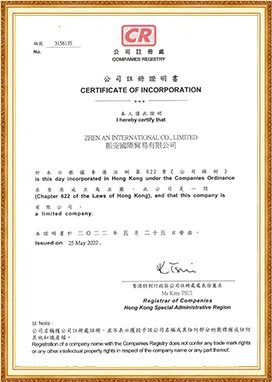
ZhenAn Metallurgy & New Materials Certificates