In global metallurgy and structural component manufacturing, silicon metal stands as the single most critical alloying additive for modifying and optimizing aluminum foundry alloys. Commercially recognized as the backbone of automotive and aerospace casting, adding the proper grades of industrial silicon transforms pure aluminum from a soft, high-shrinkage liquid into an exceptionally fluid, wear-resistant, and high-strength engineering material. As an authoritative global metallurgical raw material partner, ZhenAn presents this technical and commercial analysis detailing the underlying physics, exact grade parameters, and metallurgical mechanics governing how silicon additions modify aluminum melts. Whether you are utilizing a standard silicon metal lump, specialized silicon metal granule sizing, or precise silicon metal powder, this guide adheres to the latest 2026 global foundry standards to optimize your melt yield and product compliance.
For urgent foundry bulk inquiries, specialized element control, or tier-one pricing matrices, please coordinate with our international supply team:
Email: market@zanewmetal.com
WhatsApp/WeChat: +86 15518824805

What Is Foundry-Grade Silicon Metal and How Is It Professionally Defined?
In global raw material trade, foundry-grade 99% silicon metal is a refined single-substance elemental metalloid derived through the intense carbonothermic reduction of premium high-purity quartz (SiO₂) in submerged electrical arc furnaces. It is classified under Harmonized System Code (HS Code) 2804.6900, serving as an absolute requirement in the formulation of the Al-Si (Aluminum-Silicon) alloy series, which accounts for over 80% of all shaped aluminum castings globally.
Unlike chemical-grade silicon feedstocks which strictly restrict trace elements to protect chemical fluid beds from catalyst poisoning, foundry-grade industrial silicon focuses primarily on the targeted optimization of iron (Fe), aluminum (Al), and calcium (Ca) ratios to govern grain boundary mechanics, eutectic matrix structures, and melt cost efficiency. Delivered typically as a solid gray silicon lump 10–100mm matrix, its addition alters the physical and chemical attributes of the aluminum base metal, shifting its thermodynamic profiles to enable complex industrial molding.
What Is the Modern Refining Process of High Purity Silicon Metal for Aluminum Alloy Foundries?
Sourcing exceptional high purity silicon metal 99.5 requires absolute control over furnace parameters, ladle thermodynamics, and sorting environments. The multi-stage manufacturing framework includes:
Raw Charge Balancing
Pure quartz gravel with an SiO₂ content exceeding 99.5% is meticulously paired with low-ash bituminous coal, charcoal, and high-tier petroleum coke. Advanced foundries often demand a low Al silicon metal to prevent erratic hard-spot formation in the final cast matrix.
Electric Arc Thermal Reduction:
The mixed batch is continuously fed into a submerged arc furnace. High-power graphite electrodes generate extreme core heats up to 2000°C, driving the elemental separation:
SiO₂ + 2C → Si + 2CO↑

Ladle Oxidation Refining:
The molten silicon is tapped into a refining ladle where automated lances inject custom oxygen and air mixtures. Because calcium and aluminum oxidize at faster thermodynamic thresholds than silicon, they form a surface slag layer, upgrading the bath into a high-tier 99.5% silicon metal matrix.
Milling and Particle Tailoring:
Once cooled into large dense ingots, mechanical jaw crushers and rollers fracture the material into specific grain structures, distributed as a standard silicon lump 10–100mm, 1–3mm silicon metal granule fractions, or 200-mesh silicon metal powder fine bags depending on the downstream furnace injection setup.
How to Accurately Interpret Standard Silicon Metal Grades for Aluminum Casting?
Global buying managers and metallurgical engineers categorize industrial silicon using a standardized three- or four-digit nomenclature based on the maximum allowable percentages of iron, aluminum, and calcium impurities. Understanding these thresholds is vital to maintain appropriate mechanical limits in the foundry:
- 553 Silicon Metal (silicon 553 grade spec): Denotes an iron content of ≤0.50%, aluminum of ≤0.50%, and calcium of ≤0.30%. This is the global workhorse grade for standard casting applications, balancing high performance with optimal supply chain cost efficiency.
- 441 Silicon Metal (silicon metal 441 composition): Restricts iron to ≤0.40%, aluminum to ≤0.40%, and calcium to ≤0.10%. The lower calcium envelope makes it highly sought after for structural automotive die castings requiring elevated fracture toughness.
- 3303 Silicon Metal (high purity silicon grade 3303): Imposes strict limits of Fe ≤0.30%, Al ≤0.30%, and Ca ≤0.03%. This represents a premium 99% silicon metal tier utilized in specialty aviation master alloys and ultra-thin precision castings.
- 2202 Silicon Metal (low iron silicon metal): Tightens tolerances to Fe ≤0.20%, Al ≤0.20%, and Ca ≤0.02%. This ultra-pure high purity silicon metal 99.5 grade is reserved for premium wrought alloys and critical high-ductility structural components.
What Are the Precise Technical Parameter Specifications of Silicon Metal Grades?
The following technical data matrix details the exact chemical composition requirements for the primary industrial grades of silicon metal utilized in modern aluminum casting, fully compliant with international 2026 third-party inspection guidelines (SGS, CCIC, Eurofins):
| Commercial Grade | Si Content (Min %) | Fe Content (Max %) | Al Content (Max %) | Ca Content (Max %) | Primary Aluminum Casting Use Cases |
|---|---|---|---|---|---|
| 553 | 98.5% | 0.50% | 0.50% | 0.30% | Standard engine accessory housings, gearbox casings, structural brackets, general utility cast alloys (e.g., A380). |
| 441 | 99.1% | 0.40% | 0.40% | 0.10% | High-speed automotive alloy wheels, structural chassis components, safety-critical suspension arms (e.g., A356). |
| 421 | 99.3% | 0.40% | 0.20% | 0.10% | Specialized thin-walled electronics enclosures, custom high-conductivity heat sinks demanding low-aluminum variance. |
| 3303 | 99.37% | 0.30% | 0.30% | 0.03% | Aerospace structural impellers, premium marine-grade anti-corrosive cast assemblies, military-grade housings. |
| 2202 | 99.58% | 0.20% | 0.20% | 0.02% | Ultra-high elongation wrought-cast master batches, defense-sector ballistic components requiring minimum iron contamination. |
How Does Silicon Metal Improve Aluminum Casting Performance?
Adding 553 silicon metal or 441 silicon metal into an aluminum melt fundamentally fundamentally alters the thermodynamic and physical dynamics of the crystallization process. Pure aluminum exhibits poor foundry properties, characterized by a narrow liquid-solid transition zone, high volumetric solidification shrinkage (approx. 6.5%), and extreme vulnerability to hot tearing. When elemental silicon dissolves into the aluminum matrix, it creates a binary eutectic mixture. At the precise eutectic concentration of approximately 11.7% to 12.6% silicon, the liquid melt transforms directly into a solid at a single, reduced temperature of 577°C, instead of passing through an extended, sluggish mushy state.
This thermodynamic shift radically maximizes the liquid melt's fluid flow, allowing the molten aluminum to penetrate and fill the most intricate, thin-walled geometric channels of a die mold before freezing. Furthermore, elemental silicon expands slightly upon solidification, which perfectly counters the natural liquid-to-solid shrinkage of the aluminum matrix. This volumetric equilibrium minimizes localized macro-porosity, suppresses hot-tearing cracks along complex casting radiuses, and drastically increases the geometric yield and soundness of high-volume industrial foundries.
What Are the Precise Mechanical and Microstructural Enhancements Driven by Silicon Additions?
Beyond optimizing fluid dynamics within the mold, silicon additions fundamentally engineer the microscopic grain architecture of the solid aluminum casting:
- Eutectic Matrix Hardening: Silicon exhibits negligible solid solubility within aluminum, forcing excess silicon to precipitate out as an ultra-hard, dispersed phase within the inter-dendritic spaces. This hard eutectic network acts as a structural reinforcing matrix that anchors the soft aluminum grains.
- Drastic Reduction in the Coefficient of Thermal Expansion (CTE): High-silicon aluminum formulations (especially hypereutectic variations containing 15% to 25% silicon) showcase extreme dimensional stability under volatile operating heats. This makes them ideal for engine pistons that must maintain strict tolerances inside a combustion cylinder.
- Suppression of Hot Cracking: By supplying ample eutectic liquid at the final stages of freezing, silicon fills the microscopic structural voids forming between solidifying dendrites, neutralizing tensile stress concentrations that otherwise trigger catastrophic hot tears.
How Do Different Silicon Content Profiles Contrast Across Foundry Operations?
Varying the concentration of silicon metal within the aluminum matrix creates distinct metallurgical profiles, classified into three main industrial categories:
- Hypoeutectic Alloys (5% to 10% Si, e.g., A356 / A380): These formulations combine great casting flow with excellent post-treatment ductility and impact toughness. They rely heavily on 441 silicon metal to limit iron contamination, making them ideal for load-bearing automotive knuckles and suspension components.
- Eutectic Alloys (11% to 13% Si, e.g., A413): Engineered to deliver the absolute peak fluid filling performance and minimum volumetric shrinkage. These alloys are extensively channeled into ultra-thin-walled electronics housings and complex, non-heat-treated pressure die castings.
- Hypereutectic Alloys (14% to 25% Si, e.g., A390): These materials feature large, primary silicon crystals embedded throughout the matrix, yielding exceptional wear resistance and structural hardness. Hypereutectic alloys require specialized low iron silicon metal and phosphor modification to prevent coarse, brittle clustering, and are heavily utilized in linerless engine cylinders and air compressor blocks.
Silicon Metal vs Ferrosilicon and FesiZr: What Are Their Foundational Foundry Differences?
Procurement departments frequently confuse pure industrial silicon with common ferroalloys like ferrosilicon (FeSi) and ferrosilicon zirconium (FeSiZr). According to global metallurgical standards, these products are non-interchangeable, possessing completely separate chemistries and intended applications:
- Chemical Composition Profiles: Silicon metal is a high-purity單质 material (Si ≥98.5%), where iron is minimized as a trace impurity. Ferrosilicon is an intentional iron-silicon alloy (typically FeSi75, containing ~75% Si and ~25% Fe). Ferrosilicon Zirconium is a specialized multi-component ferroalloy embedded with 2%–6% zirconium to serve as a nodulizer.
- Target Melting Baselines: Pure silicon metal is specifically engineered to dissolve into aluminum baths without introducing unwanted heavy metals. Conversely, ferrosilicon and FeSiZr are explicitly formulated for iron foundries and steel refining; adding them to an aluminum casting furnace would inject massive, destructive amounts of iron, ruining the aluminum alloy's mechanical elongation limits.
- Primary Metallurgical Roles: Silicon metal modifies fluid mechanics and introduces wear-resistant eutectic matrices in non-ferrous aluminum. Ferrosilicon functions as a primary bulk steel deoxidizer, while Ferrosilicon Zirconium operates as a premium inoculant in gray and ductile iron casting to control graphite flake distribution and eliminate hard chilling defects.
The Expert Buying Guide for Sourcing Silicon Metal in Global Aluminum Foundries
To ensure high melt recovery rates, safeguard downstream mechanical integrity, and satisfy strict environmental compliance standards, ZhenAn's chief metallurgical procurement specialists advise implementing the following sourcing strategies:
- Enforce Precise Sizing Matrices to Match Charging Technology: Do not buy random sizes. If your foundry utilizes rapid automated induction furnaces, opt for a dense silicon metal granule (1–5mm) or fine silicon metal powder injection to maximize surface contact and accelerate dissolution. For massive reverberatory furnaces, stick to a standard silicon lump 10–100mm to prevent the material from instantly burning off into the surface slag.
- Establish Stringent Trace Element Multipliers: Look beyond the macro numbers of 553 or 441. Mandate your silicon granules supplier to guarantee strict parts-per-million (ppm) maximum limits on deleterious trace elements like phosphorus (P), boron (B), and titanium (Ti), which can inadvertently suppress the efficacy of external grain refiners or strontium modifiers.
- Audit Carbon Intensity and ESG Credentials: With regulations like the EU's Carbon Border Adjustment Mechanism (CBAM) imposing penalties on carbon-heavy metals, always evaluate the energy footprint of your supplier. Prioritize producers leveraging clean hydropower or solar grids, and demand verified ISO 14067 Product Carbon Footprint (PCF) disclosures from your partner to avoid steep regulatory tariffs.
Detailed FAQ: Key Technical Insights on Silicon Metal in Aluminum Casting
Q1: How does silicon metal improve aluminum casting performance and alloy properties?
A1: Silicon metal acts as the primary fluidizing and anti-shrinkage modifier in aluminum casting metallurgy. Its main contribution is the creation of a highly fluid binary eutectic matrix that radically lowers the overall pouring temperature of the melt down to roughly 577°C. By decreasing the melting threshold and narrowing the solidification temperature range, it gives the liquid alloy exceptional volumetric stability and mold-filling capability. Once solid, the precipitated silicon crystals form an integrated, hard inter-dendritic grid that directly enhances structural strength, increases fatigue resistance, provides exceptional dimensional stability, and significantly reduces the casting's susceptibility to high-temperature cracking or deformation under mechanical loads.
Q2: Why is silicon added to aluminum alloys in casting processes?
A2: Silicon is added because pure molten aluminum is exceptionally difficult to cast effectively. Unalloyed liquid aluminum suffers from low fluid mobility and a high volumetric solidification contraction rate of roughly 6.5%. This extreme shrinkage frequently causes severe casting defects, such as internal shrinkage cavities, localized macro-porosity, surface sink marks, and extensive hot tearing along the mold's sharp internal radiuses. By dissolving a high-purity silicon lump 10–100mm into the bath, the foundry transforms the base metal into an Al-Si alloy. Solidifying silicon naturally undergoes a slight volume expansion, which perfectly counters the contraction of the aluminum matrix. This ensures crisp mold replication, exceptional geometric accuracy, and a dramatic reduction in scrap rates.
Q3: How does silicon metal affect fluidity and filling ability in aluminum melts?
A3: Silicon metal optimizes fluid dynamics by reducing the melt's kinematic viscosity and altering its thermodynamic crystallization mechanics. As silicon concentrations approach the eutectic threshold (~12.5% Si), the liquid melt flows smoothly through narrow channels because it changes directly from a liquid to a solid without forming a sluggish, semi-solid dendritic network. This high fluid mobility enables the alloy to fill ultra-thin-walled, intricate geometric cavities-such as those found in modern automotive transmission cases and structural EV battery enclosures-without freezing prematurely. This rapid filling performance also permits lower pouring temperatures, reducing hydrogen absorption and reducing gas porosity defects.
Q4: What role does silicon play in reducing shrinkage and casting defects?
A4: Silicon reduces casting defects through a combination of volumetric compensation and thermodynamic feeding. As an aluminum-silicon melt reaches its final freezing stage, the remaining liquid transitions into a eutectic phase that expands slightly as the silicon crystals precipitate. This expansion counteracts the natural contraction of the surrounding aluminum dendrites. This process forces the remaining liquid into micro-voids, eliminating the formation of localized shrinkage cavities and center-line porosity. Furthermore, this consistent feeding mechanism relieves internal tensile stresses during the critical mushy stage, suppressing hot tearing along complex casting radiuses.
Q5: How does silicon content influence mechanical strength in aluminum alloys?
A5: Silicon content increases mechanical strength through dispersion strengthening and microstructural modification. Because silicon possesses very low solid solubility in aluminum, it precipitates during cooling as hard, independent elemental crystals distributed throughout the softer alpha-aluminum matrix. These hard particles act as structural pinning centers that restrict dislocation movement when the component is subjected to external mechanical loads, significantly raising the material's yield strength, Brinell hardness, and fatigue limits. However, if the silicon content exceeds the hypereutectic threshold without proper modification, these crystals can grow into coarse, brittle plates that compromise the alloy's impact toughness and elongation metrics.
Q6: Which aluminum alloy grades commonly use silicon metal as an additive?
A6: Silicon metal is a primary constituent in several highly prominent global aluminum casting alloy series. These include the 3xx.x series (Al-Si-Cu / Al-Si-Mg), represented by foundational workhorse grades like A356 (extensively chosen for high-stress automotive steering knuckles and aerospace structural impellers) and A380 (the global benchmark for high-pressure die-cast engine blocks and brackets). It also underpins the 4xx.x series (pure Al-Si binary alloys), such as A413, which is highly valued for thin-walled marine-grade components due to its exceptional corrosion resistance and mold-filling characteristics. These formulations rely on consistent, high-tier 99% silicon metal additions to maintain predictable mechanical baselines.
Q7: How does silicon improve wear resistance and corrosion resistance in cast aluminum?
A7: Silicon improves wear resistance by populating the alloy with exceptionally hard, dispersed primary crystals that exhibit a Mohs hardness of approximately 7. When the casting faces abrasive wear or sliding friction, these hard silicon particles bear the primary contact load, protecting the softer aluminum matrix from gauling and severe adhesive wear. This makes high-silicon aluminum alloys ideal for linerless automotive engine cylinders. Regarding corrosion resistance, silicon naturally forms a highly stable, passive silicon dioxide (SiO₂) sub-layer when exposed to atmosphere. This works in tandem with aluminum's natural oxide layer to form an inert barrier that resists chemical degradation in marine environments and industrial atmospheres.
Q8: What factors affect silicon recovery rate in aluminum casting processes?
A8: The silicon recovery rate-the percentage of added silicon that successfully dissolves into the alloy rather than burning off into the slag-is dictated by three main variables:
1. Melt Sizing Alignment: Utilizing an oversized silicon metal lump in small induction furnaces causes sluggish dissolution, leaving the material exposed to surface oxygen for too long and increasing oxidation losses. Conversely, injecting ultra-fine silicon metal powder fine directly onto the surface of a turbulent bath causes the powder to immediately oxidize into slag before dissolving. Sizing must be closely matched to furnace volume.
2. Bath Temperature Controls: Dissolving silicon metal is an endothermic process that proceeds efficiently at temperatures between 720°C and 760°C. If the melt temperature drops too low, dissolution stalls, forcing the silicon to sink to the furnace floor as un-dissolved sludge.
3. Slag Chemistry and Agitation: The presence of a highly reactive, un-skimmed oxide slag layer accelerates the oxidation of newly added silicon. Foundries should leverage electromagnetic bottom-stirring or rotary inert gas skimming to submerge the silicon additions beneath the surface, preventing atmospheric oxidation and maximizing recovery rates beyond 95%.
Visit https://www.metal-alloy.com/ to learn more about the product. If you would like to learn more about the product price or are interested in purchasing, please email market@zanewmetal.com. We will get back to you as soon as we see your message.
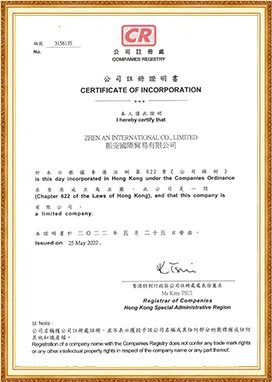
ZhenAn Metallurgy & New Materials Certificates