


How to Evaluate Ferro Vanadium Quality?
Ferro vanadium (FeV) quality is evaluated based on vanadium content (V%), impurity levels (C, Si, P, S, Al), particle size consistency, and recovery performance in steelmaking. Among these, vanadium content and impurity control are the most critical factors, as they directly determine alloying efficiency, steel cleanliness, and final mechanical properties. High-quality ferro vanadium ensures stable composition, high recovery rate, and minimal contamination, which is essential for producing high-strength and high-performance steels.
Ferro Vanadium Standard Specification (Quality Reference)
| Grade | V (%) | C (%) | Si (%) | P (%) | S (%) | Al (%) | Size | Quality Level |
|---|---|---|---|---|---|---|---|---|
| FeV 80 | 78–82 | ≤0.5 | ≤1.5 | ≤0.05 | ≤0.03 | ≤2.0 | 10–50 mm | High purity |
| FeV 60 | 58–62 | ≤0.6 | ≤2.0 | ≤0.06 | ≤0.04 | ≤2.5 | 10–50 mm | Standard |
| FeV 50 | 48–52 | ≤0.8 | ≤2.5 | ≤0.08 | ≤0.05 | ≤3.0 | 10–50 mm | Economic |
Key Factors to Evaluate Ferro Vanadium Quality
1. Vanadium Content (V%) – Core Value Indicator
Vanadium content is the most direct indicator of ferro vanadium quality. Higher V% means more effective alloying with lower consumption per ton of steel. For example, FeV 80 provides significantly better efficiency than FeV 50, reducing overall alloy addition cost in high-grade steel production.
2. Impurity Levels – Impact on Steel Cleanliness
Impurities such as carbon, phosphorus, sulfur, silicon, and aluminum must be strictly controlled. High levels of P and S can reduce steel toughness, while excess Al and Si may lead to unwanted inclusions. High-quality ferro vanadium features low impurity content, ensuring cleaner steel and better mechanical properties.
3. Particle Size Distribution – Consistency Matters
Uniform particle size ensures predictable melting behavior and stable alloying performance. Oversized lumps may not fully dissolve, while excessive fines may oxidize quickly, reducing recovery rate. A controlled size range (e.g., 10–50 mm or 3–10 mm) is a key quality indicator.
4. Vanadium Recovery Rate in Steelmaking
Actual performance in the furnace is critical. High-quality ferro vanadium provides high recovery rates (typically >90%), meaning more vanadium is effectively absorbed into the steel, reducing waste and improving cost efficiency.
5. Chemical Stability and Batch Consistency
Reliable suppliers ensure consistent chemical composition across batches, which is essential for large-scale steel production. Variations in composition can lead to unstable steel properties and production inefficiencies.
6. Physical Condition and Appearance
High-quality ferro vanadium should have:
Clean metallic luster
Minimal dust and fines
No excessive oxidation or rust
This reflects proper production and storage conditions.
Grade Comparison: FeV 80 vs FeV 60 vs FeV 50
FeV 80 vs FeV 60
FeV 80 provides higher vanadium concentration and lower impurity levels, resulting in better alloying precision and higher recovery efficiency. It is preferred for high-performance steels such as HSLA and automotive steel. FeV 60 offers a balance between cost and performance, suitable for general alloy steel production where extreme purity is not required.
FeV 80 vs FeV 50
FeV 80 ensures superior steel quality and consistency, making it ideal for demanding applications. FeV 50, while more economical, has lower vanadium content and higher impurity tolerance, which may lead to reduced performance in high-grade steel.
FeV 60 vs FeV 50
FeV 60 provides better metallurgical performance and cleaner steel compared to FeV 50. FeV 50 is mainly used in large-scale, cost-sensitive production, where strict performance requirements are not critical.
Summary
Evaluating ferro vanadium quality requires a comprehensive analysis of vanadium content, impurity levels, particle size distribution, recovery rate, and batch consistency. Among all grades, FeV 80 represents the highest quality standard, offering superior alloying efficiency and steel performance. Selecting high-quality ferro vanadium directly improves steel strength, production efficiency, and cost control.
FAQ – Ferro Vanadium Quality Evaluation
1. What is the most important factor in ferro vanadium quality?
Vanadium content (V%) is the most critical factor, as it determines alloying efficiency.
2. How do impurities affect ferro vanadium quality?
Impurities like P and S reduce steel toughness, while Al and Si affect inclusion formation and cleanliness.
3. What is a good vanadium recovery rate?
A high-quality ferro vanadium typically achieves over 90% recovery rate in steelmaking.
4. Does particle size affect quality?
Yes, uniform particle size ensures stable melting and higher recovery efficiency.
5. Which grade is best for high-strength steel?
FeV 80 is the best choice due to its high vanadium content and low impurity levels.
6. How to ensure supplier quality consistency?
Choose suppliers with strict quality control, batch testing, and stable production processes.
Get High-Quality Ferro Vanadium Supply
We supply FeV 80, FeV 60, and FeV 50 with strict quality control, low impurity levels, and stable performance for global steel manufacturers.
📧 Email: market@zanewmetal.com
📱 WhatsApp: +86 15518824805
✔ High vanadium recovery rate (>90%)
✔ Low impurity guaranteed for clean steel
✔ Consistent batch quality and fast delivery
👉 Contact us now for quotation, samples, and technical support.
Trusted Ferrovanadium Supplier – Quality · Experience · Stable Supply
All ferrovanadium (FeV) products are produced under strict ISO9001 quality management systems and verified by third-party inspection. COA, SDS, and REACH documents are available to ensure smooth international trade.
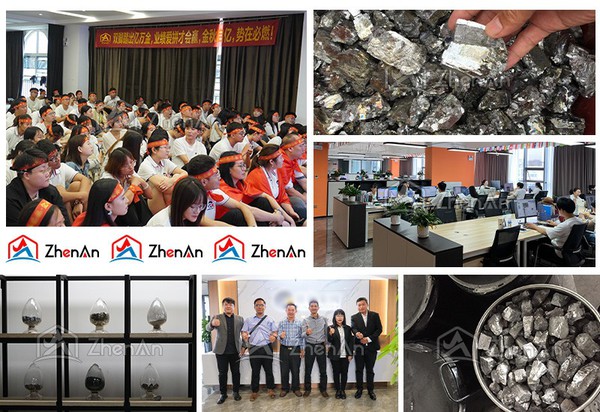
01
30+ Years of Experience
With over three decades in ferroalloy production, ZhenAn has deep expertise in ferrovanadium applications in alloy steel, tool steel, and high-strength structural steel.
02
Stable Composition & Performance
Strict control of vanadium content and impurities (C, Si, P, S, Al) ensures consistent alloying performance, improving strength, toughness, and wear resistance in steelmaking.
03
Reliable Supply & Flexible Specifications
Stable production capacity supports long-term cooperation. Multiple grades (FeV50, FeV60, FeV80) and customized sizes/packaging are available to meet different steel plant requirements.
04
Fast Response & Technical Support
24-hour quotation service with professional technical guidance to support your alloy selection and optimize metallurgical performance.