


Modern commercial steelmaking operates on exceptionally tight margins, where profit optimization depends heavily on reducing processing time and eliminating chemical adjustments during secondary refining. In the production of high-strength structural steels, automotive alloys, and wear-resistant rebar, vanadium micro-alloying is a core process. However, fluctuating chemical compositions in raw feedstocks present significant operational challenges. When vanadium inputs vary from batch to batch, steel mills experience unpredictable elemental recovery rates, extended ladle metallurgy furnace (LMF) processing times, and increased consumption of expensive deoxidizers.
To eliminate these costly process variations, cost-sensitive steel producers are moving away from unpredictable spot-market purchases toward certified, stable-batch supply chains. Securing a reliable supply of high-purity vanadium pentoxide (V2O5) allows metallurgy plants to standardize furnace additions, minimize slag chemistry disruptions, and optimize production costs. This technical guide outlines the chemical processing foundations, comparison metrics, and long-term procurement strategies required to stabilize vanadium alloy additions, demonstrating how direct partnership with primary global producers like ZhenAn helps mitigate raw material variation risks.
1. What Defines High Purity Vanadium Pentoxide Quality in Cost-Sensitive Metallurgy?
In industrial metallurgy, vanadium pentoxide (V2O5) is the core mineral compound used to introduce pure vanadium into iron and steel chemistries. Delivered primarily as a fused crystalline material, it provides the required active elemental density needed for high-temperature smelting. For cost-driven manufacturing operations, utilizing top-tier High Purity Vanadium Pentoxide ensures that the exact volume added to the furnace yields a precise, predictable increase in the steel's dissolved vanadium content.
High-quality metallurgical feedstocks are explicitly processed to control not only the active metal content but also the exact ratios of residual trace elements. Ensuring strict consistency across every incoming material lot allows steel mills to standardize processing times, minimize ladle-to-ladle chemistry variations, and reliably meet tough downstream mechanical testing requirements.
---
2. How Are Fused Flake Form V2O5 Products Manufactured for Batch Stability?
Achieving absolute batch-to-batch consistency requires automated, closed-loop chemical refining. The production process begins by blending vanadium-bearing slag or roasted ore concentrates with specific sodium salts in a rotary kiln. This thermal roasting converts insoluble vanadium into water-soluble sodium vanadate compounds. The roasted product undergoes counter-current leaching, multi-stage filtration, and chemical purification to precipitate clean Ammonium Polyvanadate (APV) intermediates.
Next, the APV crystals are fed into continuous calcination furnaces to drive off ammonia, leaving behind highly refined $V_2O_5$. To produce a stable, low-dust flake form V2O5, this powder is melted in a specialized gas-fired fusion furnace at temperatures above $700^\circ\text{C}$. This molten liquid flows continuously onto water-cooled, rotating casting wheels where it rapidly solidifies into a uniform, dense sheet. The cooled material is automatically broken into designated flake dimensions and immediately packed into airtight containers. This automated process prevents ambient moisture absorption and cross-contamination, ensuring every production batch delivers an identical chemical profile.
---
3. How Should Steel Mills Select Material via a Industrial Grade Specification Roadmap?
When selecting raw materials, engineering teams must evaluate processing variations against specific grade baselines. Sourcing departments typically classify incoming materials into two distinct operational specifications based on the refinery's structural setup:
- Industrial Grade Specification (≥ 98.0% Base): Commonly integrated into high-volume rebar and structural steel lines under the designation industrial vanadium pentoxide. It provides excellent chemical efficiency for general micro-alloying while keeping bulk procurement costs at a minimum.
- Low Impurity V2O5 Tier (≥ 98.5% to 99.0%): Classified as premium-grade low impurity vanadium pentoxide, this material is specified for ultra-clean steel operations, high-stress automotive forging lines, and specialized tool steel production where tramp elements must be kept within micro-ppm limits.
---
4. What Metric Outlines a Quality V2O5 Chemical Specification?
A reliable metallurgical V2O5 chemical specification must outline strict purity boundaries and physical sizing metrics. For cost-driven ladle metallurgy, the following technical parameter values serve as the standard baseline for batch validation:
| Chemical Composition Metric | Standard Industrial Target Values | Direct Operational Impact on Steelmaking |
|---|---|---|
| Active Component Content | ≥ 98.0% (V2O5 98% Minimum) | Ensures highly predictable alloying yields and stabilizes furnace processing times. |
| Iron Content (Fe) | ≤ 0.25% Maximum | Completely compatible with iron chemistry; eliminates unexpected composition drift. |
| Silica Content ($SiO_2$) | ≤ 0.20% Maximum | Minimizes slag volume variations and protects acid-sensitive ladle refractory linings. |
| Phosphorus (P) & Sulfur (S) | Each ≤ 0.03% Maximum | Prevents hot-shortness, brittleness, and micro-cracking defects along grain boundaries. |
| Physical Particle Dimensions | 2mm to 15mm Flakes | Optimizes melting kinetics and prevents raw material loss through furnace exhaust systems. |
---
5. Why Do Catalytic Plants Require Premium Grade V2O5 Inputs?
Beyond bulk steel micro-alloying, high-purity vanadium materials are widely utilized across the chemical processing sector. In these applications, the material functions as a high-selectivity reaction catalyst rather than an elemental additive.
Chemical processing plants use premium grade V2O5 primarily within the contact process for high-volume sulfuric acid ($H_2SO_4$) production. It is also extensively used in manufacturing maleic anhydride and phthalic anhydride. For these applications, chemical engineers require exceptionally low transition-metal limits to prevent catalyst poisoning, maintain high conversion efficiency, and maximize catalyst bed lifecycles.
---
6. How Do Flake Vanadium Pentoxide Feedstocks Stabilize Ferroalloy Production?
Within the metallurgical sector, Flake Vanadium Pentoxide serves as the fundamental raw material used to produce ferrovanadium (FeV) master alloys and vanadium-nitrogen (VN) briquettes. These refined master alloys are subsequently added to liquid steel during secondary ladle refining operations.
When consistent-batch flakes are introduced into the reduction furnace, smelting parameters remain perfectly stable. During the hot rolling process, the dissolved vanadium forms highly uniform vanadium carbonitride $[V(C,N)]$ precipitates across austenite grain boundaries. This controlled micro-alloying pinned structure prevents unwanted grain growth at high temperatures. The resulting steel products achieve superior yield strength, exceptional weldability, and enhanced impact resistance without requiring expensive post-rolling heat treatments.
---
7. V2O5 98% Minimum VS V2O5 99% Purity
Selecting the ideal purity level requires balancing specific technical parameters against economic goals:
- V2O5 98% Minimum: The standard benchmark grade for commercial steel mills manufacturing structural rebar, heavy plates, and standard pipeline steels. It delivers identical micro-alloying benefits while offering maximum cost efficiency for high-volume production lines.
- V2O5 99% Purity: Specified for critical high-performance materials under the V2O5 99% Purity designation. Metallurgists select this grade for aerospace forging applications, nuclear engineering components, and specialized clean automotive steels where any residual trace element could compromise fatigue life or cause micro-void formation.
---
8. Flake Vanadium Pentoxide VS Powder Vanadium Pentoxide
The physical presentation of the raw material significantly impacts handling efficiency and process yields:
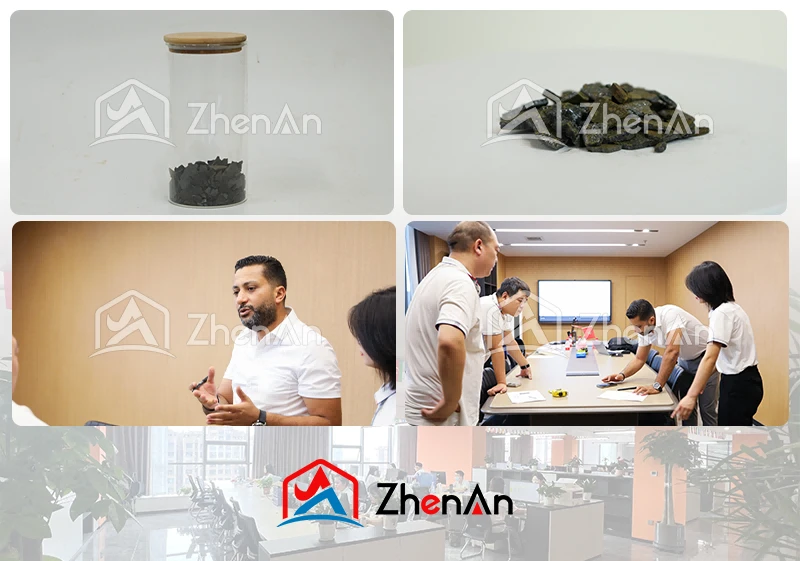
- Flake Vanadium Pentoxide: Features a high bulk density and optimized flake shape, making it perfect for direct furnace addition via automated conveyor lines. It drops cleanly through the furnace slag layer into the melt with zero dust generation, ensuring excellent material recovery.
- Powder Vanadium Pentoxide (V2O5 powder specification): Primarily chosen for fluid-bed chemical reactors and rapid acid-leaching processes. Due to its fine particle size and high surface area, it is rarely used in heavy metallurgy shops because it can easily be lost through furnace exhaust systems or cause material handling challenges.
---
9. How Can Buyers Secure High Purity V2O5 Flakes Under Standard Packaging Contracts?
To insulate steel plant operations from material variations and logistics delays, procurement departments should implement three core purchasing protocols:
- Establish Direct-to-Refiner Offtake Contracts: Sourcing directly from fully integrated producers like ZhenAn cuts out intermediate broker variations. This gives purchasing teams direct access to consistent batch manufacturing and detailed lot testing data.
- Enforce Rigid Packaging Rules: Vanadium materials are sensitive to moisture and ambient contamination during transport. Purchasing contracts should always specify heavy-duty Standard Packaging, utilizing tightly sealed iron drums or moisture-barrier super sacks (V2O5 flakes packaging) to preserve product chemistry during transit.
- Implement Pre-Shipment Lot Analysis: Require comprehensive testing data mapped to the supplier's V2O5 chemical specification before dispatch, ensuring all critical elements meet target boundaries well before arrival.
Contact ZhenAn's Global Industrial Sourcing Desk:
Email: market@zanewmetal.com
WhatsApp/WeChat: +86 15518824805
---
10. FAQ
Q1: How does stable-batch vanadium pentoxide flake supply reduce steel production risks?
A: A stable-batch supply of 98% vanadium pentoxide flakes ensures that the chemical composition, active metal content, and trace element profiles remain identical across every delivery lot. For steel mills, this uniformity eliminates the operational risk of unpredictable vanadium recovery yields in the ladle furnace. Operators can run standardized, automated addition recipes without needing to constantly pause processes for real-time adjustments, reducing the risk of off-grade steel batches and protecting downstream processing schedules.
Q2: Why is batch-to-batch consistency important for V₂O₅ used in steelmaking?
A: In high-volume steel production, process predictability directly impacts profitability. If the chemistry of incoming Flake Vanadium Pentoxide varies between lots, the reduction chemistry inside the alloy furnace becomes unstable, leading to unpredictable processing times and inconsistent metallurgy. Consistent batch chemistry allows operators to optimize power usage, accurately calculate required deoxidizer additions, and maintain uniform mechanical properties across thousands of tons of finished steel products.
Q3: How can V₂O₅ composition variation affect alloy steel quality?
A: Fluctuations in active vanadium concentrations cause direct variations in the density of vanadium carbonitride precipitates formed during rolling. If the vanadium addition is too low, the finished steel may fail to meet minimum yield strength targets. Conversely, if it is unexpectedly high, it can lead to over-alloying, which increases material costs and reduces the steel's low-temperature impact toughness. Uncontrolled trace elements can also cause micro-voids, compromising the long-term structural integrity of the steel.
Q4: What quality parameters should buyers monitor for stable V₂O₅ supply?
A: Procurement teams must monitor both chemical and physical parameters. Chemically, they should check the total active metal percentage to verify it meets the V2O5 98% Minimum threshold, while ensuring tramp elements like phosphorus, sulfur, and arsenic remain safely below specified limits. Physically, buyers must monitor particle size consistency to confirm the material falls within the designated flake dimensions, which prevents dust generation and ensures steady dissolution rates during melting.
Q5: Can consistent vanadium pentoxide flakes help improve production efficiency?
A: Yes, utilizing certified high purity V2O5 flakes significantly improves overall plant productivity. Because the feedstock dissolves uniformly and delivers highly predictable recovery rates, ladle metallurgy operators can hit narrow target chemistries on the first attempt. This shortens ladle furnace processing cycles, reduces electric arc power consumption, extends refractory lining life, and increases the plant's total annual throughput.
Q6: How do steel mills control raw material variation during vanadium addition?
A: Steel mills manage variation by implementing strict raw material pre-screening protocols and moving away from highly variable spot-market brokers. They rely on direct refiner sourcing to ensure consistent batch manufacturing, and match incoming lots directly to a standardized Chemical Composition Specification. Additionally, plants configure automated furnace addition systems tuned to the specific physical characteristics of industrial flakes to keep material recovery rates completely stable.
Q7: Why do manufacturers prefer suppliers with reliable V₂O₅ quality control systems?
A: Manufacturers prioritize suppliers like ZhenAn who utilize advanced, continuous quality control systems because they provide verified, batch-specific chemical traceability. A reliable quality management system guarantees that every delivery lot is analyzed via precise laboratory methods and packed in standardized V2O5 flakes packaging, ensuring the material arrives free from contamination and ready for direct furnace charging.
Q8: How can stable V₂O₅ supply help optimize alloy production costs?
A: A stable supply chain optimizes costs by eliminating waste and reducing processing overhead. It prevents expensive over-alloying practices, reduces the consumption of auxiliary furnace fluxes, and minimizes energy usage by shortening refining times. Furthermore, establishing direct, long-term supply relationships protects steel mills from sudden spot-market price spikes, allowing corporate purchasing departments to maintain highly predictable operational budgets.