


What are the main components of graphite electrodes?
|
Graphite Electrode Physical and Chemical Index:
|
|||||
|
Item
|
Nominal diameter mm
|
||||
|
|
350~450
|
500~800
|
|||
|
Grade
|
Ex
|
一
|
Ex
|
一
|
|
|
Resistivity
μΩ·m ≤ |
Electrode
|
9.0
|
10.5
|
9.0
|
10.5
|
|
Connector
|
8.0
|
8.0
|
|||
|
Flexural strength MPa ≥
|
Electrode
|
7.0
|
6.5
|
||
|
Connector
|
15.0
|
15.0
|
|||
|
Elastic Modulus GPa ≤
|
Electrode
|
9.3
|
9.3
|
||
|
Connector
|
14.0
|
14.0
|
|||
|
Bulk density g/cm3 ≥
|
Electrode
|
1.53
|
1.52
|
||
|
Connector
|
1.70
|
1.70
|
|||
|
Thermal expansion coefficient 10-6/℃
room temperature ~600℃ ≥ |
Electrode
|
2.9
|
2.9
|
||
|
Connector
|
2.8
|
2.8
|
|||
|
Ash % ≤
|
0.5
|
0.5
|
|||
Graphite electrodes are mainly made of petroleum coke and needle coke as raw materials, coal tar as a binder, and are made through calcination, batching, kneading, pressing, roasting, graphitization, and machining. They are conductors that release electrical energy in the form of an arc in an electric arc furnace to heat and melt the charge. According to their quality indicators, they can be divided into ordinary power, high power, and ultra-high power.

Eaf Graphite Electrodes
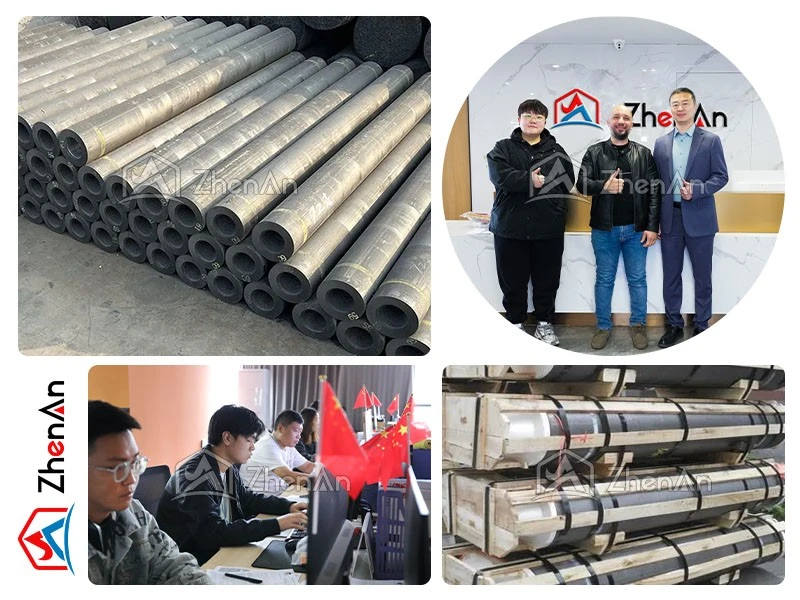
Carbon Graphite Electrode