What Is the Best Grade of Ferrotitanium for Steelmaking?
For most steelmaking applications, FeTi70 is considered the best balance between titanium content, alloy recovery, process efficiency, and economic value.
Compared with lower-grade ferrotitanium, FeTi70 introduces more titanium per kilogram of alloy, reducing slag generation and alloy addition volume. This improves titanium utilization and simplifies process control.
| Grade | Typical Ti Content | Steelmaking Efficiency | Typical Application |
|---|---|---|---|
| FeTi30 | 25-35% | Medium | Foundry and low-alloy steel |
| FeTi40 | 35-45% | Good | Structural steel and casting alloys |
| FeTi70 | 65-75% | Excellent | Stainless steel, HSLA steel, aerospace steel |
Steel producers targeting strict titanium control, inclusion modification, and grain refinement typically choose FeTi70 due to its superior metallurgical performance.
What Is Ferrotitanium?
Ferrotitanium is a ferroalloy composed primarily of titanium and iron. The alloy is produced to introduce titanium into molten steel efficiently and economically.
Titanium has an extremely strong affinity for oxygen, nitrogen, carbon, and sulfur. During steelmaking, titanium reacts with these elements to form stable compounds, improving steel cleanliness and mechanical properties.
As a result, ferrotitanium plays a critical role in producing high-performance steels with improved strength, toughness, corrosion resistance, and weldability.
How Is Ferrotitanium Produced?
Modern ferrotitanium production typically uses titanium sponge scrap, titanium turnings, titanium offcuts, or recycled titanium materials as feedstock.
The most common manufacturing methods include:
- Induction furnace melting
- Electric arc furnace smelting
- Aluminothermic reduction process
- Titanium scrap recycling and remelting
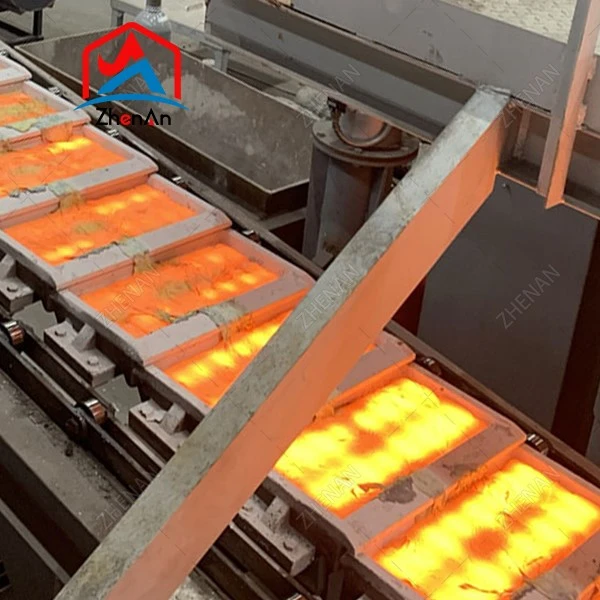
After melting and refining, the alloy is cast into ingots, crushed, screened, and packaged according to customer particle size requirements.
Strict control of oxygen, sulfur, phosphorus, and aluminum content is essential for producing high-quality ferrotitanium suitable for demanding steel grades.
Ferrotitanium Technical Specifications
| Parameter | FeTi70 | FeTi40 | FeTi30 |
|---|---|---|---|
| Titanium (Ti) | 65-75% | 35-45% | 25-35% |
| Aluminum (Al) | ≤4.5% | ≤6% | ≤8% |
| Silicon (Si) | ≤2% | ≤3% | ≤4% |
| Carbon (C) | ≤0.20% | ≤0.25% | ≤0.30% |
| Sulfur (S) | ≤0.03% | ≤0.04% | ≤0.05% |
| Phosphorus (P) | ≤0.03% | ≤0.04% | ≤0.05% |
| Particle Size | 10-50mm, 10-100mm, Customized | 10-50mm, Customized | Customized |
Applications of Ferrotitanium in Metallurgical Industry
Ferrotitanium is primarily consumed by the steel industry. Titanium additions significantly improve steel microstructure and mechanical performance.
Grain Refinement
Titanium forms fine titanium carbides and nitrides, which inhibit grain growth during solidification and heat treatment. Finer grain structures contribute to higher strength and improved toughness.
Deoxidation and Denitrification
Titanium reacts strongly with oxygen and nitrogen, reducing dissolved gases in molten steel and enhancing steel cleanliness.
Inclusion Modification
Titanium modifies non-metallic inclusions, reducing harmful inclusion morphology and improving fatigue resistance.
Strength Enhancement
Microalloying with titanium can significantly improve yield strength while maintaining good weldability.
Applications of Ferrotitanium in Chemical Industry
Although steelmaking remains the largest consumption sector, ferrotitanium is also utilized in specialized chemical and metallurgical processes.
It may be used in:
- Hydrogen storage alloy production
- Special alloy manufacturing
- Titanium-bearing master alloys
- Corrosion-resistant engineering materials
- High-temperature alloy development
Its ability to introduce titanium economically makes it attractive for industrial alloy preparation processes.
FeTi70 vs FeTi40: Which Grade Should You Choose?
| Factor | FeTi70 | FeTi40 |
|---|---|---|
| Titanium Content | Higher | Moderate |
| Recovery Efficiency | Higher | Good |
| Addition Amount | Lower | Higher |
| Cost per Ton Alloy | Higher | Lower |
| Cost per Unit Ti | Competitive | Moderate |
| Typical Users | Steel Mills | Foundries |
If accurate titanium control and metallurgical performance are priorities, FeTi70 is generally the preferred choice.
Ferrotitanium vs Ferrovanadium vs Ferroniobium
| Property | Ferrotitanium | Ferrovanadium | Ferroniobium |
|---|---|---|---|
| Main Element | Titanium | Vanadium | Niobium |
| Primary Function | Grain Refinement | Strengthening | Microalloying |
| Deoxidation Ability | Excellent | Limited | Limited |
| Nitrogen Control | Excellent | Moderate | Moderate |
| Typical Application | Stainless & HSLA Steel | Tool Steel | Pipeline Steel |
How to Purchase High-Quality Ferrotitanium?
When sourcing ferrotitanium internationally, buyers should evaluate more than titanium content alone.
Key purchasing factors include impurity control, titanium recovery rate, particle size consistency, packaging quality, production capacity, inspection reports, and supplier experience.
Requesting COA reports, third-party inspection documents, and batch testing records can significantly reduce procurement risk.
For steel plants using automated charging systems, uniform particle size distribution is particularly important for consistent alloy recovery.
FAQ About Ferrotitanium
1. What is ferrotitanium used for?
Ferrotitanium is mainly used as a titanium additive in steelmaking. It acts as a deoxidizer, denitriding agent, grain refiner, and strengthening alloy. It is widely applied in stainless steel, HSLA steel, tool steel, aerospace steel, and specialty alloys where cleanliness and mechanical performance are critical.
2. Why is titanium added to steel?
Titanium combines readily with oxygen, nitrogen, and carbon. This helps remove undesirable elements from molten steel and forms fine precipitates that refine grain structure. The result is improved strength, toughness, weldability, and corrosion resistance.
3. Which ferrotitanium grade is most commonly used?
FeTi70 is the most widely used grade in modern steelmaking because it delivers high titanium content, efficient alloy recovery, and lower addition rates. It is particularly popular in stainless steel and high-performance steel production.
4. Does higher titanium content always mean better performance?
Not necessarily. Higher titanium content improves alloying efficiency, but steelmakers must match titanium additions to specific metallurgical requirements. Excess titanium can create unwanted inclusions or increase production costs if not properly controlled.
5. What particle sizes are available?
Common commercial sizes include 10-50 mm and 10-100 mm lumps. Customized particle distributions can also be supplied for automated feeding systems, cored wire production, and specialized alloying operations.
6. How should ferrotitanium be stored?
Ferrotitanium should be stored in a dry, covered warehouse away from moisture. Proper storage prevents oxidation and contamination, ensuring stable alloy performance during steelmaking.
7. What impurities should buyers pay attention to?
The most important impurities include aluminum, silicon, carbon, sulfur, phosphorus, oxygen, and residual elements. Lower impurity levels generally improve titanium recovery and final steel quality.
8. Can ferrotitanium replace ferrovanadium?
No. Although both are alloying materials, they serve different metallurgical functions. Ferrotitanium primarily controls grain size and steel cleanliness, while ferrovanadium mainly increases strength and wear resistance through precipitation strengthening.
9. How is ferrotitanium packaged for export?
Ferrotitanium is typically packed in 1 MT jumbo bags, steel drums, or customized export packaging. Packaging can be adapted according to transportation requirements and customer specifications.
10. How do I choose a reliable ferrotitanium supplier?
Look for suppliers with proven production experience, stable raw material sources, strict quality control systems, complete inspection documentation, export experience, and the ability to provide customized specifications. Consistent product quality is often more important than obtaining the lowest quoted price.
Contact Us
ZhenAn International
Email: market@zanewmetal.com
WhatsApp: +86 15518824805
Whether you require FeTi30, FeTi40, FeTi70, customized particle sizes, or long-term alloy supply solutions, our technical team can provide professional support and fast quotations.
ZhenAn Metallurgy & New Materials Certificates