Ferrotitanium Lump vs Powder: Which Is Better?
Neither form is universally better. The optimal choice depends on production objectives, feeding methods, and alloying requirements.
| Factor | Ferrotitanium Lump | Ferrotitanium Powder |
|---|---|---|
| Steelmaking Addition | Excellent | Limited |
| Cored Wire Production | Not Suitable | Excellent |
| Reaction Speed | Moderate | Fast |
| Titanium Recovery | High | Depends on Process |
| Dust Generation | Very Low | Higher |
| Storage Safety | Easier | Requires Better Moisture Control |
| Transportation | Convenient | Requires Sealed Packaging |
For most steel plants, ferrotitanium lumps remain the preferred choice. For precision alloying systems, welding fluxes, and cored wire production, ferrotitanium powder offers significant advantages.

What Is Ferrotitanium?
Ferrotitanium is a ferroalloy consisting primarily of titanium and iron. It is used to introduce titanium into molten steel and specialty alloys efficiently.
Titanium has a strong affinity for oxygen, nitrogen, carbon, and sulfur. As a result, ferrotitanium is widely used for deoxidation, denitrification, grain refinement, inclusion control, and microalloying.
Modern ferrotitanium products are commonly produced from titanium sponge, titanium scrap, titanium turnings, and iron-bearing materials through electric furnace melting and refining processes.
How Is Ferrotitanium Manufactured?
The manufacturing process typically begins with the selection of titanium-bearing raw materials and clean iron sources.
After charging the furnace, the materials are melted and chemically adjusted to achieve the target titanium content. The molten alloy is then cast into ingots.
Depending on customer requirements, the alloy is processed into:
- Ferrotitanium lumps
- Ferrotitanium crushed granules
- Ferrotitanium powder
- Customized particle sizes
Advanced screening and quality control systems ensure consistent particle distribution and chemical composition.
Ferrotitanium Grades and Chemical Composition
| Grade | Ti (%) | Al (%) Max | Si (%) Max | C (%) Max |
|---|---|---|---|---|
| FeTi30 | 25-35 | 8.0 | 4.0 | 0.30 |
| FeTi40 | 35-45 | 6.0 | 3.0 | 0.25 |
| FeTi70 | 65-75 | 4.5 | 2.0 | 0.20 |
FeTi70 is the most commonly traded grade in international markets because it offers high titanium concentration and efficient alloying performance.
Technical Specifications of Ferrotitanium Lump
| Item | Specification |
|---|---|
| Shape | Lump / Crushed Lump |
| Common Sizes | 10-50 mm |
| Optional Sizes | 10-100 mm, 20-80 mm |
| Packaging | 1 MT Jumbo Bag |
| Application | Steelmaking, Foundry, Alloy Production |
Technical Specifications of Ferrotitanium Powder
| Item | Specification |
|---|---|
| Particle Size | 60 Mesh - 325 Mesh |
| Fine Powder | 200 Mesh, 325 Mesh |
| Bulk Density | Customized |
| Packaging | 25 kg Bags / 1 MT Bags |
| Application | Cored Wire, Welding, Powder Metallurgy |
Applications of Ferrotitanium in Metallurgical Industry
Steel Deoxidation
Titanium reacts rapidly with oxygen in molten steel, helping reduce dissolved oxygen levels and improve steel cleanliness.
Nitrogen Control
Titanium forms stable nitrides that lower free nitrogen content and improve steel toughness.
Grain Refinement
Titanium carbides and nitrides prevent grain coarsening, resulting in finer microstructures and improved mechanical properties.
Inclusion Engineering
Controlled titanium additions can modify inclusion morphology and enhance fatigue resistance in high-performance steels.
Applications of Ferrotitanium Powder in Industrial Manufacturing
Compared with lump products, ferrotitanium powder is preferred when rapid dissolution or homogeneous distribution is required.
Major applications include:
- Cored wire filling materials
- Welding electrode coatings
- Welding flux formulations
- Powder metallurgy products
- Titanium-bearing master alloys
- Additive manufacturing alloy research
The larger specific surface area of powder allows faster reaction kinetics compared with lump products.
Ferrotitanium Lump vs Powder: Cost Comparison
| Evaluation Item | Lump | Powder |
|---|---|---|
| Processing Cost | Lower | Higher |
| Screening Cost | Moderate | Higher |
| Packaging Cost | Lower | Higher |
| Storage Requirement | Standard | More Strict |
| Typical Price Level | Lower | Higher |
Because powder requires additional crushing, milling, screening, and dust-control processes, its production cost is usually higher than lump material of the same grade.
Ferrotitanium vs Titanium Sponge
| Property | Ferrotitanium | Titanium Sponge |
|---|---|---|
| Main Composition | Fe + Ti | Ti |
| Titanium Content | 30-75% | Above 99% |
| Cost Efficiency | Excellent | Higher Cost |
| Steelmaking Use | Widely Used | Limited |
| Alloy Addition Efficiency | High | Depends on Process |
For most steel production processes, ferrotitanium remains the more economical and operationally efficient titanium source.
How to Choose the Right Ferrotitanium Product?
If your operation involves converter steelmaking, electric arc furnaces, induction furnaces, or ladle alloying, ferrotitanium lumps are typically the most practical choice.
If your business manufactures cored wire, welding consumables, flux-cored products, or powder metallurgy materials, ferrotitanium powder is generally more suitable.
Buyers should evaluate titanium content, impurity levels, particle size consistency, packaging methods, production capacity, and supplier quality control systems before purchasing.
FAQ About Ferrotitanium Lump and Powder
1. Is ferrotitanium lump better than ferrotitanium powder?
Not always. Ferrotitanium lumps are generally better for direct addition into molten steel because they are easier to handle, generate minimal dust, and provide stable alloy recovery. Ferrotitanium powder is preferred for cored wire production, welding applications, and processes requiring rapid reaction and uniform distribution.
2. Why is ferrotitanium powder more expensive?
Powder production requires additional crushing, grinding, classification, screening, and packaging steps. Dust collection systems and particle size control also increase manufacturing costs. These extra processes often make powder more expensive than lump products of the same chemical grade.
3. Which particle size is most commonly used?
For steelmaking, 10-50 mm is one of the most common lump sizes. For cored wire and welding applications, 60 mesh to 325 mesh powders are frequently used. The exact size depends on feeding systems and process requirements.
4. Does ferrotitanium improve steel strength?
Yes. Titanium contributes to grain refinement and precipitation strengthening. By forming titanium carbides and nitrides, it helps improve yield strength, toughness, fatigue resistance, and weldability in many steel grades.
5. Can ferrotitanium powder be used directly in steelmaking?
Although technically possible, it is not always recommended because fine powders may oxidize more rapidly and generate dust during handling. Most steel plants prefer lump materials for direct furnace additions.
6. What is the most popular ferrotitanium grade worldwide?
FeTi70 is generally the most widely traded grade because it provides high titanium content, lower alloy addition rates, and efficient metallurgical performance in a wide range of steelmaking applications.
7. How should ferrotitanium powder be stored?
Ferrotitanium powder should be kept in sealed moisture-resistant packaging and stored in a dry warehouse. Excessive humidity can affect flowability and increase oxidation risk during long-term storage.
8. What documents should buyers request from suppliers?
Professional buyers typically request a Certificate of Analysis (COA), particle size report, packing list, inspection report, and export documentation. Some projects may also require SGS or other third-party inspection certificates.
9. What industries consume the most ferrotitanium?
The largest consumer is the steel industry. Additional demand comes from welding material manufacturers, cored wire producers, foundries, alloy producers, and specialized powder metallurgy companies.
10. How can I identify a reliable ferrotitanium supplier?
Reliable suppliers maintain stable raw material sourcing, consistent titanium content, strict impurity control, modern production facilities, quality inspection systems, and extensive export experience. Consistency between batches is often more valuable than simply obtaining the lowest purchase price.
Contact Us
ZhenAn International
Email: market@zanewmetal.com
WhatsApp: +86 15518824805
We supply ferrotitanium lumps, crushed ferrotitanium, ferrotitanium powder, and customized specifications for steel mills, foundries, cored wire manufacturers, and alloy producers worldwide.
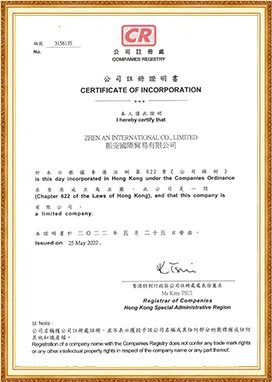
ZhenAn Metallurgy & New Materials Certificates