What Is The Price Of Electrolytic Manganese Flakes?

Dec 02, 2025

Leave a message

What is the price of Electrolytic manganese flakes?


Today's European electrolytic manganese market price
Unit: US dollars/ton
product Specification Lowest price rise and fall highest price rise and fall Price Explanation
Electrolytic manganese 99.70% 2085 -- 2105 -- European market


What is the price of manganese metal flakes per kg?

Today's price of manganese metal exported from China
Unit: (USD/ton)
product Brand Quotation rise and fall Transaction price rise and fall Remark
Electrolytic Manganese 99.70% 2020-2040 -- 2020-2040 -- Tianjin Port, FOB
Manganese ingots 95# 2085-2095 -- 2065-2085 -- Tianjin Port, FOB
Manganese ingots 97# 2095-2105 -- 2095 -- Tianjin Port, FOB


electrolytic manganese
What is Electrolytic Manganese Metal Used For?
Industrial Significance and Applications of EMM
Electrolytic manganese metal (EMM) is a high-purity form of manganese (>99.7%) produced by electrolysis. Its exceptional purity makes it indispensable in specialized metallurgical and chemical applications.
Application Area
Function
Aluminum Alloys
Enhances corrosion resistance and workability
Specialty Steel
Used in producing austenitic stainless and high-strength steels
Lithium-ion Batteries
Serves as a key cathode material in Mn-based batteries
Electronics
Utilized in thin films and semiconductor devices
Chemical Catalysts
Functions as a reductant and catalyst base

In aluminum alloys, EMM improves resistance to galvanic corrosion and refines grain structures, critical for beverage cans and architectural panels. In steelmaking, especially for stainless grades, it aids in maintaining manganese ratios essential for phase stability and corrosion resistance.

A burgeoning application lies in energy storage. EMM is used to manufacture manganese-rich cathodes such as lithium manganese oxide (LMO), offering thermal stability and low cost for EV batteries and electronics. Its electrochemical properties enable reliable charge-discharge cycles.

In electronics, ultra-pure EMM is employed in sputtering targets and manganese thin films for semiconductors. The compound's consistency ensures uniform deposition and device performance. Moreover, due to its clean reactivity, EMM is applied in synthesizing fine chemicals and as a sulfur dioxide scrubber in industrial gases.
As demand grows for green technologies and high-performance materials, EMM plays a pivotal role in enabling next-generation solutions across diverse industries. Its unmatched purity and tailored characteristics make it a cornerstone in advanced material engineering.
What is Manganese Flake Used For?
Functional Roles of Manganese Flake in Metallurgy and Chemicals
Manganese flake refers to a physically processed form of manganese metal, typically derived from high-purity manganese sources, broken into irregular flat pieces. It retains high metallic luster and chemical activity.
Use Case
Purpose
Metallurgical Alloying
Direct addition to melts for Mn enrichment
Deoxidizer in Steel
Removes oxygen and sulfur impurities
Chemical Synthesis
Reductive agent in organic/inorganic reactions
Battery Industry
Precursor for manganese-based battery materials
Non-Ferrous Alloy Production
Enhances properties in copper and zinc alloys
In steel and foundry industries, manganese flake is manually added to furnaces or ladles to increase manganese concentration, improving strength, toughness, and hardenability. Because of its high surface area, it reacts swiftly with molten metal, ensuring efficient alloying and deoxidation.
It is favored over powders where dust control is critical. Compared to briquettes or lumps, flakes dissolve faster, shortening processing times. In copper-nickel alloys and die-casting metals, manganese flake modifies phase transformation and enhances resistance to corrosive environments.
electrolytic manganese
In chemical manufacturing, manganese flake acts as a potent reductant, facilitating reductions in inorganic syntheses and acting as a precursor for permanganate production. Its controlled particle geometry enables predictable reaction kinetics.

Emerging applications include recycling streams for battery materials and producing specialty manganese oxides. The ease of handling, rapid reactivity, and adaptability to various forms make manganese flake a versatile material bridging traditional metallurgy and modern material science.


How is Electrolytic Manganese Metal Produced?
Step-by-Step Process of EMM Manufacturing
Electrolytic manganese metal is produced via electrolysis of manganese sulfate dissolved in aqueous solution. The process yields ultra-pure manganese (>99.7%) suitable for high-tech applications.
Process Stage
Description
Ore Preparation
Manganese dioxide (MnO₂) or carbonate is converted to manganese sulfate
Leaching
Ore is treated with sulfuric acid to form MnSO₄ solution
Purification
Impurities (Fe, Pb, Cu, K) are removed via precipitation and filtration
Electrolysis
Mn²⁺ ions are deposited onto cathodes as pure Mn metal
Stripping & Melting
Metallic deposits are stripped, washed, and melted into ingots/flakes
Initially, manganese ore (commonly pyrolusite) undergoes reduction with carbon or sulfur dioxide to produce manganese sulfate. Alternatively, manganese carbonate ores are directly dissolved in sulfuric acid. The resulting acidic solution undergoes rigorous purification to eliminate metallic and non-metallic contaminants that could impair electrolysis.
The purified MnSO₄ solution is then subjected to electrolysis in cells with lead alloy anodes and stainless steel cathodes. A direct current drives the reduction of Mn²⁺ ions to solid Mn, which builds up as a dense layer on the cathode. After several days, the deposit is mechanically stripped off, cleaned, and may be melted and cast into molds to form ingots or flakes.

This method ensures high-purity metal free from interstitial elements. While energy-intensive, the process is essential for producing EMM used in batteries, high-grade alloys, and precision applications. Continuous improvements focus on reducing energy consumption and environmental impact.


Can Manganese Be Extracted by Electrolysis?
Assessing Electrolysis as a Route for Manganese Extraction
Yes, manganese can be extracted by electrolysis, specifically in the form of electrolytic manganese metal (EMM)​ or manganese dioxide, depending on the electrolyte and setup. Electrolysis is the preferred commercial route for obtaining high-purity manganese (>99.7%).
Extraction Type
Electrolyte Used
Product Form
Purity Level
Electrolytic Manganese Metal (EMM)
Aqueous MnSO₄
Solid Mn metal
>99.7%
Electrolytic Manganese Dioxide (EMD)
Aqueous MnSO₄ + Oxidants
MnO₂ powder
>91%
For EMM, manganese sulfate solution is electrolyzed, depositing metallic manganese on cathodes, as described previously. This method isolates manganese in its purest elemental state and is vital for applications intolerant to impurities, such as batteries and aerospace alloys.
Alternatively, electrolysis is employed to produce electrolytic manganese dioxide (EMD), a high-purity form of MnO₂ used in dry-cell batteries. Here, manganese ions are oxidized at the anode to form MnO₂ rather than being reduced to metal.
Compared to metallothermic reduction (using carbon or aluminum), electrolysis avoids introducing unwanted elements like carbon, yielding cleaner products. However, it is more energy-intensive and environmentally sensitive due to acidic effluents and sludge byproducts.
Thus, while feasible and commercially practiced, electrolysis for manganese extraction is reserved for high-value applications demanding exceptional purity. Ongoing research aims to develop greener, low-energy alternatives to expand its viability.


Visit https://www.metal-alloy.com/ to learn more about the product. If you would like to learn more about the product price or are interested in purchasing, please email market@zanewmetal.com. We will get back to you as soon as we see your message.
 

Get a Quote Today


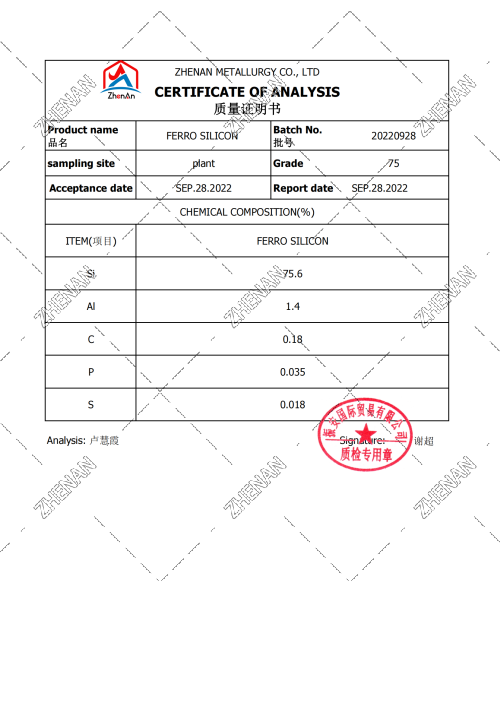
Iron Silicon Alloy With 75 Silicon Silver Grey Powder For High Strength Alloy Steel Making

🏭 Our Strengths


We have a strong foundation and a customer-focused service attitude. Our products are exported to Europe, Asia, Africa, Australia, and South America, earning high customer satisfaction.
Additionally, we have a professional R&D and sales team, as well as our own factory and laboratory.
Each batch of products undergoes rigorous inspection by our quality control team.
After passing a series of tests, our products are delivered to customers, ensuring quality assurance.
We offer customized products with different contents, standards, and specifications tailored to customer needs.

one-stop solution

professional team

high quality