


How much is manganese per kg USD?
| Today's ferromanganese export price in India | ||||||
| Unit: US dollars/metric ton | ||||||
| product | Specification | Lowest price | rise and fall | highest price | rise and fall | Price Explanation |
| High-carbon ferromanganese | 70# | 820 | -- | 825 | -- | FOB, Vizag/Haldia, India |
| High-carbon ferromanganese | 75# | 915 | -- | 920 | -- | FOB, Vizag/Haldia, India |

|
|
|
|
|---|---|---|
|
|
|
|
|
|
|
|
|
|
|
|
|
|
|
|
Furthermore, in foundries, ferromanganese aids in controlling the morphology of graphite and refines grain size, leading to superior casting quality. In welding, it contributes to arc stability and influences bead shape and penetration. Due to its strategic importance in metallurgy, ferromanganese is considered indispensable in infrastructure and heavy industry development worldwide.
|
|
|
|---|---|
|
|
|
|
|
|
|
|
|
|
|
|
|
|
|
|
|
|
|
|
|

What is the price of ferro manganese?
| Today's manganese iron market summary | |||
| Unit: Yuan/ton, ex-factory cash price including tax (for reference only) | |||
| 1) High-carbon ferromanganese | |||
| Brand | area | Today's mainstream ex-factory transaction price | Average price change |
| femn65c7.0 | Sichuan (p<0.25) | -- | -- |
| Guizhou (p<0.2) | -- | -- | |
| Guangxi (p<0.2) | 5050 | -- | |
| Shanxi (p<0.2) | 5100-5150 | -- | |
| Henan (p<0.2) | -- | -- | |
| Inner Mongolia (p<0.2) | 5100 | -- | |
| Jiangsu (p<0.2) | 5400-5500 | -- | |
| Shandong (p<0.2) | 5200 | -- | |
| Shanghai (p<0.2) | 5400-5500 | -- | |
| Tianjin (p<0.2) | 5400-5500 | -- | |
| Liaoning (p<0.2) | -- | -- | |
| femn75c7.0 | Yunnan (p<0.3) | -- | -- |
| Yunnan (p<0.2) | 5900-6000 | -- | |
| Yunnan (p<0.15) | -- | -- | |
| Guangxi (p<0.25) | 5900-6000 | -- | |
| Hunan (p<0.25) | -- | -- | |
| Guizhou (p<0.25) | -- | -- | |
| Inner Mongolia (p<0.25) | 5900 | -- | |
| Zhejiang (p<0.25) | 6300-6400 | -- | |
| Zhejiang (p<0.15) | 6300-6400 | -- | |
| Shanghai (p<0.25) | 6300-6400 | -- | |
| 2) Blast furnace ferromanganese | |||
| product | Brand | Today's mainstream ex-factory transaction price | Average price change |
| blast furnace ferromanganese | femn65c7.0 | 5100 | -- |
| 3) Medium-carbon ferromanganese | |||
| Brand | area | Today's mainstream ex-factory transaction price | Average price change |
| femn75c2.0P<0.35 | Guizhou | -- | -- |
| Guangxi | -- | -- | |
| Guizhou (P<0.2) | {=MT1001-GZ2CJ} | {=MT1001-ZD_GZ2CJC} | |
| femn75c2.0P<0.25 | Guizhou | 7600-7700 | -- |
| Guangxi | 7500-7600 | -- | |
| Hunan | 7600-7700 | -- | |
| Henan | 7600-7700 | -- | |
| Inner Mongolia | 7600-7700 | -- | |
| femn75c2.0P<0.2 | Zhejiang | 8000-8100 | -- |
| 4) Low-carbon ferromanganese: | |||
| Brand | area | Today's mainstream ex-factory transaction price | Average price change |
| FEMN80C0.7 Group II Phosphorus | Guizhou | 8800-8900 | -- |
| Hunan | 8800-8900 | -- | |
| Shanxi | 8800-8900 | -- | |
| FEMN80C0.7 group of phosphorus | Guizhou | 8800-9000 | -- |
| FEMN80C0.4 Group II Phosphorus | Hunan | 9200-9300 | -- |
| FEMN80C0.4 group of phosphorus | Hunan | 9200-9300 | -- |
| Henan | 9200-9300 | -- | |
Ferro Manganese and Silico Manganese
|
|
|
|
|---|---|---|
|
|
|
|
|
|
|
|
|
|
|
|
|
|
|
|
|
|
|
|
|
|
|
|
|
|
|
|
Production-wise, ferromanganese is generally made in blast furnaces or electric arc furnaces using manganese ore and coke, whereas silico manganese is produced in electric furnaces with added quartz (SiO₂) to introduce silicon. From a cost perspective, silico manganese may offer economic advantages by fulfilling two alloying needs in one addition. Choosing between them depends on the steel grade and desired final properties.
|
|
|
|
|---|---|---|
|
|
|
|
|
|
|
|
|
|
|
|
|
|
|
|
|
|
|
|
Additionally, it supports sulfur control during steel refining by reacting with sulfur to form manganese sulfide, thus preventing hot shortness. Though not suitable for producing stainless or ultra-low-carbon steels, high carbon ferromanganese remains a backbone material in large-volume steel production due to its availability and affordability. Its usage supports efficient production cycles and meets infrastructural demands globally.
Visit https://www.metal-alloy.com/ to learn more about the product. If you would like to learn more about the product price or are interested in purchasing, please email market@zanewmetal.com. We will get back to you as soon as we see your message.
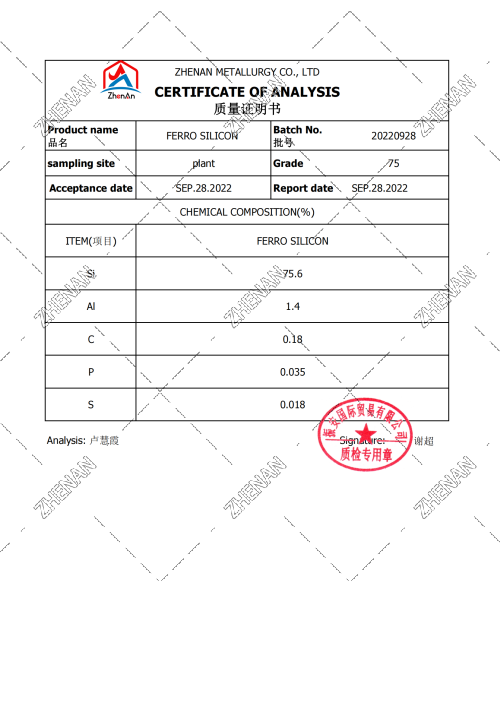
🏭 Our Strengths
We have a strong foundation and a customer-focused service attitude. Our products are exported to Europe, Asia, Africa, Australia, and South America, earning high customer satisfaction.
Additionally, we have a professional R&D and sales team, as well as our own factory and laboratory.
Each batch of products undergoes rigorous inspection by our quality control team.
After passing a series of tests, our products are delivered to customers, ensuring quality assurance.
We offer customized products with different contents, standards, and specifications tailored to customer needs.
one-stop solution
professional team
high quality