What is the price of ferro titanium per kg?Titanium iron prices in major regions of China as of April 29, 2026
| Titanium iron prices in major regions of China as of April 29, 2026 | |||||
| Price quotes from major low-titanium iron manufacturers in key domestic regions: | |||||
| Product Name | Specification | Price quote (RMB/ton, base price 25) | rise and fall | area | Remark |
| Low titanium iron | 30 | 13200-13500 | -- | Jiangsu | Price including tax |
| Low titanium iron | 30 | 13200-13500 | -- | Yingkou | Price including tax |
| Low titanium iron | 30 | 13200-13500 | -- | Jinzhou | Price including tax |
| Low titanium iron | 30 | 13200-13500 | -- | Henan | Price including tax |
| Low titanium iron | 30 | 13200-13500 | -- | Changzhou | Price including tax |
| Price quotes from major domestic manufacturers of medium and high grade titanium iron: | |||||
| Product Name | Specification | Price (RMB/ton, base price 25) | rise and fall | area | Remark |
| Titanium Iron | 40 | 13200-13500 | -- | Jinzhou | Price including tax |
| Titanium Iron | 40 | 13200-13500 | -- | Henan | Price including tax |
| Titanium Iron | 40 | 13200-13500 | -- | Jiangsu | Price including tax |
| High-titanium iron | Waste titanium type | 28000-29000 | -- | Jiangsu | Price including tax |
| High-titanium iron | Waste titanium type | 28000-29000 | -- | Liaoning | Price including tax |
| High-titanium iron | Waste titanium type | 28000-29000 | -- | Henan | Price including tax |
| Recent transaction prices in the domestic market (for reference only): | |||||
| Product Name | Specification | Price (RMB/ton) | rise and fall | area | Remark |
| Low titanium iron | 30 | 13000-13200 (25 base price) | -- | Liaoning | Price including tax |
| Titanium Iron | 40 | 13000-13200 (25 base price) | -- | Liaoning | Price including tax |
| High-titanium iron | 70A | 27,500-28,000 (actual weight) | -- | Liaoning | Price including tax |
| High-titanium iron | 70B | 26800-27300 (actual weight) | -- | Liaoning | Price including tax |
What Is the Function of Ferrotitanium in Steel?
What is the function of ferrotitanium in steelmaking?
Ferrotitanium is a critical titanium iron alloy widely used in steelmaking as a powerful titanium deoxidizer alloy. Its main function is to remove oxygen, nitrogen, and sulfur from molten steel while also controlling grain structure and improving overall steel performance.

In modern metallurgy, ferro titanium is added during ladle refining or continuous casting to improve steel cleanliness, reduce inclusions, and enhance mechanical strength. Titanium forms stable compounds such as TiN and TiC, which refine grain size and improve toughness, wear resistance, and heat resistance.
Because of these functions, ferrotitanium is widely supplied by a professional Ferrotitanium supplier for high-strength steel, stainless steel, pipeline steel, and aerospace-grade materials.
What are the specifications and technical parameters of ferrotitanium?
| Item | Specification |
|---|---|
| Product Name | Ferrotitanium (FeTi) |
| Common Grades | FeTi30 / FeTi70 |
| Titanium Content | 30% – 75% |
| Iron Content | Balance |
| Carbon (C) | ≤ 0.1% – 0.5% |
| Form | Lump / block / granules / powder |
| Sizes | 10–50 mm (customized) |
| Application | Steelmaking / deoxidation / alloying |
| Packaging | 1MT jumbo bag |
Among all grades, FeTi70 is widely used in high-performance steel production due to its high titanium recovery efficiency.
How does ferrotitanium improve steel quality?
In steel production, ferrotitanium acts as a multifunctional refining agent. It removes oxygen and nitrogen from molten steel, preventing the formation of harmful inclusions and improving steel purity.
Titanium forms extremely stable compounds such as TiC and TiN, which refine grain structure and significantly enhance steel strength, hardness, and fatigue resistance.
This is why ferro titanium lump / powder is widely used in high-end steelmaking processes requiring precise microstructure control.
In HSLA steel and stainless steel production, ferrotitanium ensures improved weldability, corrosion resistance, and long-term durability.
What is the difference between FeTi70 and FeTi30 ferrotitanium?
FeTi70 is a high-grade ferrotitanium containing around 65%–75% titanium, widely used in aerospace steel, special alloy steel, and high-strength applications.
FeTi30 contains approximately 25%–35% titanium and is mainly used in general steelmaking and cost-sensitive alloy production.
Comparison:
FeTi70 = high titanium content, strong deoxidation, premium steel applications
FeTi30 = lower cost, basic alloying, general steel use
When comparing ferro titanium price per ton, FeTi70 is significantly higher due to its higher purity and stronger alloying effect.
What is the difference between ferrotitanium lump and powder?
Ferrotitanium lump is the most common industrial form used in steelmaking. It offers stable handling, controlled dissolution, and efficient furnace charging.
Ferrotitanium powder is used in special applications requiring fast reaction and precise alloy control, but it is more reactive and harder to store safely.
Comparison:
Lump = stable feeding, industrial steelmaking, safer handling
Powder = fast reaction, precision metallurgy, higher reactivity
Most buyers prefer ferrotitanium granules / lumps / blocky forms for consistent steel plant operations.
Why is ferrotitanium widely used in modern steelmaking?
Ferrotitanium is essential in producing high-performance steels where purity and microstructure control are critical. It is widely used in pipeline steel, shipbuilding steel, tool steel, and stainless steel.
As a key titanium iron alloy manufacturer China product, it improves steel cleanliness, enhances fatigue resistance, and increases structural reliability.
Its ability to control nitrogen and oxygen makes it one of the most effective refining agents in modern metallurgy.
Why is ferrotitanium important in steel?
Ferrotitanium plays a vital role in improving steel quality by acting as a deoxidizer, nitrogen control agent, and grain refiner. It enhances strength, toughness, and corrosion resistance across multiple steel grades.
As a key ferrotitanium exporter product, it supports advanced steel production in automotive, aerospace, and infrastructure industries.
Whether using FeTi30 or FeTi70, selecting the right grade directly impacts steel performance and production efficiency.
FAQ
1. What is ferrotitanium used for in steel?
It is used as a deoxidizer and grain refiner to improve steel strength and cleanliness.
2. Why is FeTi70 preferred in high-end steel?
Because it has higher titanium content and provides stronger alloying performance.
3. What affects ferrotitanium price per ton?
Titanium content, raw material cost, and production complexity.
4. What is the difference between lump and powder ferrotitanium?
Lumps are stable and industrial-friendly, while powder reacts faster but is less stable.
5. Why is titanium important in steelmaking?
It forms stable compounds that refine grain structure and improve mechanical properties.
6. Why source ferrotitanium from China?
China offers stable supply, competitive pricing, and large-scale production capacity.
Looking for a reliable Ferrotitanium supplier?
If you are sourcing stable ferro titanium, we provide high-quality FeTi products with consistent composition and global export capability.
We supply:
FeTi30 / FeTi70 supplier grades
ferrotitanium granules / lumps / blocky
titanium iron alloy for steelmaking
ferro titanium ingot and powder
titanium deoxidizer alloy
📩 Email: market@zanewmetal.com
📱 WhatsApp: +86 15518824805
Get latest ferro titanium price, technical specifications, and bulk quotation directly from a trusted Ferrotitanium supplier and professional ferrotitanium exporter.
Third-party inspection available
Why Choose ZhenAn Ferrotitanium (FeTi)?
For steel producers, ferrotitanium (FeTi) is used to achieve clean steel, controlled nitrogen behavior, and improved mechanical performance. Buyers focus on reaction stability, impurity control, and consistent alloying efficiency-key areas ZhenAn prioritizes.
1. Stable Titanium Content for Predictable Alloying
ZhenAn FeTi is produced with controlled titanium levels, ensuring consistent deoxidation and alloying behavior in steelmaking processes.
2. Effective Nitrogen and Oxygen Control
It helps fix nitrogen and remove oxygen in molten steel, reducing defects and improving internal steel quality.
3. Grain Refinement for Better Steel Properties
Titanium promotes fine grain structure, enhancing strength, toughness, and overall durability of finished steel products.
4. Low Impurity Assurance
Strict control of carbon, sulfur, and phosphorus supports cleaner steel and reduces variability in downstream processing.
5. Stable Supply with Export Support
ZhenAn ensures consistent production capacity, reliable delivery schedules, and full export documentation (COA, SDS).
ZhenAn ferrotitanium delivers stable alloy performance, improved steel cleanliness, and dependable supply, making it suitable for advanced steelmaking applications.
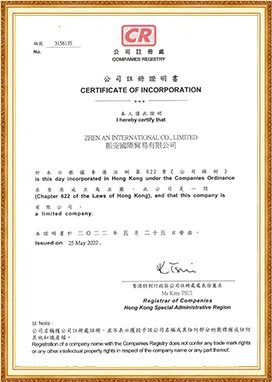
ZhenAn Metallurgy & New Materials Certificates