


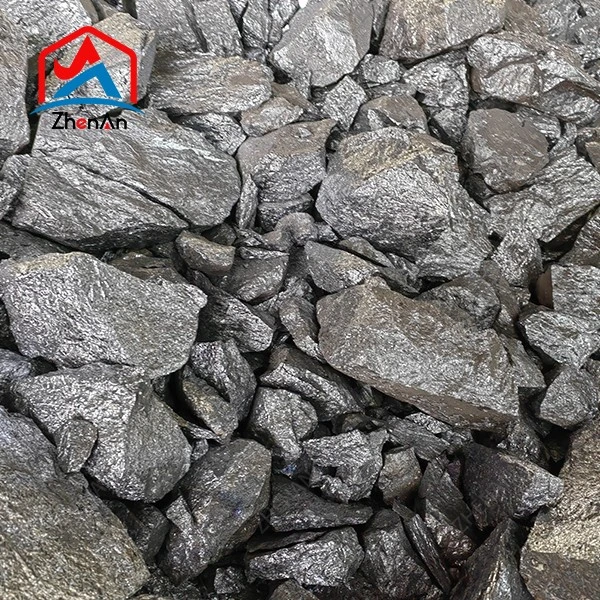
What is the price of industrial silicon 3303?
| China's export price of industrial silicon on September 3 | |||
| Brand | Tax-inclusive quote | Rise and fall | Remarks (USD/ton) |
| 421 | 1470-1520 | -- | Huangpu Port, FOB |
| 2202 | 2100-2200 | -- | Huangpu Port, FOB |
| 3303 | 1500-1530 | -- | Huangpu Port, FOB |
| 441 | 1350-1400 | -- | Huangpu Port, FOB |
| 553 | 1310-1330 | -- | Huangpu Port, FOB |
What is the price of industrial silicon powder?
| China's industrial silicon powder prices on September 3 | ||||
| Note: Yuan/ton | ||||
| Specification | Quote | Rise and fall | Sold Price | Rise and fall |
| 553 (16-200 mesh) | 9500-10400 | -- | 9300-10300 | -- |
| Si≥99% (16-200 mesh) | 9800-10400 | -- | 9400-10300 | -- |
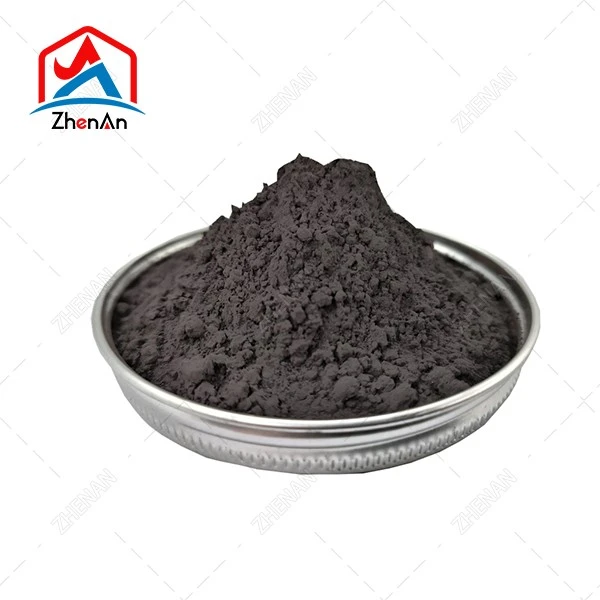
What is industrial silicon powder used for?
Industrial silicon powder serves as a critical raw material across sectors:
Aluminum Alloys (50% of global demand):
Added to molten aluminum (as AlSi master alloy) to enhance fluidity, castability, and strength (e.g., engine blocks, wheels).
Silicones & Silanes (30% of demand):
Reacted with methyl chloride to produce silicone polymers for sealants, lubricants, medical devices, and waterproof coatings.
Steelmaking & Foundries:
Deoxidizer: Removes oxygen from molten steel (replacing aluminum in some grades).
Inoculant: Improves graphite formation in cast iron.
Solar/Electronics Industry:
Feedstock for upgrading to solar-grade polysilicon (via Siemens process) for photovoltaic cells.
Lithium-Ion Batteries:
Anode additive: Nano-Si powder boosts energy density (theoretical capacity: 3,600 mAh/g vs. graphite's 372 mAh/g). Used in EVs (e.g., Tesla's 4680 cells).
Refractories & Ceramics:
Enhances thermal shock resistance in furnace linings.
Chemical Synthesis:
Precursor for silica fume (concrete additive), silicon nitride (ceramics), and ferrosilicon.
What is industrial silicon powder ?
Industrial Silicon Powder (also called Metallurgical-Grade Silicon Powder or MG-Si powder) is a high-purity (98–99.5% Si), finely ground form of elemental silicon produced from quartzite. Key characteristics:
Composition: Primarily silicon (Si), with impurities like iron (≤0.5%), aluminum (≤0.5%), and calcium (≤0.3%).
Particle Size: Ranges from 10 microns to 5 mm, classified as:
Coarse powder: 1–5 mm (for alloys).
Fine powder: 45–150 μm (for chemicals).
Micronized powder: ≤45 μm (for high-tech applications).
Forms: Crystalline (angular grains) or amorphous (spherical), depending on processing.
Distinction from Electronic-Grade Si: Lower purity (vs. 99.9999999% "11N" semiconductor Si) and no single-crystal structure.
How to make industrial silicon powder ?
Production involves carbothermic reduction of quartz followed by milling/purification:
Step 1: Smelting (Submerged Arc Furnace)
Raw Materials: Quartzite (SiO₂ ≥ 99%) + Carbon reductants (coal, coke, wood chips).
Reaction:
textCopy Code
SiO₂ + 2C → Si (molten) + 2CO↑
Process:
Mixture heated to 1,800–2,000°C in a 10–25 MW furnace.
Molten silicon tapped from the bottom (97–99% purity).
Solidified into "metallurgical-grade silicon lumps".
Step 2: Crushing & Milling
Crushing: Lumps → 1–50 mm chunks via jaw/cone crushers.
Milling:
Coarse powder: Roller mills.
Fine powder: Ball/jet mills (with inert gas to prevent oxidation).
Nano-powder: Plasma-assisted vaporization.
Step 3: Purification (Optional)
Acid Leaching: Removes Fe/Al/Ca impurities using HCl/HF.
Sieving/Classification: Achieves precise particle size distribution.
Key Production Metrics
| Parameter | Value |
|---|---|
| Energy consumption | 11,000–13,000 kWh/ton Si |
| Global production | ~8.5 million tons/year (2023) |
| Top producers | China (70%), Norway, Brazil |
| Cost range | 1,800–1,800–3,500/ton (market-dependent) |
Visit https://www.metal-alloy.com/ to learn more about the product. If you would like to know more about the product price or are interested in purchasing, please send an email to market@zanewmetal.com. We will get back to you as soon as we see your message.