


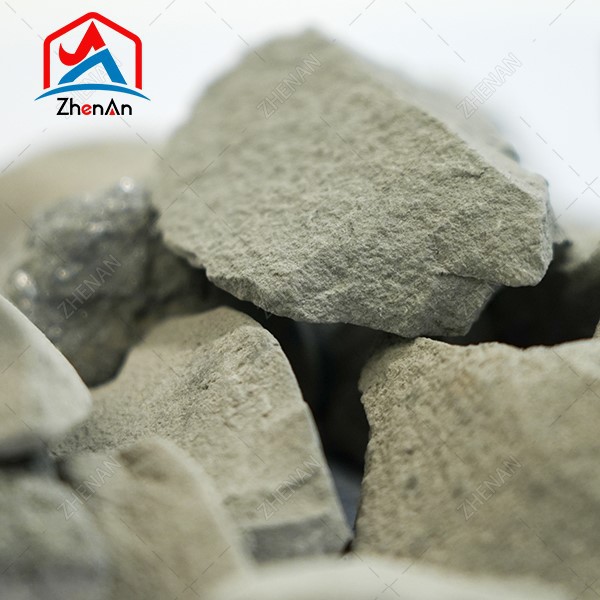
① What is Ferrosilicon Nitride and why is it important in refractory systems?
Ferrosilicon Nitride (FeSiN Alloy) is a nitrogen-containing refractory additive widely used in blast furnace ironmaking and high-temperature metallurgical systems. As a professional Nitride Bonded Refractory Additive, it combines silicon, iron, and silicon nitride phases to improve structural strength, thermal stability, and resistance to slag corrosion.
In Turkish steel plants, especially those operating imported refractory systems under aggressive molten slag conditions, Refractory Grade FeSiN has become increasingly important for maintaining furnace lining durability. Modern refractory procurement no longer focuses only on initial material cost; instead, buyers evaluate long-term slag resistance performance and operational lifespan.
② Why is slag resistance becoming a critical concern in Turkish steel operations?
Turkish steel plants often operate under high-load furnace conditions with continuous molten slag exposure, particularly in blast furnace runners, taphole clay systems, and hot metal transfer channels. Under these conditions, slag penetration and chemical erosion are among the primary causes of refractory failure.
When refractory materials cannot resist molten slag attack, the internal bonding phases gradually dissolve, leading to structural weakening, thermal cracking, and accelerated lining wear. This not only shortens furnace campaign life but also increases maintenance downtime and operational cost.
As imported refractory systems become more advanced and productivity-oriented, Turkish procurement teams are paying closer attention to refractory erosion resistance additive performance. Materials such as high nitrogen ferrosilicon nitride are increasingly selected because they provide stronger chemical durability and more stable long-term behavior.
③ What are the technical specifications of FeSiN used for slag-resistant refractory systems?
| Parameter | Specification |
|---|---|
| Product Name | Ferrosilicon Nitride (FeSiN) |
| Product Category | Refractory Grade FeSiN |
| Nitrogen Content | 20% – 30% |
| Silicon Content | 45% – 75% |
| Main Structure | Si₃N₄ + Fe-Si matrix |
| Product Form | Powder / granular / lump |
| Typical Sizes | 0–1 mm / 1–3 mm / 200 mesh |
| Functional Role | blast furnace refractory bonding material |
| Application Type | FeSiN for Blast Furnace Taphole Clay |
| Key Characteristic | thermal shock resistant refractory additive |
④ How does FeSiN improve resistance to molten slag attack?
In blast furnace environments, molten slag contains highly reactive compounds capable of penetrating and dissolving refractory matrices at elevated temperatures. Once slag infiltration begins, internal pores expand and structural degradation accelerates.
FeSiN improves slag resistance by generating stable Si₃N₄ bonding phases during high-temperature operation. These nitride structures reinforce the refractory matrix and reduce open porosity, limiting slag penetration depth.
In FeSiN for Al2O3-SiC-C refractory systems, this reinforcement mechanism significantly improves chemical durability under continuous slag flow conditions. As a result, refractory linings maintain higher density and structural integrity for longer operating periods.
In ferrosilicon nitride for hot metal runner applications, FeSiN also helps reduce erosion caused by turbulent slag flow and thermal-mechanical stress.
⑤ How do different FeSiN grades compare in slag resistance performance?
Refractory Grade FeSiN vs standard FeSiN
Refractory-grade materials provide stronger nitride bonding development and more stable anti-slag performance under long furnace campaigns. Standard grades may show lower resistance to chemical erosion.
High nitrogen ferrosilicon nitride vs conventional nitrogen FeSiN
High nitrogen FeSiN forms denser silicon nitride networks, which improve slag corrosion resistance and reduce structural degradation under molten slag attack.
FeSiN powder vs granular FeSiN
Products supplied by a ferrosilicon nitride powder manufacturer provide uniform distribution in fine refractory systems, while granular grades are suitable for heavy-duty taphole and runner applications requiring slower reaction kinetics.
⑥ How is FeSiN supplied for imported refractory systems in Turkey?
FeSiN is supplied in powder, granular, and lump forms according to refractory formulation requirements. Packaging typically uses moisture-proof jumbo bags with sealed liners to maintain stable nitrogen content during transportation and storage.
As a global Ferrosilicon Nitride Supplier and FeSiN refractory additive supplier, ZhenAn supports Turkish steel plants with stable batch quality, customized sizing, and bulk logistics solutions for imported refractory systems.
Containerized shipping is commonly used for blast furnace projects requiring continuous long-term material supply.
⑦ FAQ: Why are Turkish steel plants focusing on FeSiN slag resistance performance?
Why is slag resistance important in Turkish steel plants?
Because continuous slag exposure is one of the leading causes of refractory wear and furnace lining failure.
How does FeSiN improve resistance to molten slag attack?
It forms silicon nitride bonding phases that reduce slag penetration and strengthen the refractory matrix.
Can slag corrosion reduce furnace lining lifespan?
Yes. Chemical dissolution from slag attack accelerates structural degradation and shortens refractory campaign life.
Why are imported refractory systems evaluated for slag performance?
Because high-productivity furnace systems require stable long-term resistance against thermal and chemical wear.
How does FeSiN stabilize refractory behavior under slag flow?
It improves bonding strength and reduces erosion caused by continuous molten slag movement.
What factors influence slag resistance in blast furnace systems?
Material density, bonding phase stability, thermal shock resistance, and chemical durability.
Why is chemical durability important in Turkish steel operations?
Because unstable refractory structures increase maintenance cost and production interruption risk.
How does FeSiN improve long-term furnace performance under slag exposure?
It maintains structural integrity and reduces refractory degradation during prolonged operation.
For technical consultation, specification support, or bulk supply of Ferrosilicon Nitride / FeSiN Alloy for refractory systems:
Email: market@zanewmetal.com
WhatsApp: +86 15518824805
Visit https://www.metal-alloy.com/ to learn more about the product. If you would like to learn more about the product price or are interested in purchasing, please email market@zanewmetal.com. We will get back to you as soon as we see your message.