What is the price of ferro titanium per kg?
| Titanium Ferrophosphate Prices in Major Regions of China as of April 23, 2026 | |||||
| Price quotes from major low-titanium iron manufacturers in key domestic regions: | |||||
| Product Name | Specification | Price quote (RMB/ton, base price 25) | rise and fall | area | Remark |
| Low titanium iron | 30 | 13200-13500 | -- | Jiangsu | Price including tax |
| Low titanium iron | 30 | 13200-13500 | -- | Yingkou | Price including tax |
| Low titanium iron | 30 | 13200-13500 | -- | Jinzhou | Price including tax |
| Low titanium iron | 30 | 13200-13500 | -- | Henan | Price including tax |
| Low titanium iron | 30 | 13200-13500 | -- | Changzhou | Price including tax |
| Price quotes from major domestic manufacturers of medium and high grade titanium iron: | |||||
| Product Name | Specification | Price (RMB/ton, base price 25) | rise and fall | area | Remark |
| Titanium Iron | 40 | 13200-13500 | -- | Jinzhou | Price including tax |
| Titanium Iron | 40 | 13200-13500 | -- | Henan | Price including tax |
| Titanium Iron | 40 | 13200-13500 | -- | Jiangsu | Price including tax |
| High-titanium iron | Waste titanium type | 28000-29000 | -- | Jiangsu | Price including tax |
| High-titanium iron | Waste titanium type | 28000-29000 | -- | Liaoning | Price including tax |
| High-titanium iron | Waste titanium type | 28000-29000 | -- | Henan | Price including tax |
| Recent transaction prices in the domestic market (for reference only): | |||||
| Product Name | Specification | Price (RMB/ton) | rise and fall | area | Remark |
| Low titanium iron | 30 | 13000-13200 (25 base price) | -- | Liaoning | Price including tax |
| Titanium Iron | 40 | 13000-13200 (25 base price) | -- | Liaoning | Price including tax |
| High-titanium iron | 70A | 27,500-28,000 (actual weight) | -- | Liaoning | Price including tax |
| High-titanium iron | 70B | 26800-27300 (actual weight) | -- | Liaoning | Price including tax |
What Is Ferrotitanium Used for in Steelmaking?
Ferrotitanium (FeTi) is widely used in steelmaking as a powerful deoxidizer, denitriding agent, and grain refiner, helping improve steel cleanliness, mechanical strength, and corrosion resistance. It is especially important in producing stainless steel, high-strength low-alloy steel (HSLA), and specialty steels where controlled titanium addition is required.
What Are the Typical Specifications of Ferrotitanium?
| Parameter | Typical Range |
|---|---|
| Titanium (Ti) | 20% – 75% |
| Iron (Fe) | Balance |
| Carbon (C) | ≤0.1% – 0.5% |
| Silicon (Si) | ≤2.0% |
| Nitrogen (N) | ≤0.03% |
| Particle Size | 10–50 mm / customized |
| Form | Lump / crushed / granules |
| Density | High metallic density |
Why Is Ferrotitanium Important in Steelmaking?
Ferrotitanium plays a critical role in controlling oxygen, nitrogen, and sulfur levels in molten steel. Titanium has a strong affinity for these elements, forming stable compounds that are removed from the melt.
This process improves steel cleanliness and reduces non-metallic inclusions, which directly enhances fatigue resistance, toughness, and weldability.
In stainless steel production, ferrotitanium also helps stabilize carbon, preventing carbide precipitation and improving corrosion resistance.
How Does Ferrotitanium Improve Steel Quality?
When added to molten steel, ferrotitanium acts in multiple ways:
It first removes oxygen and nitrogen, reducing gas-related defects. Then it forms titanium nitrides and carbides, which refine the grain structure of the steel. This grain refinement leads to higher strength and better impact resistance.
Additionally, titanium improves heat resistance in high-temperature applications, making the steel more stable under extreme operating conditions.
Ferrotitanium in Stainless Steel vs Carbon Steel Applications
In stainless steel, ferrotitanium is mainly used for stabilization, preventing intergranular corrosion by binding carbon and nitrogen.
In carbon and low-alloy steels, it is used primarily for grain refinement and strengthening, improving mechanical performance and durability.
How Does Ferrotitanium Affect Inclusion Control?
Ferrotitanium helps modify and reduce harmful inclusions in steel. Titanium binds with oxygen, sulfur, and nitrogen to form stable compounds that either float out of the melt or remain harmlessly embedded in the structure.
This leads to improved steel purity, better surface quality, and enhanced machinability in downstream processing.
Ferrotitanium Grade Comparison
FeTi 70 vs FeTi 40
FeTi 70 contains higher titanium content, making it more efficient in steel refining. It is commonly used in high-grade alloy and stainless steel production, where precise control of titanium is required.
FeTi 40 is more cost-effective and suitable for general steelmaking applications, where moderate titanium addition is sufficient.
FeTi Low Carbon vs Standard Ferrotitanium
Low carbon ferrotitanium is used in high-performance steels, where carbon control is critical. It reduces the risk of carbide formation and improves corrosion resistance.
Standard ferrotitanium contains higher carbon levels and is used in more general applications where strict carbon control is not required.
Ferrotitanium vs Ferrosilicon Titanium Alloy
Ferrotitanium provides stronger deoxidation and nitrogen control, while ferrosilicon titanium alloys offer a more balanced silicon-titanium effect.
FeTi is preferred for high-purity steels, whereas combined alloys are used for cost-sensitive production.
Conclusion: Why Is Ferrotitanium Widely Used in Steelmaking?
Ferrotitanium is essential because it:
removes oxygen, nitrogen, and sulfur from steel
improves grain structure and mechanical strength
enhances corrosion and heat resistance
stabilizes stainless steel against carbide precipitation
👉 It is a key additive for producing high-performance and high-purity steel grades.
FAQ for Steel Manufacturers and Buyers
What is ferrotitanium mainly used for?
It is used for deoxidation, denitriding, and grain refinement in steelmaking.
Why is titanium added to steel?
To improve strength, corrosion resistance, and microstructure stability.
Can ferrotitanium improve stainless steel quality?
Yes, it stabilizes carbon and improves corrosion resistance.
What is the typical size of ferrotitanium?
Usually 10–50 mm, but can be customized.
Is ferrotitanium used in carbon steel?
Yes, mainly for grain refinement and strength improvement.
Does ferrotitanium reduce steel defects?
Yes, it reduces inclusions and improves steel cleanliness.
Reliable Supply of Ferrotitanium for Steelmaking
We supply high-quality ferrotitanium for global steel producers:
FeTi 40 / FeTi 70 grades available
low-carbon and standard options
stable composition and controlled impurities
bulk supply for steel mills and foundries
📩 Email: market@zanewmetal.com
📱 WhatsApp: +86 15518824805
Contact us for fast quotation and technical support within 24 hours.
Third-party inspection available
Why Choose ZhenAn Ferrotitanium?
1. Stable Ferro Alloy Expertise
With 30+ years of ferroalloy production experience, we supply high-quality ferrotitanium for steelmaking and casting industries worldwide.
2. Flexible Titanium Content Grades
We offer multiple Ti content options and particle sizes, tailored to different steel grades, deoxidation, and alloying requirements.
3. Consistent & Reliable Supply
Strong production capacity and stable raw material sourcing ensure continuous supply for both trial orders and long-term contracts.
4. Strict Quality Control System
Each batch is fully inspected with traceable production records. Third-party testing (SGS/BV) is available to ensure product reliability.
5. Advanced Production & Technical Support
Modern production lines and experienced metallurgical engineers ensure stable quality and provide technical support for your application.
6. Trusted by Global Buyers
Our ferrotitanium is exported to 100+ countries and regions, widely used by steel mills and alloy manufacturers worldwide.
7. Free Samples for Testing
We support sample testing before bulk purchase, helping you evaluate performance with lower procurement risk.
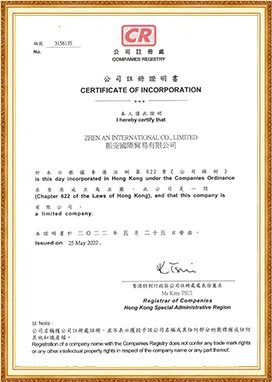
ZhenAn Metallurgy & New Materials Certificates