Nickel wire has become an essential material in modern battery manufacturing and energy storage technologies. Its unique combination of electrical conductivity, corrosion resistance, weldability, and thermal stability makes it ideal for battery interconnections and electrical transmission systems.
From electric vehicle batteries to large-scale renewable energy storage facilities, pure nickel wire helps ensure safe, reliable, and efficient energy transfer throughout the battery lifecycle.
What Is Nickel Wire?
Nickel wire is a metallic wire manufactured from high-purity nickel, typically Nickel 200 (Ni200) or Nickel 201 (Ni201). The material usually contains more than 99.5% nickel and is produced through precision melting, drawing, annealing, and surface treatment processes.
Its excellent conductivity and resistance to oxidation make it a preferred conductive material for battery manufacturers worldwide.

How Is Nickel Wire Manufactured?
The production of battery-grade nickel wire involves strict metallurgical controls to ensure stable electrical and mechanical performance.
Electrolytic refining of nickel raw materials
Vacuum induction melting
Continuous casting into nickel rods
Multi-pass wire drawing
Precision annealing treatment
Surface cleaning and bright finishing
Dimensional and conductivity inspection
Quality control during manufacturing directly affects battery conductivity, welding performance, and long-term reliability.
Why Is Nickel Wire Important in Battery Manufacturing?
Battery systems require highly reliable conductive materials capable of operating under repeated charge-discharge cycles.
Pure nickel wire provides several advantages:
Stable electrical conductivity
Excellent spot welding performance
High corrosion resistance
Good mechanical flexibility
Long service life
Resistance to oxidation during battery operation
These characteristics make nickel wire a preferred solution for battery pack assembly and electrical connections.
Main Applications of Nickel Wire in Lithium Batteries
Battery Cell Interconnection
Nickel wire is commonly used to connect individual battery cells into modules and packs. Reliable interconnections ensure stable current flow and reduce energy loss.
Battery Tab Manufacturing
Nickel wire serves as a conductive tab material that connects electrodes to external circuits.
Spot Welding Applications
Due to its excellent weldability, nickel wire is widely used in automated spot-welding processes for cylindrical, prismatic, and pouch batteries.
Battery Pack Assembly
Large battery packs for electric vehicles and energy storage systems utilize nickel wire for electrical connection and current distribution.
Nickel Wire in Energy Storage Systems (ESS)
Energy storage systems require durable conductive materials capable of operating continuously for many years.
Nickel wire is used in:
Residential energy storage batteries
Commercial energy storage systems
Solar energy storage installations
Wind energy storage systems
Grid-scale battery projects
Its corrosion resistance helps maintain electrical reliability even in challenging environmental conditions.
Common Nickel Wire Grades for Battery Industry
| Grade | Nickel Content | Main Feature | Typical Application |
|---|---|---|---|
| Ni200 | ≥99.6% | Excellent conductivity | Lithium battery packs |
| Ni201 | ≥99.6% | Lower carbon content | High-reliability energy storage systems |

Technical Specifications of Battery-Grade Nickel Wire
| Property | Typical Value |
|---|---|
| Nickel Purity | 99.5%–99.9% |
| Density | 8.90 g/cm³ |
| Melting Point | 1455°C |
| Electrical Conductivity | High |
| Corrosion Resistance | Excellent |
| Weldability | Excellent |
Nickel Wire vs Nickel-Plated Steel Wire
| Property | Pure Nickel Wire | Nickel-Plated Steel Wire |
|---|---|---|
| Nickel Content | Very High | Surface Coating Only |
| Electrical Conductivity | Higher | Lower |
| Corrosion Resistance | Excellent | Moderate |
| Battery Performance | Superior | Cost-Oriented Option |
| Service Life | Longer | Shorter |
Nickel Wire vs Copper Wire in Battery Systems
| Property | Nickel Wire | Copper Wire |
|---|---|---|
| Corrosion Resistance | Excellent | Moderate |
| Spot Welding Performance | Excellent | More Difficult |
| Battery Compatibility | Excellent | Application Dependent |
| Oxidation Resistance | Superior | Lower |
Battery Industry Procurement Guide
When purchasing nickel wire for battery production, manufacturers should evaluate:
- Nickel purity certification
- Wire diameter tolerance
- Electrical conductivity requirements
- Spot welding performance
- Surface cleanliness
- Mechanical strength
- Production consistency
- COA and quality documentation availability
Choosing the correct nickel wire specification can significantly improve battery performance, assembly efficiency, and product reliability.
Future Market Trends
The rapid expansion of electric vehicles, renewable energy projects, and energy storage installations is driving strong demand for battery-grade nickel materials.
As battery energy density and safety requirements continue to increase, high-purity nickel wire is expected to remain a key material in next-generation battery manufacturing technologies.

FAQ
Why is nickel wire used in lithium batteries?
Because it offers excellent conductivity, corrosion resistance, and reliable spot welding performance.
What nickel grade is commonly used for batteries?
Ni200 and Ni201 are the most common grades used in battery manufacturing.
Can nickel wire improve battery life?
High-quality nickel wire helps maintain stable electrical connections, improving long-term battery reliability.
Is pure nickel better than nickel-plated steel?
Pure nickel generally provides superior conductivity, corrosion resistance, and service life.
What batteries use nickel wire?
Lithium-ion batteries, EV battery packs, energy storage batteries, and portable electronic batteries.
Can nickel wire be spot welded?
Yes. Excellent weldability is one of its major advantages.
What purity is recommended for battery applications?
Typically 99.5% or higher nickel content is preferred.
What industries consume the most battery-grade nickel wire?
Electric vehicle manufacturing, energy storage systems, consumer electronics, and renewable energy sectors.
How is nickel wire supplied?
It is commonly supplied in coils, spools, or customized lengths.
How can I request a quotation?
Please provide wire diameter, purity requirements, quantity, and application details.
Contact Information
ZhenAn International
Email: market@zanewmetal.com
WhatsApp: +86 15518824805
Professional Supplier of Pure Nickel Wire and Battery Connection Materials for Energy Storage and Lithium Battery Manufacturing.
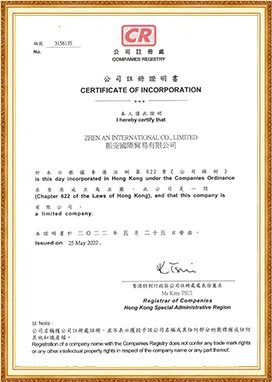
ZhenAn Metallurgy & New Materials Certificates