


① What is Ferrosilicon Nitride and why is it relevant in CBAM-driven refractory strategy?
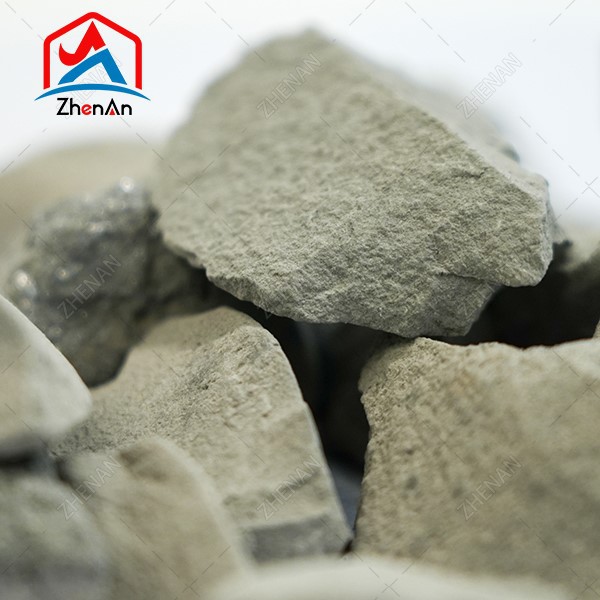
Ferrosilicon Nitride (FeSiN Alloy) is a nitrogen-bearing metallurgical material composed of iron, silicon, and stable nitride phases such as Si₃N₄. In modern refractory engineering, it is classified as a Nitride Bonded Refractory Additive and is widely used in blast furnace, runner, and taphole systems to improve structural stability under extreme thermal and chemical conditions.
Under CBAM (Carbon Border Adjustment Mechanism) pressure, European steel and refractory producers-especially in Germany-are increasingly required to reduce lifecycle emissions while maintaining operational efficiency. This shift directly increases demand for Refractory Grade FeSiN and Ferrosilicon Nitride Supplier solutions that can extend refractory lifespan and reduce replacement frequency.
② Why is CBAM pushing German refractory producers toward erosion-resistant FeSiN materials?
CBAM introduces a carbon-cost linkage across imported materials and energy-intensive industrial supply chains. For German refractory producers, this means that every ton of refractory failure and replacement carries not only operational cost but also embedded carbon cost exposure.
In this context, high-temperature erosion resistance becomes a key optimization lever. Refractories that suffer from refractory erosion resistance additive deficiency require more frequent maintenance, increasing both CO₂ footprint and total lifecycle cost.
FeSiN materials-especially high nitrogen ferrosilicon nitride and silicon nitride ferro alloy systems-provide improved resistance against slag attack and thermal degradation. This allows longer campaign life in blast furnace environments, directly reducing:
replacement frequency
raw material consumption
carbon intensity per ton of steel
downtime-related energy inefficiency
Thus, FeSiN becomes not just a technical input, but a CBAM compliance optimization material.
③ Technical specification of FeSiN for industrial refractory systems
| Parameter | Specification |
|---|---|
| Product Name | Ferrosilicon Nitride (FeSiN) |
| Classification | Refractory Grade FeSiN |
| Nitrogen Content | 20% – 30% (high nitrogen controlled system) |
| Main Phases | Si₃N₄ + Fe-Si matrix |
| Product Types | FeSiN powder manufacturer grade / lump material |
| Particle Size | 0–1 mm / 1–3 mm / 200 mesh powder |
| Application | FeSiN for blast furnace taphole clay |
| Function | blast furnace refractory bonding material |
| Chemical Behavior | nitride bonded refractory additive |
| Purity | low impurity silicon nitride alloy |
④ How does FeSiN improve high-temperature erosion resistance in refractory systems?
High-temperature erosion in blast furnace environments is primarily caused by the combined effects of molten slag flow, chemical dissolution, and mechanical shear stress. In FeSiN for Al2O3-SiC-C refractory systems, erosion begins when bonding phases weaken under continuous thermal and chemical attack.
FeSiN improves erosion resistance by forming stable in-situ Si₃N₄ networks during operation. These networks act as a reinforcement skeleton within the refractory matrix, reducing material loss under high-velocity slag flow in hot metal runner and taphole zones.
In ferrosilicon nitride for taphole clay applications, this mechanism significantly reduces penetration depth of slag and slows down surface degradation. As a result, refractory lining maintains structural integrity for longer operating cycles, which is critical in CBAM-sensitive European steel operations.
⑤ FeSiN grade comparison in erosion resistance applications
Refractory Grade FeSiN vs standard metallurgical FeSiN
Refractory grade FeSiN provides tighter nitrogen control and more stable phase formation, making it suitable for high-load blast furnace environments. Standard metallurgical grades may exhibit inconsistent bonding behavior under thermal cycling.
High nitrogen ferrosilicon nitride vs conventional FeSiN
High nitrogen systems generate more dense Si₃N₄ networks, improving resistance to refractory erosion resistance additive requirements in aggressive slag environments.
FeSiN powder vs lump material
FeSiN powder manufacturer products ensure uniform dispersion in castable systems, while lump materials are preferred in ferrosilicon nitride for hot metal runner zones requiring slower reaction kinetics.
⑥ How is FeSiN supplied for European refractory procurement systems?
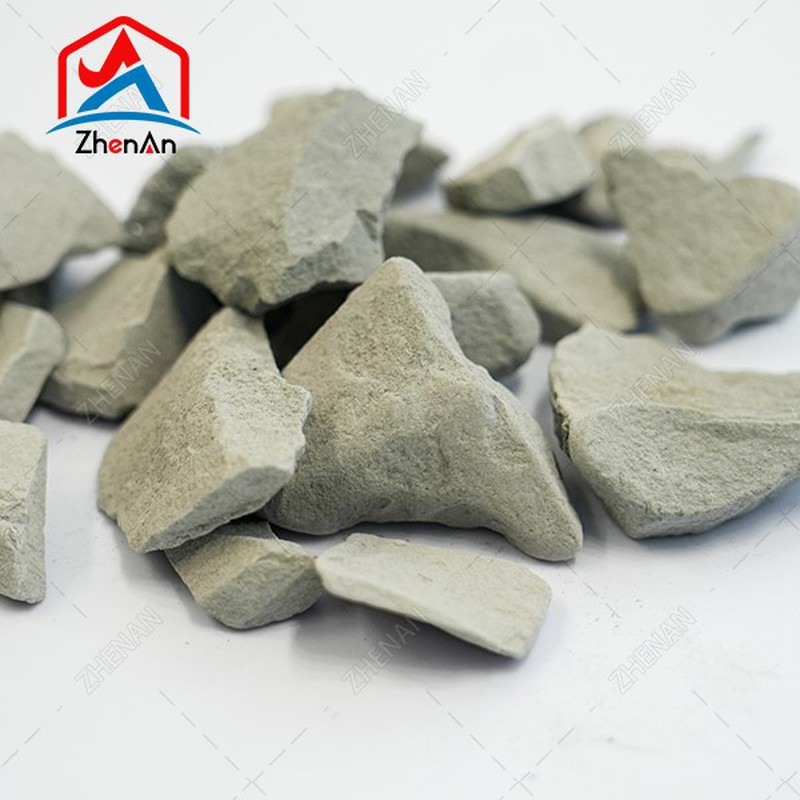
FeSiN is supplied in both powder and lump forms depending on application requirements in blast furnace and runner systems. Powder grades are widely used in fine refractory formulations, while lump materials are applied in heavy-duty thermal zones.
Packaging is typically in 1-ton moisture-resistant jumbo bags with inner liners to ensure stability of nitrogen content during long-distance logistics. This is critical for maintaining performance consistency in CBAM-regulated procurement chains.
As a Ferrosilicon Nitride Supplier, ZhenAn provides controlled-grade materials designed for long lifecycle performance, supporting both cost reduction and carbon efficiency goals in European steel supply systems.
⑦ FAQ: Why are German refractory producers prioritizing FeSiN under CBAM pressure?

How does CBAM influence refractory material selection in Europe?
It forces producers to prioritize materials that reduce lifecycle emissions through longer service life and fewer replacements.
Why is erosion resistance important under CBAM-driven cost pressure?
Because erosion-resistant materials reduce maintenance frequency and embedded carbon per ton of steel output.
How does FeSiN improve high-temperature erosion resistance?
It forms Si₃N₄ bonding structures that reinforce refractory matrices against slag and thermal attack.
Why are German refractory producers focusing on material efficiency?
Because CBAM penalizes inefficient, high-replacement-rate refractory systems with higher carbon costs.
Can FeSiN extend refractory lifespan in carbon-reduction systems?
Yes, by improving structural stability and reducing erosion rates in blast furnace environments.
How does FeSiN contribute to sustainability in steelmaking refractories?
It reduces consumption frequency, lowering overall material and energy intensity.
What role does durability play in CBAM compliance strategies?
Higher durability reduces lifecycle emissions and improves cost-per-ton efficiency.
Why is material longevity important for cost and emissions control?
Because longer-lasting refractories reduce both operational cost and carbon reporting exposure.
For technical consultation, specification matching, or bulk supply of Ferrosilicon Nitride / FeSiN Alloy:
Email: market@zanewmetal.com
WhatsApp: +86 15518824805
Visit https://www.metal-alloy.com/ to learn more about the product. If you would like to learn more about the product price or are interested in purchasing, please email market@zanewmetal.com. We will get back to you as soon as we see your message.