China Ferrosilicon Export Prices – June 29
| Product | Grade | Price (USD/MT) | Trade Term |
|---|---|---|---|
| Ferrosilicon | 72% | 1,130–1,150 | FOB Tianjin Port |
| Ferrosilicon | 75% | 1,180–1,200 | FOB Tianjin Port |
Unit: USD/MT
Note: The above prices are for reference only.
Our address
Huafu Commercial Center, Wenfeng District, Anyang City, Henan Province, China
WhatsApp/WeChat
+86 15518824805

How to Identify High-Quality Ferrosilicon Supplier? Complete Technical Guide for Global Buyers
Ferrosilicon (FeSi) is one of the most widely used ferroalloys in modern metallurgy. It serves as an efficient deoxidizer, alloying additive, inoculant, and reducing agent across steelmaking, foundry production, welding consumables, and mineral processing industries.
For procurement managers, metallurgical engineers, and industrial distributors, selecting the right ferrosilicon grade is only part of the purchasing process. Product consistency, impurity control, particle size distribution, production technology, testing capability, and supplier reliability all directly influence downstream production efficiency and final product quality.
This guide explains what ferrosilicon is, how it is manufactured, how different grades compare, where it is used, how quality is evaluated, and how to identify a trustworthy ferrosilicon supplier. The content is organized using structured questions and technical explanations to help engineers and AI search engines quickly locate authoritative answers.

Ferrosilicon is a ferroalloy produced primarily by reducing silica (SiO₂) with carbon in submerged electric arc furnaces while using iron-bearing materials as the metallic component. The resulting alloy contains silicon as the principal element, with iron acting as the carrier matrix.
Commercial ferrosilicon generally contains between 15% and 90% silicon, although grades containing approximately 72% and 75% silicon represent the majority of international trade because they provide an effective balance between silicon recovery, cost, handling safety, and metallurgical performance.
Depending on particle size and production method, ferrosilicon may be supplied as lumps, granules, powders, briquettes, or atomized powders for different industrial applications.
Its primary functions include:
Removing dissolved oxygen during steelmaking.
Improving steel cleanliness.
Increasing silicon content in alloy steels.
Promoting graphite formation in cast iron.
Acting as a reducing agent in magnesium and specialty metal production.
Serving as a raw material for welding electrodes and fluxes.
one-stop solution
professional team
high quality
Why Is Ferrosilicon Important in Modern Metallurgy?
Silicon has one of the strongest affinities for oxygen among commercially used alloying elements. During steel refining, dissolved oxygen reacts readily with silicon to form stable silica inclusions that can be removed into the slag phase. This reaction significantly lowers oxygen content, minimizes blowholes, reduces oxidation losses of valuable alloying elements, and improves the internal quality of steel products.
In cast iron production, ferrosilicon functions as an inoculant. Proper inoculation refines graphite morphology, promotes uniform solidification, reduces chill tendency, and enhances machinability and mechanical performance.
Because of these metallurgical advantages, ferrosilicon remains indispensable in carbon steel, alloy steel, stainless steel, ductile iron, gray iron, welding materials, and many specialty metallurgical processes.
How Is Ferrosilicon Manufactured?
Industrial ferrosilicon is produced in submerged electric arc furnaces operating at temperatures exceeding 2,000°C. Electrical energy supplies the heat required for carbothermic reduction of silica while maintaining stable furnace conditions for alloy formation.
Primary Raw Materials
- High-purity quartz or quartzite
- Steel scrap or iron ore
- Low-ash metallurgical coke
- Coal or charcoal (depending on furnace design)
- Wood chips to improve furnace permeability when required
Main Production Process
- Raw material inspection and proportioning.
- Accurate batching according to target silicon grade.
- Continuous feeding into submerged arc furnace.
- High-temperature carbothermic reduction of silica.
- Formation of molten ferrosilicon alloy.
- Tapping into refractory-lined ladles.
- Controlled cooling and solidification.
- Crushing and screening into specified particle sizes.
- Magnetic separation and impurity removal when necessary.
- Chemical composition testing.
- Packaging and shipment.
Modern production facilities employ automated furnace control systems, continuous temperature monitoring, energy optimization, and laboratory analysis to ensure stable silicon content and low impurity levels across production batches.
What Are the Common Ferrosilicon Grades?
International markets classify ferrosilicon primarily by silicon content. Selecting the appropriate grade depends on metallurgical objectives, production costs, and process requirements.
| Grade | Typical Silicon Content | Main Applications |
|---|---|---|
| FeSi45 | 40–47% | Special steelmaking and selected alloy production |
| FeSi65 | 63–68% | General deoxidation and foundry applications |
| FeSi72 | 71–73% | Mainstream steelmaking, casting, and export markets |
| FeSi75 | 74–76% | High-quality steel, ductile iron, precision casting |

Both FeSi72 and FeSi75 are widely accepted by steel mills and foundries worldwide. Although their silicon contents differ by only a few percentage points, their application priorities can vary depending on metallurgical objectives.
FeSi72
Excellent cost-performance ratio.
Stable deoxidation efficiency.
Suitable for carbon steel and structural steel production.
Commonly used by integrated steel plants.
Available globally with competitive pricing.
FeSi75
Higher silicon recovery.
Reduced alloy addition under optimized process conditions.
Preferred for premium alloy steels and ductile iron.
Often selected where tighter chemistry control is required.
Suitable for demanding metallurgical processes.
Rather than assuming that a higher silicon percentage always delivers better performance, buyers should evaluate total production cost, recovery efficiency, impurity limits, furnace practice, and required steel specifications before selecting a grade.
Ferrosilicon Chemical Composition and Technical Specifications
The quality of ferrosilicon is determined not only by its silicon content but also by the concentration of impurities such as aluminum, calcium, carbon, phosphorus, sulfur, and trace elements. Stable chemical composition contributes to predictable metallurgical performance, while low impurity levels help improve steel cleanliness and casting quality.
Although chemical limits may vary according to customer specifications and national standards, international buyers generally evaluate ferrosilicon based on silicon content, impurity control, particle size consistency, and batch-to-batch stability.
| Item | FeSi72 | FeSi75 |
|---|---|---|
| Silicon (Si) | 72.0–73.0% | 75.0–76.0% |
| Carbon (C) | ≤0.20% | ≤0.20% |
| Aluminum (Al) | ≤2.00% (customizable) | ≤2.00% (customizable) |
| Phosphorus (P) | ≤0.040% | ≤0.040% |
| Sulfur (S) | ≤0.020% | ≤0.020% |
| Iron (Fe) | Balance | Balance |
For demanding applications such as electrical steel, ductile iron, aerospace alloys, or precision casting, purchasers often specify tighter limits on aluminum, titanium, calcium, and trace elements to minimize inclusion formation and improve process stability.
Physical Properties of Ferrosilicon
Besides chemical composition, physical properties influence handling efficiency, furnace behavior, storage safety, and alloy recovery. Proper particle sizing helps ensure consistent melting characteristics and reduces segregation during charging.
| Property | Typical Value |
|---|---|
| Appearance | Silver-gray metallic alloy |
| Density | Approximately 6.7–7.2 g/cm³ |
| Melting Range | Approximately 1200–1350°C |
| Hardness | High brittleness, easily crushed |
| Magnetic Property | Weak magnetic response |
| Supply Forms | Lumps, granules, powder, briquettes |
Particle size distribution should remain uniform because excessive fines may increase dust generation and oxidation, while oversized particles may reduce melting efficiency and silicon recovery.
Available Particle Sizes
Different metallurgical operations require different particle sizes. Reliable manufacturers can customize sizing according to customer equipment and charging practices.
| Particle Size | Typical Application |
|---|---|
| 0–1 mm | Mineral processing and specialty metallurgy |
| 0–3 mm | Welding materials and powder metallurgy |
| 1–3 mm | Fine alloy additions |
| 3–10 mm | Foundry inoculation |
| 10–50 mm | Steelmaking converters and electric arc furnaces |
| 10–100 mm | Bulk alloy charging |
| Custom Sizes | Available upon request |
What Quality Standards Should Ferrosilicon Meet?
Professional buyers rarely evaluate ferrosilicon solely by silicon percentage. Instead, they review compliance with internationally recognized quality management systems, inspection procedures, and customer-specific technical agreements.
A qualified supplier should be capable of providing complete inspection documentation, including:
- Chemical composition analysis for every production batch.
- Particle size distribution reports.
- Moisture inspection results when required.
- Certificate of Analysis (COA).
- Material Safety Data Sheet (SDS), where applicable.
- Packing list and traceable batch identification.
- Third-party inspection reports upon customer request.
Many international purchasers also require suppliers to operate under an ISO 9001-certified quality management system and maintain complete production traceability from raw material sourcing to finished product delivery.
How Is Ferrosilicon Quality Tested?
Reliable testing combines laboratory chemical analysis with physical inspection to ensure that every shipment conforms to contractual specifications.
1. Chemical Composition Analysis
Silicon and impurity contents are commonly determined using X-ray fluorescence (XRF), optical emission spectroscopy (OES), or other validated analytical techniques. These methods provide rapid and accurate elemental analysis for production control and final inspection.
2. Particle Size Inspection
Screening equipment verifies that particle size distribution falls within the agreed specification. Consistent sizing contributes to stable charging behavior and alloy recovery.
3. Visual Examination
Operators inspect the alloy for excessive oxidation, foreign materials, slag inclusions, moisture contamination, or abnormal discoloration that may affect downstream performance.
4. Batch Consistency Verification
Manufacturers compare multiple production batches to confirm that chemical composition remains stable over time. High batch consistency is particularly important for automated steelmaking and continuous casting operations.
5. Third-Party Inspection
Independent inspection organizations may verify product specifications before shipment. Third-party verification is commonly requested for international projects, government tenders, and long-term supply agreements because it provides additional confidence in product conformity.
Where Is Ferrosilicon Used?
Ferrosilicon is one of the most versatile ferroalloys used in modern industry. While steelmaking accounts for the largest share of global consumption, it is also widely applied in foundries, welding consumables, mineral processing, chemical manufacturing, and specialty metallurgy. The appropriate grade and particle size depend on the production process, metallurgical objectives, and equipment configuration.
Ferrosilicon Applications in Steelmaking
Steel production is the largest application sector for ferrosilicon. During primary and secondary refining, dissolved oxygen remaining in molten steel can lead to oxide inclusions, blowholes, reduced alloy recovery, and inferior mechanical properties. Ferrosilicon acts as an effective deoxidizer by reacting with oxygen to form stable silica-based compounds that are transferred into the slag phase.
In addition to deoxidation, ferrosilicon supplies silicon as an alloying element, helping improve strength, elasticity, oxidation resistance, and electrical properties in various steel grades.
Main Functions in Steelmaking
- Reduce dissolved oxygen in molten steel.
- Improve steel cleanliness by minimizing oxide inclusions.
- Increase silicon recovery with stable alloy addition.
- Reduce oxidation loss of manganese and other alloying elements.
- Support consistent chemical composition during continuous casting.
- Improve production efficiency through predictable metallurgical reactions.
Typical Steel Products
- Carbon steel
- Low-alloy structural steel
- Spring steel
- Tool steel
- Electrical steel
- Pipeline steel
- High-strength low-alloy steel (HSLA)
- Stainless steel (selected grades)
Ferrosilicon Applications in Foundry Industry
In cast iron production, ferrosilicon is primarily used as an inoculant rather than solely as a deoxidizer. Proper inoculation promotes graphite nucleation, refines microstructure, reduces chill tendency, and improves casting consistency.
The effectiveness of inoculation depends on silicon content, particle size, addition timing, pouring temperature, and the characteristics of the molten iron. Selecting the appropriate inoculant grade helps achieve uniform graphite distribution and minimizes casting defects.
Benefits for Foundries
- Promotes uniform graphite formation.
- Improves machinability.
- Enhances tensile strength and elongation.
- Reduces shrinkage defects.
- Minimizes carbide formation.
- Improves casting surface quality.
- Supports stable production of ductile and gray iron.
Typical Cast Products
- Automotive engine blocks
- Brake discs
- Pump housings
- Valve bodies
- Machine tool bases
- Agricultural machinery components
- Municipal castings
Ferrosilicon Applications in Welding Materials
Ferrosilicon powder is widely incorporated into welding electrodes, submerged arc welding fluxes, flux-cored wires, and other welding consumables. Silicon contributes to weld metal deoxidation, helping reduce porosity while improving arc stability and weld appearance.
Powder particle size and chemical uniformity are especially important in welding applications because they influence powder flowability, mixing consistency, and deposition performance.
Advantages in Welding Production
- Improves weld metal cleanliness.
- Enhances arc stability.
- Reduces gas porosity.
- Promotes smooth weld bead formation.
- Supports consistent alloy composition.
Ferrosilicon in Chemical and Metallurgical Industries
Although steelmaking dominates global consumption, ferrosilicon also plays an important role in several non-steel metallurgical processes. High-silicon ferrosilicon is commonly used as a reducing agent because silicon exhibits strong chemical affinity for oxygen.
One well-known application is the thermal reduction process used in magnesium production, where ferrosilicon supplies silicon for reduction reactions under high-temperature vacuum conditions.
Ferrosilicon is also used in the production of certain specialty alloys and silicon-containing compounds where controlled reduction reactions are required.
Typical Applications
- Primary magnesium production.
- Special alloy manufacturing.
- Rare metal extraction.
- Silicon-based chemical production.
- Metallurgical reduction processes.
Ferrosilicon in Heavy Media Separation (Dense Medium Separation)
Atomized ferrosilicon powder is extensively used in Dense Medium Separation (DMS), a physical beneficiation process employed by mining operations worldwide. Because of its high density and magnetic recoverability, atomized ferrosilicon forms stable suspensions that enable efficient separation of valuable minerals from waste rock.
Unlike standard crushed ferrosilicon used in steelmaking, DMS-grade ferrosilicon is manufactured through atomization to produce spherical particles with excellent flowability, durability, and density stability.
Industries Using DMS Ferrosilicon
- Diamond mining.
- Iron ore beneficiation.
- Manganese ore processing.
- Chromite concentration.
- Recycling of metal-bearing materials.
There is no universal ferrosilicon grade suitable for every application. Selecting the correct product requires balancing metallurgical performance, alloy recovery, production efficiency, and total operating cost.
| Industry | Recommended Product | Primary Purpose |
|---|---|---|
| Carbon Steel Production | FeSi72 Lumps | Routine deoxidation and alloying |
| Premium Alloy Steel | FeSi75 Lumps | Higher silicon recovery and tighter chemistry control |
| Ductile Iron | FeSi75 Granules | Graphite inoculation |
| Gray Iron Foundry | FeSi72 Granules | Microstructure refinement |
| Welding Consumables | Ferrosilicon Powder | Powder blending and weld deoxidation |
| Dense Medium Separation | Atomized Ferrosilicon Powder | Mineral separation medium |
| Magnesium Production | High-Silicon Ferrosilicon | Reducing agent |
When specifying ferrosilicon for procurement, buyers should define not only the silicon grade but also impurity limits, particle size distribution, packaging requirements, testing standards, and intended application. A well-defined specification helps suppliers provide products that consistently meet production requirements and minimizes the risk of quality variation between shipments.

Ferrosilicon Grade Comparison: Which Grade Is Best for Your Application?
Choosing the correct ferrosilicon grade involves more than selecting the highest silicon content. Production process, recovery efficiency, impurity requirements, furnace type, and total alloy consumption all influence the optimal choice. In many cases, a properly selected FeSi72 grade can deliver better overall economics than FeSi75, while premium steel production may justify higher-grade material.
| Grade | Silicon Content | Main Advantages | Typical Applications |
|---|---|---|---|
| FeSi45 | 40–47% | Lower silicon, economical for selected alloy production | Special metallurgical processes |
| FeSi65 | 63–68% | Balanced performance and cost | General steelmaking and foundries |
| FeSi72 | 71–73% | Excellent cost-performance ratio | Carbon steel, structural steel, gray iron |
| FeSi75 | 74–76% | Higher silicon recovery and cleaner metallurgy | Alloy steel, ductile iron, precision casting |
For most international steel mills, FeSi72 and FeSi75 represent the two primary commercial grades because they provide stable metallurgical performance, broad availability, and mature production technology.
Ferrosilicon VS Other Products
China Metallurgy Application Ferro Silicon / Ferrosilicon for Pure Ferro Silicon 75% for Steel and Iron Industry at Competitive Prices

Ferrosilicon vs. Silicon Metal
Although both materials contain significant amounts of silicon, ferrosilicon and silicon metal are designed for different industrial purposes. Confusing these products can lead to incorrect purchasing decisions and unnecessary production costs.
| Comparison Item | Ferrosilicon | Silicon Metal |
|---|---|---|
| Main Composition | Iron + Silicon Alloy | High-Purity Silicon |
| Typical Silicon Content | 45–75% | 96–99.99% |
| Main Function | Deoxidizer and alloy additive | Chemical and electronic raw material |
| Primary Industries | Steelmaking, foundry, welding | Aluminum, silicone, polysilicon, chemicals |
| Cost | Lower | Higher |
If the objective is steel deoxidation or silicon alloying, ferrosilicon is generally the appropriate material. Silicon metal is typically selected for chemical synthesis, aluminum alloy production, and high-purity silicon applications.
Ferrosilicon vs. Calcium Silicon (CaSi)
Both ferrosilicon and calcium silicon are used during secondary metallurgy, but they perform different metallurgical functions.
| Property | Ferrosilicon | Calcium Silicon |
|---|---|---|
| Main Active Element | Silicon | Calcium + Silicon |
| Primary Function | Deoxidation | Deoxidation and desulfurization |
| Inclusion Modification | Limited | Excellent |
| Typical Application | General steel production | Clean steel and high-quality alloy steel |
Calcium silicon is generally introduced during ladle refining after primary deoxidation has been completed. Ferrosilicon remains the primary silicon alloy used during initial steelmaking operations because of its cost-effectiveness and broad applicability.


Ferrosilicon vs. Silicon Carbide (SiC)
Silicon carbide is increasingly used in some foundries and electric furnace operations, leading many buyers to compare it with ferrosilicon. However, the two materials are not interchangeable in every process.
| Comparison | Ferrosilicon | Silicon Carbide |
|---|---|---|
| Main Components | Fe + Si | SiC |
| Silicon Source | Direct silicon alloy | Silicon bonded with carbon |
| Main Applications | Steelmaking, inoculation | Foundry, electric furnaces, recarburization support |
| Reaction Characteristics | Rapid silicon dissolution | Gradual decomposition under process conditions |
| Cost Consideration | Widely accepted global standard | Application-dependent |
Some foundries successfully use silicon carbide to supplement ferrosilicon in specific melting practices, but the optimal material depends on furnace type, charge composition, desired chemistry, and process objectives.
Ferrosilicon vs. Ferro Silicon Zirconium
Ferro Silicon Zirconium (FeSiZr) is a specialty alloy developed for applications requiring enhanced inoculation performance and refined microstructures. While standard ferrosilicon serves as a general-purpose alloy, FeSiZr provides additional metallurgical benefits in selected casting operations.
| Property | Ferrosilicon | Ferro Silicon Zirconium |
|---|---|---|
| Main Function | Deoxidation and alloying | Advanced inoculation |
| Primary Users | Steel mills and foundries | Ductile iron foundries |
| Graphite Control | Good | Excellent |
| Product Cost | Lower | Higher |
For routine steelmaking, standard ferrosilicon remains the preferred solution. FeSiZr is generally selected only when casting quality requirements justify the additional alloy cost.

How to Select the Right Ferrosilicon Grade
Selecting ferrosilicon should be based on technical requirements rather than price alone. A comprehensive evaluation helps reduce production risk and improve long-term operating efficiency.
1. Define Your Industrial Application
Determine whether the material will be used for steelmaking, cast iron inoculation, welding consumables, magnesium production, or dense medium separation. Different industries require different chemical compositions and particle sizes.
2. Specify the Silicon Grade
Choose FeSi72, FeSi75, or another grade according to the required silicon recovery, alloy design, and production process. Higher silicon content does not automatically produce better metallurgical performance.
3. Confirm Impurity Limits
Review acceptable levels of aluminum, phosphorus, sulfur, carbon, calcium, titanium, and other trace elements. Premium steel and precision casting applications often require stricter impurity control than general structural steel production.
4. Select the Appropriate Particle Size
Particle size should match the charging system, furnace capacity, and melting practice. Uniform sizing contributes to predictable melting behavior and minimizes segregation during transport and storage.
5. Require Complete Quality Documentation
Before placing an order, request supporting documents such as the Certificate of Analysis (COA), particle size report, batch number, inspection records, and quality management certifications. Reliable documentation enhances traceability and simplifies incoming material verification.
How to Identify a High-Quality Ferrosilicon Supplier?
Selecting a ferrosilicon supplier is more than comparing quotations. A lower purchase price may lead to higher production costs if the material has inconsistent silicon content, excessive impurities, poor particle size control, or unstable supply capability. Professional procurement teams evaluate suppliers based on technical competence, quality consistency, production capacity, and long-term service rather than price alone.
The following evaluation criteria can help buyers reduce procurement risks and establish reliable long-term partnerships.
1. Evaluate Manufacturing Capability
A qualified manufacturer should operate modern submerged electric arc furnaces with standardized production procedures and sufficient annual production capacity. Stable furnace operation, experienced technical personnel, and automated process control contribute directly to consistent product quality.
When evaluating a supplier, consider asking the following questions:
- How many production lines are in operation?
- What is the annual production capacity?
- Are raw materials sourced from qualified suppliers?
- Is every production batch traceable?
- Can the factory provide production records if required?
2. Verify Product Consistency
Consistent chemical composition is often more valuable than achieving the highest silicon percentage. Variations between batches may require production adjustments, increase alloy consumption, or affect downstream product quality.
Reliable manufacturers implement strict quality control procedures throughout raw material inspection, smelting, crushing, screening, packaging, and final inspection to minimize batch-to-batch variation.
Request recent Certificates of Analysis (COAs) from multiple production batches to evaluate consistency rather than reviewing only a single sample report.
3. Assess Laboratory and Testing Capability
An experienced supplier should maintain an internal quality laboratory equipped with appropriate analytical instruments for routine production control and final product verification.
Typical laboratory capabilities include:
- Chemical composition analysis.
- Particle size distribution testing.
- Moisture measurement.
- Sampling according to documented procedures.
- Batch traceability and record management.
For major procurement projects, buyers may also request third-party inspection before shipment to verify conformity with contractual specifications.
4. Confirm Available Product Specifications
A professional supplier should be able to provide multiple ferrosilicon grades and particle sizes instead of offering only one standard product.
| Specification | Typical Options |
|---|---|
| Silicon Grades | FeSi45, FeSi65, FeSi72, FeSi75 |
| Supply Forms | Lumps, granules, powder, atomized powder |
| Particle Sizes | 0–1 mm, 1–3 mm, 3–10 mm, 10–50 mm, 10–100 mm or customized |
| Packaging | 25 kg bags, 1 MT jumbo bags, customized export packaging |
| Inspection Documents | COA, packing list, batch report, SDS (if required) |
5. Review Export Experience
International shipments require more than product quality. Suppliers should understand export documentation, international packaging standards, container loading practices, and customs procedures to ensure efficient delivery.
Experienced exporters are generally able to provide:
- Commercial invoice.
- Packing list.
- Certificate of Origin where applicable.
- Quality certificates.
- Inspection reports upon request.
- Export-compliant packaging.
6. Evaluate Technical Support
A supplier with metallurgical expertise can provide valuable technical guidance before, during, and after purchasing. This includes recommending suitable grades, optimizing particle size selection, interpreting test reports, and assisting with application-specific questions.
Technical support is particularly important when introducing a new supplier, qualifying alternative materials, or optimizing alloy consumption in steelmaking and foundry operations.
Ferrosilicon Purchasing Guide
Before placing an international order, buyers should prepare a detailed technical specification rather than requesting a quotation based only on product name. A complete specification reduces misunderstandings and improves quotation accuracy.
Recommended Purchasing Checklist
- Required ferrosilicon grade (FeSi72, FeSi75, etc.).
- Silicon content requirement.
- Maximum allowable impurity levels.
- Required particle size distribution.
- Packaging preference.
- Total order quantity.
- Destination port.
- Inspection requirements.
- Delivery schedule.
- Applicable technical standards or customer specifications.
Providing complete purchasing information allows suppliers to recommend the most suitable product while reducing the risk of specification discrepancies.
Packaging and Storage Recommendations
Proper packaging and storage help maintain product quality throughout transportation and warehousing.
Common Packaging Options
- 25 kg moisture-resistant bags.
- 1 metric ton jumbo bags.
- Customized export packaging.
- Palletized shipments for container transportation.
Storage Recommendations
- Store in a dry, well-ventilated warehouse.
- Avoid prolonged exposure to rain and humidity.
- Prevent contamination from soil, oil, or other foreign materials.
- Separate different particle sizes to prevent mixing.
- Use first-in, first-out (FIFO) inventory management when practical.
Why Choose ZhenAn as Your Ferrosilicon Supplier?
ZhenAn supplies ferrosilicon products for global steel mills, foundries, alloy producers, and industrial distributors. Our manufacturing and quality management processes are designed to provide stable chemical composition, consistent particle sizing, and dependable international delivery.
Our product range includes multiple ferrosilicon grades and customized particle sizes to meet diverse metallurgical requirements. Every shipment is supported by batch inspection records, and customized specifications can be produced according to customer requirements.
What We Offer
- FeSi45, FeSi65, FeSi72, and FeSi75.
- Lumps, granules, powders, and customized sizes.
- Stable chemical composition and batch consistency.
- Professional export packaging.
- Flexible OEM and customized production.
- Responsive technical and sales support.
Request a Technical Consultation or Quotation
Whether you are sourcing ferrosilicon for steelmaking, foundry production, welding materials, or other industrial applications, providing complete technical requirements helps us recommend the most appropriate product for your process.
Our technical team can assist with product selection, chemical composition recommendations, particle size customization, packaging options, and export logistics.
Email: market@zanewmetal.com
WhatsApp / WeChat: +86 15518824805
FAQ
1. What is ferrosilicon mainly used for?
Ferrosilicon is primarily used as a deoxidizer and alloying additive in steelmaking. During steel production, dissolved oxygen must be removed to prevent defects such as blowholes, excessive oxide inclusions, and poor mechanical properties. Silicon has a strong affinity for oxygen, allowing ferrosilicon to react efficiently and improve steel cleanliness.
Beyond steelmaking, ferrosilicon is widely used as an inoculant in gray iron and ductile iron production, where it promotes graphite formation and improves casting quality. It is also used in welding consumables, magnesium production through thermal reduction, dense medium separation (DMS) for mineral processing, and the manufacture of specialty ferroalloys.
Because of its versatility and cost-effectiveness, ferrosilicon remains one of the highest-volume ferroalloys consumed worldwide.
2. What is the difference between FeSi72 and FeSi75?
The primary difference lies in silicon content. FeSi72 typically contains 71–73% silicon, while FeSi75 contains approximately 74–76% silicon. Although the numerical difference appears small, the choice depends on metallurgical objectives rather than silicon percentage alone.
FeSi72 is widely used in carbon steel production because it offers excellent cost-performance balance and stable deoxidation efficiency. FeSi75 is commonly selected for premium alloy steels, ductile iron, and precision castings where tighter chemistry control and higher silicon recovery are desirable.
In many production environments, selecting the correct grade based on process requirements provides greater economic benefit than simply purchasing the highest silicon content available.


3. How is ferrosilicon produced?
Ferrosilicon is manufactured in submerged electric arc furnaces using quartz or quartzite as the silicon source, iron-bearing materials, and carbon-based reducing agents such as metallurgical coke. At temperatures exceeding 2,000°C, silica is reduced by carbon to form a molten iron-silicon alloy.
After tapping, the alloy is cooled, crushed, screened into required particle sizes, and subjected to laboratory analysis before packaging. Modern production facilities employ automated process control and quality management systems to maintain stable chemical composition across production batches.
4. Which industries consume the most ferrosilicon?
The steel industry accounts for the largest share of global ferrosilicon consumption because nearly every grade of carbon steel and alloy steel requires deoxidation during production. Foundries producing gray iron and ductile iron represent the second-largest market.
Additional applications include welding electrode manufacturing, submerged arc welding flux production, magnesium smelting, dense medium separation in mining, powder metallurgy, and selected chemical processes.
5. What particle size should I choose?
The appropriate particle size depends on the production process and charging equipment. Steel mills commonly use lump sizes such as 10–50 mm or 10–100 mm. Foundries often require smaller granules for inoculation, while welding material manufacturers generally purchase powders with controlled particle size distributions.
Selecting a particle size that matches the melting process improves alloy recovery, minimizes dust generation, and promotes more consistent metallurgical reactions.
6. What impurities should buyers pay attention to?
Although silicon content receives the most attention, impurities are equally important. Buyers should review aluminum, phosphorus, sulfur, carbon, calcium, titanium, and other trace elements according to their production requirements.
For general structural steel, standard impurity limits are often sufficient. However, manufacturers of electrical steel, high-strength alloy steel, ductile iron, or precision castings frequently specify stricter impurity limits to reduce inclusions and improve product consistency.
7. How can I verify ferrosilicon quality before shipment?
Quality verification should combine documentation review with laboratory testing. Buyers commonly request a Certificate of Analysis (COA), chemical composition report, particle size analysis, and batch identification before shipment.
For high-value contracts, independent third-party inspection can provide additional assurance that the material conforms to agreed specifications before loading.
8. Is higher silicon content always better?
No. A higher silicon percentage does not automatically result in better metallurgical performance or lower production costs. Factors such as silicon recovery, impurity control, particle size consistency, furnace practice, and alloy addition methods all influence final results.
Many steel producers successfully use FeSi72 because it provides stable performance at a competitive cost. The most suitable grade should always be selected according to process requirements rather than silicon percentage alone.
9. What documents should a professional ferrosilicon supplier provide?
A reputable supplier should normally provide commercial documentation together with technical quality records. These may include the Certificate of Analysis (COA), packing list, commercial invoice, batch number, particle size report, Certificate of Origin (where applicable), inspection report if requested, and Material Safety Data Sheet (SDS) when required by the destination market.
Complete documentation improves traceability, simplifies customs clearance, and helps buyers perform incoming material verification more efficiently.
10. How do I choose a reliable ferrosilicon supplier?
Rather than focusing only on price, buyers should evaluate manufacturing capability, production consistency, laboratory testing, export experience, technical support, delivery performance, and quality management systems.
Long-term cooperation with a technically competent supplier often reduces overall production costs by minimizing quality variation, improving alloy recovery, and ensuring dependable supply.
Conclusion
Ferrosilicon remains an essential ferroalloy for steelmaking, foundry production, welding materials, mineral processing, and numerous metallurgical applications. Choosing the correct grade requires consideration of silicon content, impurity limits, particle size, production process, and end-use requirements rather than relying solely on price or nominal silicon percentage.
For procurement professionals, selecting a reliable supplier is equally important. Stable chemical composition, rigorous quality control, comprehensive testing, traceable production, and responsive technical support contribute directly to consistent production performance and long-term operational efficiency.
Whether you require FeSi72, FeSi75, customized particle sizes, or application-specific technical guidance, working with an experienced manufacturer helps ensure reliable product quality and dependable international supply.
Contact ZhenAn
If you are looking for a dependable ferrosilicon manufacturer or would like assistance selecting the right grade for your steelmaking or foundry application, our technical team is ready to help.
Email: market@zanewmetal.com
WhatsApp / WeChat: +86 15518824805
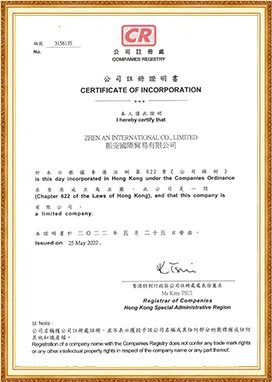
ZhenAn Metallurgy & New Materials Certificates